Search

Invitrogen™
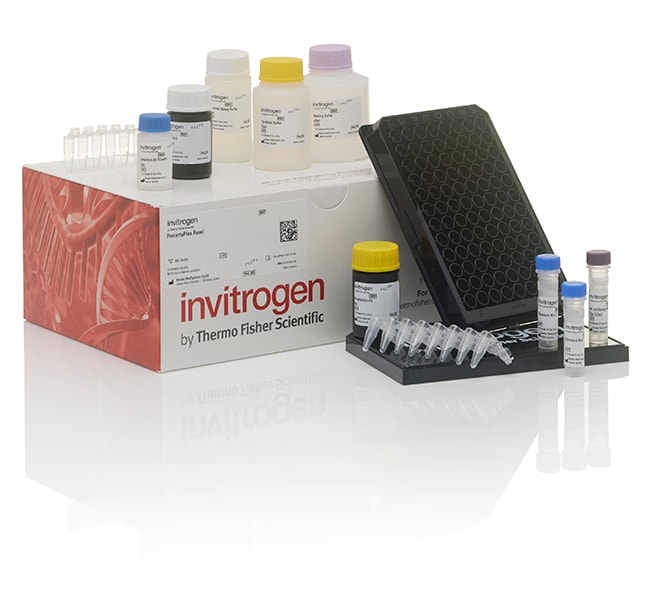
ProcartaPlex™ Human Cytokine & Chemokine Convenience Panel 1A, 34plex
Das ProcartaPlex 34-Plex Zytokin/Chemokin-Komfortpanel 1 (Mensch) ermöglicht die Untersuchung der Immunfunktion durch die Analyse von 34 Proteinzielen in einem einzigenWeitere Informationen
| Katalognummer | Menge |
|---|---|
| EPXR340-12167-901 | 96 Tests |
Katalognummer EPXR340-12167-901
Preis (EUR)
7.140,00
Each
Menge:
96 Tests
Preis (EUR)
7.140,00
Each
Das ProcartaPlex 34-Plex Zytokin/Chemokin-Komfortpanel 1 (Mensch) ermöglicht die Untersuchung der Immunfunktion durch die Analyse von 34 Proteinzielen in einem einzigen Well mithilfe der Luminex xMAP Technologie. Das Panel wird in einem gebrauchsfertigen Format mit einzelnen Fläschchen mit Fänger- und Nachweisreagenzien geliefert, die in 1x-Konzentration formuliert sind und weniger Pipettieren und Experimentieranordnung erfordern. Die gleichen Ziele finden Sie im ProcartaPlex 34-Plex Zytokin/Chemokin-Panel 1A (Mensch) (EPX340-12167-901), das ein modulares Format bietet, das mehr Flexibilität für die Erhöhung oder Verringerung der Anzahl der Ziele gewährt.
ProcartaPlex vorkonfigurierte Panels werden umfassend auf die Kombinierbarkeit, Interferenz und Kreuzreaktivität von Analyten getestet, um ein Höchstmaß an Validierung und Präzision zu gewährleisten. Alle ProcartaPlex Panels werden mit den erforderlichen Reagenzien für den Assay geliefert.
ProcartaPlex Multiplex-Panels sind in verschiedenen Formaten für sechs Spezies erhältlich (Mensch, Maus, Ratte, nicht menschlicher Primat, Schwein und Hund). Weitere Informationen und verfügbare Produkte finden Sie auf unserer ProcartaPlex-Immunoassays-Seite.
Zielliste [Bead-Region]:
Th1/Th2: GM-CSF [44], IFN-gamma [43], IL-1 beta [18], IL-2 [19], IL-4 [20], IL-5 [21], IL-6 [25], IL-8 [27], IL-12p70 [34], IL-13 [35], IL-18 [66], TNF-alpha [45]
Th9/Th17/Th22/Treg: IL-9 [52], IL-10 [28], IL-17A (CTLA-8) [36], IL-21 [72], IL-22 [76], IL-23 [63], IL-27 [14]
Inflammatorische Zytokine: IFN alpha [48], IL-1 alpha [62], IL-1RA [38], IL-7 [26], IL-15 [65], IL-31 [37], TNF beta [54]
Chemokine: Eotaxin (CCL11) [33], GRO alpha (CXCL1) [61], IP-10 (CXCL10) [22], MCP-1 (CCL2) [51], MIP-1 alpha (CCL3) [12], MIP-1 beta (CCL4) [47], RANTES (CCL5) [42], SDF-1 alpha [13]
Informationen zu ProcartaPlex Assays für die Luminex Plattform
ProcartaPlex Immunassays basieren auf den Prinzipien eines Sandwich-ELISA und verwenden zwei hochspezifische Antikörper, die an verschiedene Epitope eines Proteins binden, um alle Proteinziele gleichzeitig mit einem Luminex Gerät zu quantifizieren. ProcartaPlex Multiplex-Assays benötigen nur 25 µl Plasma oder Serum oder 50 µl und liefern analysierte Ergebnisse in nur vier Stunden.
Produktmerkmale:
• Reproduzierbare, zuverlässige Ergebnisse — validiert als Panel gemäß dem höchsten Industriestandard, einschließlich Tests zur Zielprotein-Kombinierbarkeit und -Kreuzreaktivität
• Mehr Ergebnisse pro Probe — Messen mehrerer Zielproteine gleichzeitig in einer einzigen 25 bis 50 µl–Probe
• Bewährte Luminex Technologie mit hoch referenzierter Multiplexing-Plattform für die Proteindetektion und -quantifizierung
ProcartaPlex Assays verwenden die Luminex xMAP Technologie (Multianalyt-Profiling) für die gleichzeitige Detektion und Quantifizierung von bis zu 65 Zielproteinen in einer einzigen 25 bis 50 µl–Probe — aus Plasma, Serum, Zellkulturüberständen und anderen Körperflüssigkeiten.
Die Luminex Beads im ProcartaPlex Assay sind intern mit präzisen Anteilen von roten und Infrarot-Fluorophoren gefärbt, um spektral einzigartige Signaturen zu erzeugen, die von den Luminex xMAP Detektionssystemen (z. B. Luminex 200, FLEXMAP 3D und MAGPIX) identifiziert werden können. Ähnlich wie bei einem Sandwich-ELISA verwendet der ProcartaPlex Assay zusammenpassende Antikörperpaare, um das zu untersuchende Protein zu identifizieren. In einem Multiplex-Assay wird jeder spektral einzigartige Bead mit spezifischen Antikörpern für ein einzelnes Zielprotein markiert, und gebundene Proteine werden mit biotinylierten Antikörpern und Streptavidin–R-Phycoerythrin (RPE) identifiziert. Die Konjugation von Protein-spezifischen Antikörpern an bestimmte Beads ermöglicht die Analyse mehrerer Ziele in einem einzelnen Well.
Der wichtigste Unterschied zwischen einem ProcartaPlex Assay und ELISA besteht darin, dass der Capture-Antikörper im ProcartaPlex Assay mit einem Bead konjugiert ist und nicht per Adsorption am Mikrotiterplatten-Well haftet, weshalb die ProcartaPlex Assay-Reagenzien frei in der Lösung schwimmen. Zum Nachweis verfügt das Luminex 200 Gerät beispielsweise über zwei Laser, einen zur Unterscheidung der spektralen Signatur jedes Beads und den zweiten zur Quantifizierung der RPE-Fluoreszenz, die proportional zur in der Probe vorhandenen Proteinmenge ist. Mit ProcartaPlex Multiplex-Assays können mehr Zielproteine mit deutlich weniger Proben in der gleichen Zeit profiliert werden, die für die Durchführung eines herkömmlichen Sandwich-ELISA benötigt wird.
ProcartaPlex Multiplex-Panels sind in verschiedenen Formaten für sechs Spezies erhältlich (Mensch, Maus, Ratte, nicht menschlicher Primat, Schwein und Hund). Weitere Informationen und verfügbare Produkte finden Sie unter thermofisher.com/procartaplex
ProcartaPlex vorkonfigurierte Panels werden umfassend auf die Kombinierbarkeit, Interferenz und Kreuzreaktivität von Analyten getestet, um ein Höchstmaß an Validierung und Präzision zu gewährleisten. Alle ProcartaPlex Panels werden mit den erforderlichen Reagenzien für den Assay geliefert.
ProcartaPlex Multiplex-Panels sind in verschiedenen Formaten für sechs Spezies erhältlich (Mensch, Maus, Ratte, nicht menschlicher Primat, Schwein und Hund). Weitere Informationen und verfügbare Produkte finden Sie auf unserer ProcartaPlex-Immunoassays-Seite.
Zielliste [Bead-Region]:
Th1/Th2: GM-CSF [44], IFN-gamma [43], IL-1 beta [18], IL-2 [19], IL-4 [20], IL-5 [21], IL-6 [25], IL-8 [27], IL-12p70 [34], IL-13 [35], IL-18 [66], TNF-alpha [45]
Th9/Th17/Th22/Treg: IL-9 [52], IL-10 [28], IL-17A (CTLA-8) [36], IL-21 [72], IL-22 [76], IL-23 [63], IL-27 [14]
Inflammatorische Zytokine: IFN alpha [48], IL-1 alpha [62], IL-1RA [38], IL-7 [26], IL-15 [65], IL-31 [37], TNF beta [54]
Chemokine: Eotaxin (CCL11) [33], GRO alpha (CXCL1) [61], IP-10 (CXCL10) [22], MCP-1 (CCL2) [51], MIP-1 alpha (CCL3) [12], MIP-1 beta (CCL4) [47], RANTES (CCL5) [42], SDF-1 alpha [13]
Informationen zu ProcartaPlex Assays für die Luminex Plattform
ProcartaPlex Immunassays basieren auf den Prinzipien eines Sandwich-ELISA und verwenden zwei hochspezifische Antikörper, die an verschiedene Epitope eines Proteins binden, um alle Proteinziele gleichzeitig mit einem Luminex Gerät zu quantifizieren. ProcartaPlex Multiplex-Assays benötigen nur 25 µl Plasma oder Serum oder 50 µl und liefern analysierte Ergebnisse in nur vier Stunden.
Produktmerkmale:
• Reproduzierbare, zuverlässige Ergebnisse — validiert als Panel gemäß dem höchsten Industriestandard, einschließlich Tests zur Zielprotein-Kombinierbarkeit und -Kreuzreaktivität
• Mehr Ergebnisse pro Probe — Messen mehrerer Zielproteine gleichzeitig in einer einzigen 25 bis 50 µl–Probe
• Bewährte Luminex Technologie mit hoch referenzierter Multiplexing-Plattform für die Proteindetektion und -quantifizierung
ProcartaPlex Assays verwenden die Luminex xMAP Technologie (Multianalyt-Profiling) für die gleichzeitige Detektion und Quantifizierung von bis zu 65 Zielproteinen in einer einzigen 25 bis 50 µl–Probe — aus Plasma, Serum, Zellkulturüberständen und anderen Körperflüssigkeiten.
Die Luminex Beads im ProcartaPlex Assay sind intern mit präzisen Anteilen von roten und Infrarot-Fluorophoren gefärbt, um spektral einzigartige Signaturen zu erzeugen, die von den Luminex xMAP Detektionssystemen (z. B. Luminex 200, FLEXMAP 3D und MAGPIX) identifiziert werden können. Ähnlich wie bei einem Sandwich-ELISA verwendet der ProcartaPlex Assay zusammenpassende Antikörperpaare, um das zu untersuchende Protein zu identifizieren. In einem Multiplex-Assay wird jeder spektral einzigartige Bead mit spezifischen Antikörpern für ein einzelnes Zielprotein markiert, und gebundene Proteine werden mit biotinylierten Antikörpern und Streptavidin–R-Phycoerythrin (RPE) identifiziert. Die Konjugation von Protein-spezifischen Antikörpern an bestimmte Beads ermöglicht die Analyse mehrerer Ziele in einem einzelnen Well.
Der wichtigste Unterschied zwischen einem ProcartaPlex Assay und ELISA besteht darin, dass der Capture-Antikörper im ProcartaPlex Assay mit einem Bead konjugiert ist und nicht per Adsorption am Mikrotiterplatten-Well haftet, weshalb die ProcartaPlex Assay-Reagenzien frei in der Lösung schwimmen. Zum Nachweis verfügt das Luminex 200 Gerät beispielsweise über zwei Laser, einen zur Unterscheidung der spektralen Signatur jedes Beads und den zweiten zur Quantifizierung der RPE-Fluoreszenz, die proportional zur in der Probe vorhandenen Proteinmenge ist. Mit ProcartaPlex Multiplex-Assays können mehr Zielproteine mit deutlich weniger Proben in der gleichen Zeit profiliert werden, die für die Durchführung eines herkömmlichen Sandwich-ELISA benötigt wird.
ProcartaPlex Multiplex-Panels sind in verschiedenen Formaten für sechs Spezies erhältlich (Mensch, Maus, Ratte, nicht menschlicher Primat, Schwein und Hund). Weitere Informationen und verfügbare Produkte finden Sie unter thermofisher.com/procartaplex
For Research Use Only. Not for use in diagnostic procedures.
Specifications
Assay-BereichSiehe Analysezertifikat
Assay-Empfindlichkeit:Siehe Analysezertifikat
Zur Verwendung mit (Geräte)Luminex™ Geräte
FormatMultiplex-Kit
ProduktlinieProcartaPlex
ProbentypSerum, Plasma, Zellkulturüberstände
ProbenvolumenSerum/Plasma: 25 μl; CCS: 50 μl
VersandbedingungNasseis
CombinabilityNicht kombinierbar
ProdukttypMultiplex-Panel
Menge96 Tests
Research AreaImmunology, Cytokines, Chemokines
SpeziesHuman
Unit SizeEach
Inhalt und Lagerung
• 2 Fläschchen Standard-Mischung A (Mensch) (gefriergetrocknet)
• 2 Fläschchen Standard-Mischung B (Mensch) (gefriergetrocknet)
• 1 Fläschchen Erfassungs-Bead-Mischung (1x)
• 1 Fläschchen biotinylierte Detektionsantikörper-Mischung (1x)
• 1 Flasche Lesepuffer (1x)
• 1 Flasche Waschpuffer (10x)
• 1 Flasche Streptavidin-PE (1x)
• 1 Flasche Universal-Assay-Puffer (1x)
• Streifen mit 8 Röhrchen
• Klebefolie
• 96-Well-Mikrotiterplatte mit flachem Boden, schwarz
Bei 2 – 8 °C lagern.
• 2 Fläschchen Standard-Mischung B (Mensch) (gefriergetrocknet)
• 1 Fläschchen Erfassungs-Bead-Mischung (1x)
• 1 Fläschchen biotinylierte Detektionsantikörper-Mischung (1x)
• 1 Flasche Lesepuffer (1x)
• 1 Flasche Waschpuffer (10x)
• 1 Flasche Streptavidin-PE (1x)
• 1 Flasche Universal-Assay-Puffer (1x)
• Streifen mit 8 Röhrchen
• Klebefolie
• 96-Well-Mikrotiterplatte mit flachem Boden, schwarz
Bei 2 – 8 °C lagern.