 Recognizing the significant advances in diagnosis and treatment that biobanking enables, the White House announced the Precision Medicine Initiative (PMI) in 2015. The goal of the PMI is to assemble a longitudinal cohort of 1 million Americans willing to donate biological specimens and provide de-identified demographic and health data. Ultimately this will expand knowledge in the fields of genomics, metabolomics and proteomics. However, when samples are collected from donors, the full range of their future uses is unknown. Therefore, broad consent allows a person to give open-ended consent for any future research using their sample. There is no risk to the donor through this consent process because their data will remain de-identified. However, De Vries et al. (2016) found that the general public does not favor broad consent.1
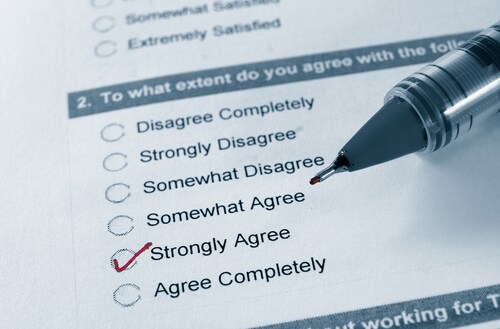
In June 2014, the authors sent a survey to 2,654 individuals, a nationally representative sample of the U.S. population. They received 1,599 responses (response rate = 60.2%). The survey introduced a fictional biobank. It described the biobank’s purpose and potential benefits, and defined broad consent. It then asked the respondents a range of questions to measure their comprehension of the above description, followed by their level of agreement or disagreement with the following sentence: “I would donate tissue samples and medical information to the biobank, so that it can use them for any research study that it allows, without further consent from me.” The survey contained seven subsequent questions that were associated with potential moral concerns of the respondents. Following each scenario, they again asked participants about their willingness to consent if their specimens could be used for that type of research.
De Vries et al. found that 44% of respondents felt that broad, or blanket, consent was unacceptable. Similarly, they found that broad consent, even with a caution (28.1%) or an option to withdraw (29.2%), or combined with limits (34.9%), was largely unacceptable. However their results also indicated that the worst option was to use real-time specific consent for each use of an individual sample (45%). They did not find consistent effects from gender, race, education, income, religion or political views on policy preferences.
Based on earlier research indicating an effect by “non-welfare interests” (NWI) on willingness to use broad consent, De Vries et al. looked at responses to specific scenarios they had included in their survey. They found that those who weren’t willing to donate using broad consent across each of the NWI scenarios generally had a less favorable opinion on broad consent. Further, the type of NWI did not affect policy preferences.
De Vries et al. suggest that biobanks respond to their findings and work toward building public confidence and trust in their use of biospecimens. They also acknowledge that broad consent needs to remain the current practice for practical reasons; however, it is up to biobanks to ensure that they fully inform their donors.
Reference
1. De Vries, R.G., et al. (2016) “Understanding the public’s reservations about broad consent and study-by-study consent for donations to a biobank: Results of a national survey,” PLoS One, 11(7) (e0159113), doi: 10.1371/journal.pone.0159113.

Validating Sample Identity and Detecting Errors with Genotyping
Storing biological samples is a risky affair. A single error...
Read More
Big Data: Challenges of Population-Based Imaging Biobanks
Medical imaging can play a crucial role in complementing gen...
Read More
Electronic Health Records: A New Ethical Issue for Biobanking?
As biobanks develop, transitioning from simple repositories ...
Read More
A New Honest Brokered, Modular System for Biobanking
Felmeister et al. (2016) developed a modular, integrated sys...
Read More
Leave a Reply