Editor’s Note: This is the fourth article in the Tuesday series discussing how Laboratory Information Management Systems (LIMS) are being used in oil and gas operations. [Subscribe now so you don’t miss an article in the series.] 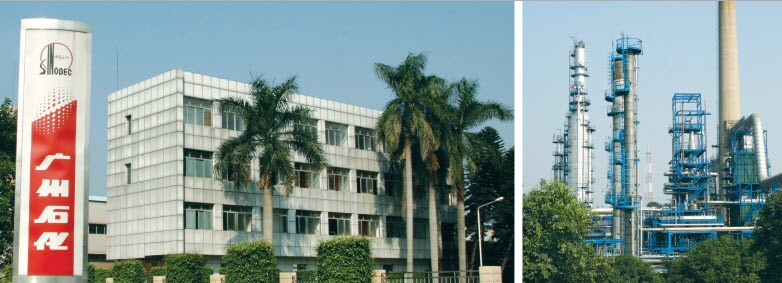 Sinopec is China’s largest producer and supplier of oil products (including gasoline, diesel and jet fuel) and petrochemical products (including intermediates, synthetic resin, synthetic fiber monomers and polymers, synthetic fiber and chemical fertilizer). It is also the second largest crude oil producer. The scope of Sinopec’s business is in five areas:
- Oil and gas exploration
- Oil refining
- Production of petrochemicals, chemical fibers, chemical fertilizers and other chemical products
- Storage and pipeline transportation of crude oil and natural gas
- Import and export of crude oil, natural gas, refined oil products, chemicals, and other commodities.
To meet its reporting needs, Sinopec had developed a simple daily logging system at the oil refining laboratory in Guangzhou which could enable reports to be entered and produced. Apart from that system, transactions had been conducted largely through manual means, including the collecting of data, the entering of raw records, the writing of report papers and the transferring of report papers between facilities. However, with the continuous expansion of business, this simple system was unable to meet the needs of Sinopec’s complex and fast-paced production. The company needed to automate the collection of data from instruments and transmission of report papers between different sites for better communication and decision making. They determined that Sinopec’s Guangzhou branch would require a laboratory information management system (LIMS) to achieve the following functions:
- Analyze the quality of crude oil
- Enter and produce sample results
- Search for results
- Manage the production operation
- Transfer and share laboratory data between different sites.
The new LIMS system helped Sinopec Guangzhou not only meet all of its objectives but save significant costs in human resources and time. 80% of its manual record keeping has been eliminated since data can now be collected automatically from instruments, and there is no need for operators to write records in notebooks or ride bicycles to deliver reports from one facility to another. Laboratory workers at different sites can now share data in real time, which helps them save huge amounts of paper that in the past was used to print reports for laboratories every day. The Sinopec Guangzhou Quality Inspection Center is now able to have real-time data monitoring, so that system operators can stay alert to data variations. Once any irregularities are spotted, they can take immediate actions to probe for possible causes as well as focus on relevant procedures and laboratory results. In addition, in the event a problem occurs in the oil production process, relevant data can also be retrieved from the LIMS for further examination or to provide guidance for production through data analysis. Read the complete case study to learn more about the implementation, training, and testing procedures that resulted in a LIMS system that helps improve laboratory automation, ensures smooth operation, and enhances economic returns for Sinopec Guangzhou.

New Software Offers Advantage in Underground Mining
Finding productive mine sites begins with surveying potentia... Chris Calam
Read More
Discover the New Minerals Analysis Technology at SME
If you want to network with more than 6,500 people in the mi... Tom Strombotne
Read More
Check out the Cement, Coal & Minerals Learning Center
Mining operators and cement manufacturers must improve effic... Marlene Gasdia-Cochrane, Editor
Read More
What Happened After a Bolivian Mining Company Automated its Laboratory Processes?
The San Cristobal mine, located in southwestern Bolivia, is ...
Read More

Leave a Reply