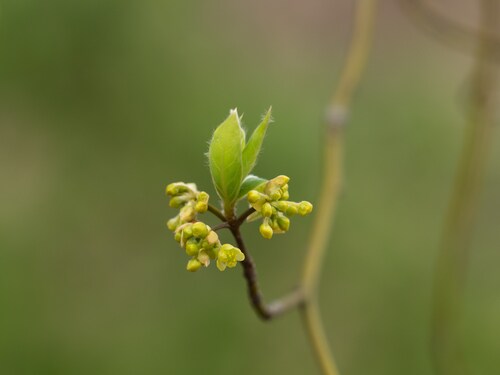
 Lindera reflexa Hemsl. is a medicinal plant associated with Chinese medicine and prescribed to treat gastritis and peptic ulcers. Sun et al. (2016) recently applied ultra-high-performance liquid chromatography (UHPLC) linear trap quadrupole (LTQ) Orbitrap mass spectrometry (MS) to examine fragmentation behaviors for 12 known Lindera reflexa root compounds, as well as to identify unknown compounds associated with the medicinal plant.1
To do this, the team used an optimized Dionex UltiMate 3000 UHPLC system coupled with an LTQ Orbitrap XL Hybrid Ion Trap-Orbitrap mass spectrometer (both Thermo Scientific). The researchers recorded and processed the data using Xcalibur and Mass Frontier software revisions 3.0 and 7.0, respectively (both Thermo Scientific). The 12 reference compounds comprised five types: stilbene, flavonoid, alkaloid, pyranone I and pyranone II.
Table 1. Reference compounds
|
Type |
Compounds |
|
stilbene |
|
|
flavonoid |
|
|
alkaloid |
|
|
pyranone I |
|
|
pyranone II |
|
The research team was able to detect the 12 standards, construct fragmentation pathways and confirm the structures of their derivatives, using Mass Frontier software to assist in this undertaking. Combining the MS(n) data, accurate mass measurements and retention times, they were able to identify (unambiguously or tentatively) 42 total constituent compounds in the Lindera reflexa root sample. These included eight stilbenes, eight flavonoids, nine alkaloids, 10 pyranone I compounds, and seven pyranone II compounds. Of these, they report 24 to be novel identifications.
Table 2. Novel compounds
|
Type |
Potential novel compounds |
|
stilbene |
|
|
flavonoid |
|
|
pyranone I |
|
|
pyranone II |
|
Sun et al. report their UHPLC-LTQ-Orbitrap-MS protocol to be both efficient and sensitive, as well as a first application of this method to identify the chemical constituents of Lindera reflexa root. They indicate that the data here is useful for better understanding the medicinal plant, for further studies examining pharmacokinetics and metabolomics, and for quality control during the production of this Chinese medicine.
Reference
1. Sun, X., et al. (2016) “Characterization and identification of the chemical constituents in the root of Lindera reflexa Hemsl. using ultra-high performance liquid chromatography coupled with linear trap quadrupole orbitrap mass spectrometry,” Journal of Pharmaceutical and Biomedical Analysis, 126 (pp. 34–47).

Assessing Ion Interference Using a Triple Knockout Standard Diagnostic Tool
Researchers use isobaric tandem mass tag (TMT) reagents as a...
Read More
Identifying Metal Species with Electrospray Ionization and Tandem Mass Spectrometry
Elemental transition metals iron (Fe), zinc (Zn), nickel (Ni...
Read More
Setting BPA Free: Bisphenol Fragmentation Pathways
Bisphenols are common additives in everyday products like pl...
Read More
Creepy Science: Black Widow Silk
Spiders possess a singular ability to strike irrational fear...
Read More
Leave a Reply