Search



Thermo Scientific™
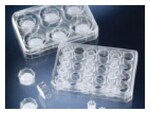
Nunc™ Polycarbonate Cell Culture Inserts in Multi-Well Plates
Cultivate most cell types without matrix coating when using Thermo Scientific™ Nunc™ Polycarbonate Membrane Inserts in Multidishes.
Have Questions?
Change view

| Catalog Number | Pore Size | Dish Type | Culture Area |
|---|---|---|---|
| 140629 | 8 μm | 24-Well Plate | 0.47 cm2 |
| 140620 | 0.4 μm | 24-Well Plate | 0.47 cm2 |
| 140627 | 3 μm | 24-Well Plate | 0.47 cm2 |
| 140640 | 0.4 μm | 6-Well Plate | 3.14 cm2 |
| 140642 | 3 μm | 6-Well Plate | 3.14 cm2 |
| 140644 | 8 μm | 6-Well Plate | 3.14 cm2 |
| 140652 | 0.4 μm | 12-Well Plate | 1.13 cm2 |
| 140654 | 3 μm | 12-Well Plate | 1.13 cm2 |
| 140656 | 8 μm | 12-Well Plate | 1.13 cm2 |
| 140660 | 0.4 μm | 6-Well Plate | 4.1 cm2 |
| 140663 | 3 μm | 6-Well Plate | 4.1 cm2 |
| 140668 | 8 μm | 6-Well Plate | 4.1 cm2 |
Catalog number 140629
Price (USD)
532.00
Case of 48
Pore Size:
8 μm
Dish Type:
24-Well Plate
Culture Area:
0.47 cm2
Price (USD)
532.00
Case of 48
Cultivate most cell types without matrix coating when using Thermo Scientific™ Nunc™ Polycarbonate Membrane Inserts in Multidishes.
Features:
- Tissue culture-treated porous membrane for optimized cell attachment
- Three pore sizes: 0.4, 3, and 8 micron
- Pre-packed in sterile Nunclon™ Delta-treated multi-well plates
- Nontoxic and nonpyrogenic
Applications:
- Tumor migration and invasion assays
- Epithelial (e.g. Caco-2) and endothelial (e.g. brain microvascular endothelial cells) barriers assays
- Dermal/epidermal and epithelial tissue models (e.g. artificial skin model)
- Chemotaxis studies
- Co-culture
Warranty: 90 days
WARNING: Cancer – www.P65Warnings.ca.gov
Disclaimer to internal research use restriction: Any restrictions on the purchaser to utilize the product(s) for internal research purposes only does not apply to the product(s) on the web pages associated with this statement.
General References:
- Mardi A Crane-Godreau et.al (2005). CCL20/macrophage Inflammatory Protein 3alpha and Tumor Necrosis Factor Alpha Production by Primary Uterine Epithelial Cells in Response to Treatment With Lipopolysaccharide or Pam3Cys. PMID: 15618187
- Rettinger CL et. al (2018). Quantitative Assessment of Retina Explant Viability in a Porcine Ex Vivo Neuroretina Model. PMID: 29924674
- Mardi A Crane-Godreau et.al (2004). Effect of Escherichia coli and Lactobacillus rhamnosus on macrophage inflammatory protein 3 alpha, tumor necrosis factor alpha, and transforming growth factor beta release by polarized rat uterine epithelial cells in culture. PMID: 15039305
- Soboll G et. al (2006). Effect of oestradiol on PAMP-mediated CCL20/MIP-3 alpha production by mouse uterine epithelial cells in culture. PMID: 16771853
- Mardi A Crane-Godreau et. al (2009). Exposure to Cigarette Smoke Disrupts CCL20-Mediated Antimicrobial Activity in Respiratory Epithelial Cells. PMID: 19966927
- Wildemann B et. al (2005). Differences in the fusion and resorption activity of human osteoclasts after stimulation with different growth factors released from a polylactide carrier. PMID: 15477999
- Sugita Y et. al (1997). Pigment epithelium-derived factor (PEDF) has direct on the metabolism and proliferation of microglia and indirect effects on astrocytes. PMID: 9335258
- van Schilfgaarde M et. al (1999). Haemophilus influenzae localized in epithelial cell layers is shielded from antibiotics and antibody-mediated bactericidal activity. PMID: 10222210
- Chung HC et. al (2014). Inhibition of porcine endogenous retrovirus in PK15 cell line by efficient multitargeting RNA interference. PMID: 24138389
- Ode A et. al (2010). Toward biomimetic materials in bone regeneration: functional behavior of mesenchymal stem cells on a broad spectrum of extracellular matrix components. PMID: 20878902
Specifications
ColorClear
DescriptionPolycarbonate Cell Culture Inserts with 8 micron pore size in 24-well plate
Dish Type24-Well Plate
For Use With (Equipment)Multidish 24
Inserts per Plate12
No. per Case48/Cs.
No. per Pack12 Pk.
Quantity12 Pk.
Surface TreatmentCell culture-treated
Culture Area0.47 cm2
MaterialPolycarbonate
No. of Wells24
Pore Density<0.85 x 10⁵ pores/cm2
Pore Size8 μm
SterilitySterile
TypeCulture Insert
Volume (Metric) Well0.5 mL
Volume (Metric) Working0.5 mL
Unit SizeCase of 48