Search


Citations & References (35)
Invitrogen™
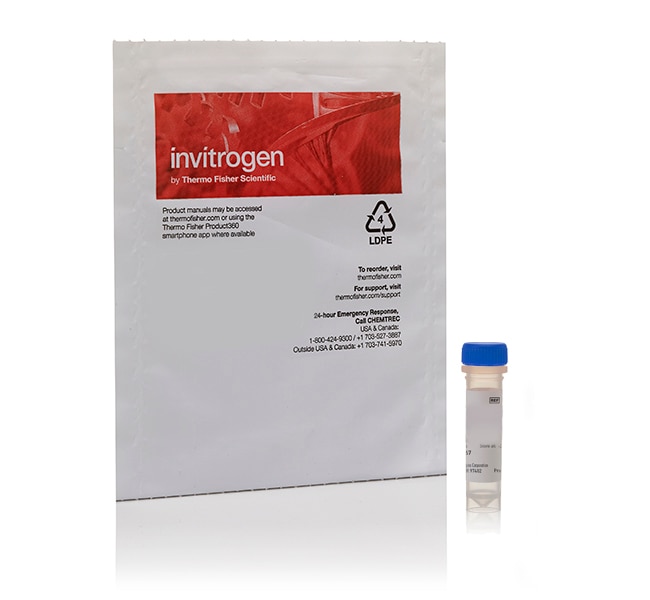
Cholera Toxin Subunit B (Recombinant) Conjugate
Recombinant cholera toxin B subunit (CT-B) conjugates bind with high affinity to GM1 ganglioside and support neuronal tracing, GM1 labeling, membrane trafficking, and membrane organization studies. Choose from Alexa Fluor™ 488, 555, 594, and 647 fluorescent conjugates, Biotin-XX, or horseradish peroxidase (HRP) to match your detection workflow.
Have Questions?
Change view

| Catalog Number | Conjugate | Quantity |
|---|---|---|
| C22842 | Alexa Fluor 594 | 500 μg |
| C22841 | Alexa Fluor 488 | 500 μg |
| C34776 | Alexa Fluor 555 | 100 μg |
| C22843 | Alexa Fluor 555 | 500 μg |
| C34777 | Alexa Fluor 594 | 100 μg |
| C34778 | Alexa Fluor 647 | 100 μg |
| C34779 | Biotin | 100 μg |
| C34780 also known as C-34780 | HRP (Horseradish Peroxidase) | 100 μg |
Catalog number C22842
Price (USD)
998.00
Each
Conjugate:
Alexa Fluor 594
Quantity:
500 μg
Price (USD)
998.00
Each
Recombinant cholera toxin B conjugates for GM1 labeling and neuronal tracing
Cholera toxin B subunit (CT-B) binds with high affinity to GM1 ganglioside on the cell surface and is widely used for neuronal tracing, GM1 labeling, endocytosis, and membrane trafficking studies. At neutral pH, CT-B forms a pentamer with multiple GM1-binding sites, enabling multivalent interactions with GM1-containing membranes.
These conjugates are made using recombinant cholera toxin B subunit without the enzymatically active A subunit of native cholera toxin.
Why use recombinant cholera toxin B conjugates?
- Label GM1 ganglioside: Use the high-affinity interaction between CT-B and GM1 to visualize and detect GM1-associated membrane structures.
- Trace neuronal projections: Use CT-B for well-established retrograde labeling of neuronal pathways.
- Study membrane trafficking: Follow CT-B/GM1 internalization and retrograde trafficking through endosomal pathways.
- Investigate membrane organization: Label GM1 and examine GM1-associated membrane domains in lipid raft-related studies.
- Use recombinant B subunit: Study GM1 binding and trafficking with CT-B lacking the enzymatically active A subunit of native cholera toxin.
- Choose multiple detection formats: Select fluorescent Alexa Fluor™ conjugates, Biotin-XX, or HRP to match fluorescence, affinity-based, or enzyme-based detection workflows.
Choose a CT-B conjugate for your detection workflow
Select from Alexa Fluor™ 488, 555, 594, and 647 CT-B conjugates for fluorescence imaging, Biotin-XX for avidin- or streptavidin-based detection, or HRP for enzyme-based detection.
Why choose from multiple conjugates?
- Match your imaging system: Select an Alexa Fluor™ conjugate compatible with available excitation sources, emission filters, and detectors.
- Support multicolor imaging: Choose spectrally distinct Alexa Fluor™ dyes for use with other fluorescent probes, antibodies, and cellular markers.
- Enable affinity-based detection: Use Biotin-XX conjugates with avidin- or streptavidin-based detection workflows.
- Enable enzyme-based detection: Use HRP conjugates for chromogenic or chemiluminescent detection workflows.
- Use one GM1-binding probe across workflows: Apply recombinant CT-B with different labels while maintaining the same GM1-binding biological probe.
Applications of cholera toxin B conjugates
Cholera toxin B conjugates are versatile probes for neuronal tracing, GM1 ganglioside labeling, endocytosis, and membrane trafficking studies.
Use CT-B conjugates to:
- Perform neuronal tracing, including widely used retrograde labeling of neuronal projections
- Label GM1 ganglioside on cell membranes
- Visualize GM1-associated membrane domains in lipid raft-related studies
- Study CT-B/GM1 internalization and retrograde trafficking through endosomal pathways
- Perform fluorescence imaging with Alexa Fluor™ 488, 555, 594, or 647 conjugates
- Perform avidin- or streptavidin-based detection with Biotin-XX conjugates
- Perform enzyme-based detection with HRP conjugates
For Research Use Only. Not for use in diagnostic procedures.
For Research Use Only. Not for use in diagnostic procedures.
Specifications
Label TypeAlexa Fluor Dyes
Product LineAlexa Fluor
Protein FormRecombinant
Protein SubtypeCholera Toxin
Quantity500 μg
Shipping ConditionRoom Temperature
ConjugateAlexa Fluor 594
FormLyophilized
RecombinantRecombinant
Unit SizeEach
Contents & Storage
Store in freezer (-5 to -30°C) and protect from light.
Citations & References (35)
Citations & References
Abstract
Chondrocytes utilize a cholesterol-dependent lipid translocator to externalize phosphatidylserine.
Journal:Biochemistry
PubMed ID:16519527
'During endochondral ossification, growth plate chondrocytes release plasma membrane (PM) derived matrix vesicles (MV), which are the site of initial hydroxyapatite crystal formation. MV constituents which facilitate the mineralization process include the integral membrane ectoenzymes alkaline phosphatase (ALPase) and nucleotide pyrophosphatase phosphodiesterase (NPP1/PC-1), along with a phosphatidylserine- (PS-) rich membrane
Inhibition of caveolar uptake, SV40 infection, and beta1-integrin signaling by a nonnatural glycosphingolipid stereoisomer.
Journal:J Cell Biol
PubMed ID:17371832
'Caveolar endocytosis is an important mechanism for the uptake of certain pathogens and toxins and also plays a role in the internalization of some plasma membrane (PM) lipids and proteins. However, the regulation of caveolar endocytosis is not well understood. We previously demonstrated that caveolar endocytosis and beta1-integrin signaling are
Gbetagamma activation of Src induces caveolae-mediated endocytosis in endothelial cells.
Journal:J Biol Chem
PubMed ID:15345719
'Caveolae-mediated endocytosis in endothelial cells is stimulated by the binding of albumin to gp60, a specific albumin-binding protein localized in caveolae. The activation of gp60 induces its cell surface clustering and association with caveolin-1, the caveolar-scaffolding protein. This interaction leads to G(i)-induced Src kinase activation, which in turn signals dynamin-2-mediated
Plasticity of B cell receptor internalization upon conditional depletion of clathrin.
Journal:Mol Biol Cell
PubMed ID:15716350
'B cell antigen receptor (BCR) association with lipid rafts, the actin cytoskeleton, and clathrin-coated pits influences B cell signaling and antigen presentation. Although all three cellular structures have been separately implicated in BCR internalization, the relationship between them has not been clearly defined. In this study, internalization pathways were characterized
Condensed complexes, rafts, and the chemical activity of cholesterol in membranes.
Journal:Proc Natl Acad Sci U S A
PubMed ID:11050164
'Epifluorescence microscopy studies of mixtures of phospholipids and cholesterol at the air-water interface often exhibit coexisting liquid phases. The properties of these liquids point to the formation of "condensed complexes" between cholesterol and certain phospholipids, such as sphingomyelin. It is found that monolayers that form complexes can incorporate a low