Search




Citations & References (1)
Gibco™
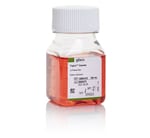
TrypLE™ Express Enzyme (1X), phenol red

接着哺乳類細胞をプラスチックから解離させるための動物トリプシンに代わる組換え酵素。TrypLE™ Expressは、 TrypLE™ Selectで見られる酵素と同じものになりますが、生産規模をより経済的なものにして製造されています。TrypLE™ Expressは冷蔵で保存することができます。また室温でも6ヶ月間安定です詳細を見る


製品番号(カタログ番号) 12605010
価格(JPY)
5,400
Each
数量:
100 mL
接着哺乳類細胞をプラスチックから解離させるための動物トリプシンに代わる組換え酵素。TrypLE™ Expressは、 TrypLE™ Selectで見られる酵素と同じものになりますが、生産規模をより経済的なものにして製造されています。TrypLE™ Expressは冷蔵で保存することができます。また室温でも6ヶ月間安定です。 TrypLE™ Expressは幅広い細胞に作用し、トリプシンのプロトコルを変更する必要はありません。TrypLE™ ExpressはPBS-EDTA バッファーの1X濃度で提供され、フェノールレッドを含有しています。
研究目的またはさらに発展した細胞培養を利用した製造目的での使用。
研究目的またはさらに発展した細胞培養を利用した製造目的での使用。
研究用途にのみご使用ください。診断目的には使用できません。
仕様
細胞タイプMammalian Cells
キレート剤EDTA
濃度1 X
培養タイプAdherent Cell Culture
グリーン機能ACT Ecolabel (Silver)
浸透圧Check and Record
製品ラインGibco
数量100 mL
備考Room Temperature Stable
品質保持期間24 Months
出荷条件Room Temperature
電子線源Animal origin-free
試験済みIn vitro Bioassay
分類Animal Origin-free
形状Liquid
製品タイプCell Culture Dissociation Reagent
無菌性Sterile-filtered
添加剤ありPhenol Red, EDTA
Unit SizeEach
組成および保存条件
Storage conditions: 15°C to 30°C, protect from light
Alternate storage conditions: 2°C to 8°C or -5°C to -20°C
Shipping conditions: Room temperature
Shelf life: 24 months from date of manufacture
Alternate storage conditions: 2°C to 8°C or -5°C to -20°C
Shipping conditions: Room temperature
Shelf life: 24 months from date of manufacture
よくあるご質問(FAQ)
How can I assess residual TrypLE reagent remaining after my downstream processing steps?
What enzymes do you recommend for passaging mesenchymal stem cells (MSC)?
Does TrypLE Express Enzyme have a His-tag?
Is there an upper limit for the amount of time cells can be incubated with TrypLE Express Enzyme, TrypLE Select Enzyme, or CTS TrypLE Select Enzyme for dissociation?
For your TrypLE products, how does the enzyme get inactivated?
引用および参考文献 (1)
引用および参考文献
Abstract
A simple tool to improve pluripotent stem cell differentiation.
Journal:Nat Methods
PubMed ID:23584186
We describe a method to help overcome restrictions on the differentiation propensities of human pluripotent stem cells. Culturing pluripotent stem cells in dimethylsulfoxide (DMSO) activates the retinoblastoma protein, increases the proportion of cells in the early G1 phase of the cell cycle and, in more than 25 embryonic and induced