Search

Thermo Scientific™
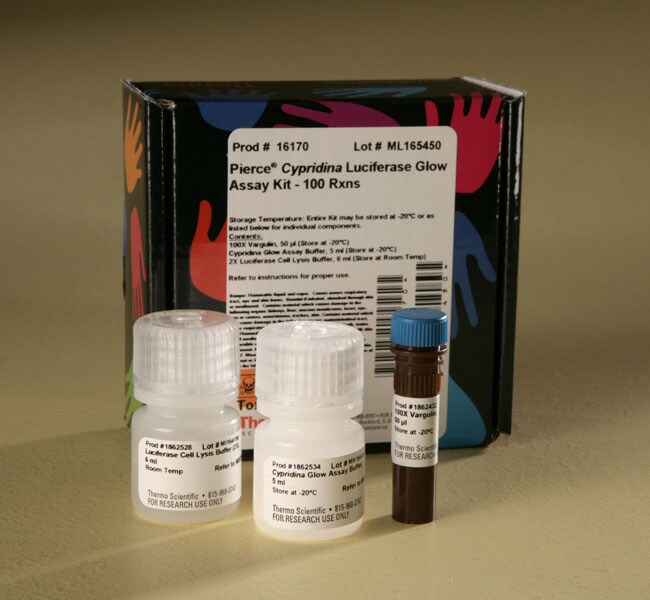
Pierce™ Cypridina Luciferase Glow Assay Kit
Thermo Scientific Pierce Cypridina Luciferase Glow Assay Kitは、ウミホタルルシフェラーゼレポーターの存在下で、非常に強い詳細を見る


製品番号(カタログ番号) 16170
価格(JPY)
14,700
キャンペーン価格
Ends: 25-Sep-2026
24,500割引額 9,800 (40%)
Each
数量:
100反応キット
Thermo Scientific Pierce Cypridina Luciferase Glow Assay Kitは、ウミホタルルシフェラーゼレポーターの存在下で、非常に強い、安定した生物発光シグナル(半減期は1時間以上)を生成します。
Cypridina Luciferase Glow Assay Kitの特長:
•高感度—ウミホタルルシフェラーゼ活性を高感度に検出
• 分泌型ルシフェラーゼ—細胞を破壊することなく、リアルタイムアッセイおよびカイネティック解析が可能
• 安定—試薬はフラッシュアッセイより高いシグナル安定性を実現
• シンプル—インジェクター搭載型ルミノメーターは不要
• 適合性 — アッセイ試薬は他のウミホタルルシフェラーゼと適合
• 自動化対応—ハイスループットアッセイに適合
• 便利—汎用細胞溶解バッファーと最適化済みグローアッセイ試薬を同梱
• 安全—非放射性アッセイを実現
このPierce Luciferase Glow Assay Kitには、哺乳類細胞培養培地およびライセート中のウミホタルルシフェラーゼの活性を測定するための試薬が含まれます。このキットをhermo Scientific Cypridina Luc Vectorsと併用すると、ルシフェラーゼ活性の分泌検出または細胞内検出を行うための、非常に高感度の生物発光レポーターアッセイ系を確立できます。ルシフェラーゼ反応によって生成された発光シグナルは、産生されたルシフェラーゼタンパク質量と相関し、ルシフェラーゼ発現を誘導するプロモーターの活性に比例します。このキットは、Vargulinを基質として使用するあらゆるウミホタルルシフェラーゼ、または誘導体の活性の検出に使用できます。
内容:
細胞溶解バッファー、反応バッファー、および基質
必要なもの:
ウミホタルルシフェラーゼ、およびルミノメーター、または発光モニタリングが可能な他の機器(Thermo Scientific Luminoskan AscentやVarioskan Flashマイクロプレートリーダーなど)
アプリケーション:
• cis調節因子およびtrans作用因子を解析するためのプロモーター研究
• 薬物スクリーニング
• siRNAおよびmiRNAのスクリーニング
• オフターゲット効果を研究するマルチプレックスアッセイ
• 分泌経路/タンパク質局在レポーターアッセイ
• シグナル伝達経路解析
• RNAスプライシング研究
ウミホタルルシフェラーゼは、海生貝虫であるCypridina noctilucaに由来する61 kDaのタンパク質です。ウミホタルルシフェラーゼが細胞培養培地に高濃度で分泌されるため、生細胞のレポーター活性モニタリングを可能にします。ルミノメーターで捕捉した発光シグナルは、産生されたウミホタルルシフェラーゼタンパク質量と相関し、ウミホタル遺伝子発現を誘導するプロモーター活性の測定に用いることができます。Thermo Scientific Cypridina Luc Vectorsのウミホタル遺伝子は、哺乳類細胞内での発現用に改変されており、アッセイキットとともに使用することで最適な性能を発揮します。ウミホタルグロー試薬は、グロータイプのカイネティクスによるウミホタルルシフェラーゼ反応を生じます。インジェクター非搭載型ルミノメーターや、サンプルのバッチ処理が必要なアプリケーションに推奨されます。
Cypridina Luciferase Glow Assay Kitの特長:
•高感度—ウミホタルルシフェラーゼ活性を高感度に検出
• 分泌型ルシフェラーゼ—細胞を破壊することなく、リアルタイムアッセイおよびカイネティック解析が可能
• 安定—試薬はフラッシュアッセイより高いシグナル安定性を実現
• シンプル—インジェクター搭載型ルミノメーターは不要
• 適合性 — アッセイ試薬は他のウミホタルルシフェラーゼと適合
• 自動化対応—ハイスループットアッセイに適合
• 便利—汎用細胞溶解バッファーと最適化済みグローアッセイ試薬を同梱
• 安全—非放射性アッセイを実現
このPierce Luciferase Glow Assay Kitには、哺乳類細胞培養培地およびライセート中のウミホタルルシフェラーゼの活性を測定するための試薬が含まれます。このキットをhermo Scientific Cypridina Luc Vectorsと併用すると、ルシフェラーゼ活性の分泌検出または細胞内検出を行うための、非常に高感度の生物発光レポーターアッセイ系を確立できます。ルシフェラーゼ反応によって生成された発光シグナルは、産生されたルシフェラーゼタンパク質量と相関し、ルシフェラーゼ発現を誘導するプロモーターの活性に比例します。このキットは、Vargulinを基質として使用するあらゆるウミホタルルシフェラーゼ、または誘導体の活性の検出に使用できます。
内容:
細胞溶解バッファー、反応バッファー、および基質
必要なもの:
ウミホタルルシフェラーゼ、およびルミノメーター、または発光モニタリングが可能な他の機器(Thermo Scientific Luminoskan AscentやVarioskan Flashマイクロプレートリーダーなど)
アプリケーション:
• cis調節因子およびtrans作用因子を解析するためのプロモーター研究
• 薬物スクリーニング
• siRNAおよびmiRNAのスクリーニング
• オフターゲット効果を研究するマルチプレックスアッセイ
• 分泌経路/タンパク質局在レポーターアッセイ
• シグナル伝達経路解析
• RNAスプライシング研究
ウミホタルルシフェラーゼは、海生貝虫であるCypridina noctilucaに由来する61 kDaのタンパク質です。ウミホタルルシフェラーゼが細胞培養培地に高濃度で分泌されるため、生細胞のレポーター活性モニタリングを可能にします。ルミノメーターで捕捉した発光シグナルは、産生されたウミホタルルシフェラーゼタンパク質量と相関し、ウミホタル遺伝子発現を誘導するプロモーター活性の測定に用いることができます。Thermo Scientific Cypridina Luc Vectorsのウミホタル遺伝子は、哺乳類細胞内での発現用に改変されており、アッセイキットとともに使用することで最適な性能を発揮します。ウミホタルグロー試薬は、グロータイプのカイネティクスによるウミホタルルシフェラーゼ反応を生じます。インジェクター非搭載型ルミノメーターや、サンプルのバッチ処理が必要なアプリケーションに推奨されます。
研究用途にのみご使用ください。診断目的には使用できません。
仕様
アッセイレポーター酵素、ルシフェラーゼレポーターアッセイ
適合する細胞哺乳類細胞
検出法バイオ発光
使用対象 (装置)ルミノメーター(マイクロプレート)
フォーマット384ウェルプレート、96ウェルプレート
標識タイプ酵素標識
製品ラインPierce
数量100反応キット
基質Vargulin(ウミホタルルシフェリン)
基質特性化学基質
基質タイプルシフェラーゼ基質
ターゲットルシフェラーゼ、ウミホタルルシフェラーゼ
技術高度化学発光性
タイプアッセイキット
Unit SizeEach
組成および保存条件
• ウミホタルグローアッセイバッファー、5 mL、4°C保存
• Vargulin (1X)、5 μL
-20°C保存• 2X Cell Lysis Buffer、6 mL、室温保存
キットを受け取り後-20°Cで保存、または各試薬を個別に指定温度で保存。
• Vargulin (1X)、5 μL
-20°C保存• 2X Cell Lysis Buffer、6 mL、室温保存
キットを受け取り後-20°Cで保存、または各試薬を個別に指定温度で保存。