Search

Thermo Scientific™
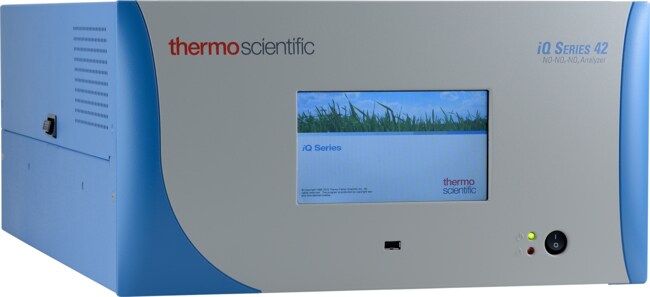
42iQ (NO-NO2-NOx) 分析装置
42iQ NO-NO2-NOx 分析装置は、化学蛍光技術を利用して、排出源の窒素酸化物を従来と同等の性能レベルで測定します。
| 製品番号(カタログ番号) | 検出限界 |
|---|---|
| 42IQ | 0.40 ppm (平均化時間 60 秒) |
製品番号(カタログ番号) 42IQ
価格(JPY)
-
検出限界:
0.40 ppm (平均化時間 60 秒)
Thermo Scientific™ iQ シリーズガス分析装置を使うと、分析装置の情報に 24 時間 365 日アクセスできます。iQ シリーズガス分析装置は、使い込むにつれてよりスマートに機能するよう設計されております。高精度でタフなソリューションによりトラブルシューティングにかかる時間を最短に抑えます。Thermo Scientific™ 42iQ NO-NO2-NOx 分析装置は、化学蛍光技術を利用して、排出源の窒素酸化物 (NO-NO2-NOx) を従来と同等の性能レベルで測定します。
不具合を予測して未然に防ぐ、iQ シリーズガス分析装置のインテリジェンスをご確認ください。 当社の次世代ガス分析装置プラットフォームには、以下が装備されています。
予知診断
改善された保守性とプラグアンドプレイのコンポーネントを備え、不具合が発生する前に未然に対処します。極めて高い精度でタフなソリューションには、革新的で交換可能な DMC モジュールが備えられ、分析装置の情報に 24 時間 365 日アクセスして、トラブルシューティングにかかる時間を最短に抑えます。
Proactive Communications
iQ360 と E メール通知を通じて、最適な性能を維持します。iQ360 サービスに登録すると、アラームの作動時に、当社のテクニカルサポートチームに機器から直接連絡が入ります。当社のテクニカルサポートチームが修正計画を作成して、お客様側の担当者に E メールでお知らせします。iQ シリーズガス分析装置を導入すると、不測の事態を排除し、一日の作業を的確に管理できます。
パーソナルデバイスの接続
iQ コンパニオンモバイルアプリを使うと、リアルタイムの連続リモートモニタリングが実現します。iQ アプリを使うと、iQ ガス分析装置をリモートモニタリングしたり、簡便な方法で当社に連絡したり、メンテナンス通知と製品文書に容易にアクセスしたりできるようになります。
仕様
認証/コンプライアンスCE、TUV-SUD 安全性、EPA、EN15267-2 (申請中)
通信ポートSerial ports:
1 RS-232/485 port
1 RS-485 external accessory port
Other ports:
3 Full speed USB ports (one in front, two in rear)
1 Gigabit ethernet port
1 RS-232/485 port
1 RS-485 external accessory port
Other ports:
3 Full speed USB ports (one in front, two in rear)
1 Gigabit ethernet port
奥行き(ヤードポンド法)24 インチ
奥行き(メートル法)609 mm
概要42iQ (NO-NO2-NOx) 分析装置
電気的要件100 ~ 240 VAC、50/60 Hz、275 W
高さ(ヤードポンド法)8.72 インチ
高さ(メートル法)221.48 mm
測定範囲Preset: 0-0.05, 0.1, 0.2, 0.5, 1, 2, 5, 10, 20 ppm
0-0.1, 0.2, 0.5, 1, 2, 5, 10, 20, 50 mg/m3; Extended Ranges: 0-100ppm; 0-150 mg/m^3
Custom Ranges: 0-20ppm; 0-30 mg/m^3
0-0.1, 0.2, 0.5, 1, 2, 5, 10, 20, 50 mg/m3; Extended Ranges: 0-100ppm; 0-150 mg/m^3
Custom Ranges: 0-20ppm; 0-30 mg/m^3
出力6 Isolated analog voltages outputs, with 4 selectable ranges
6 Isolated analog current outputs, with 2 selectable ranges
6 Isolated analog current outputs, with 2 selectable ranges
精度+/-0.4 ppb (500 ppb range)
スパンドリフト±1% full scale (24 hr.)
温度(華氏)動作32°F to 104°F
重量 (ヤードポンド法)40 ポンド
重量(メートル法)18 kg
幅(ヤードポンド法)16.75 ポンド
幅(メートル法)425.45 mm
ゼロドリフト<0.40 ppm (24 時間)
検出限界0.40 ppm (平均化時間 60 秒)
流速0.6 ~ 0.8 L/分
入力16 Digital Inputs (TTL), 4 Isolated Voltage Inputs 0 to 10 V
直線性フルスケールの +/-1%
反応時間40 秒 (平均化時間 10 秒)
80 秒 (平均化時間 60 秒)
300 秒 (平均化時間 300 秒)
80 秒 (平均化時間 60 秒)
300 秒 (平均化時間 300 秒)
温度(摂氏)動作0 ~ 40 ℃
ゼロノイズ0.20 ppb RMS (平均化時間 60 秒)
Unit SizeEach