Search


Citations & References (3)
Invitrogen™
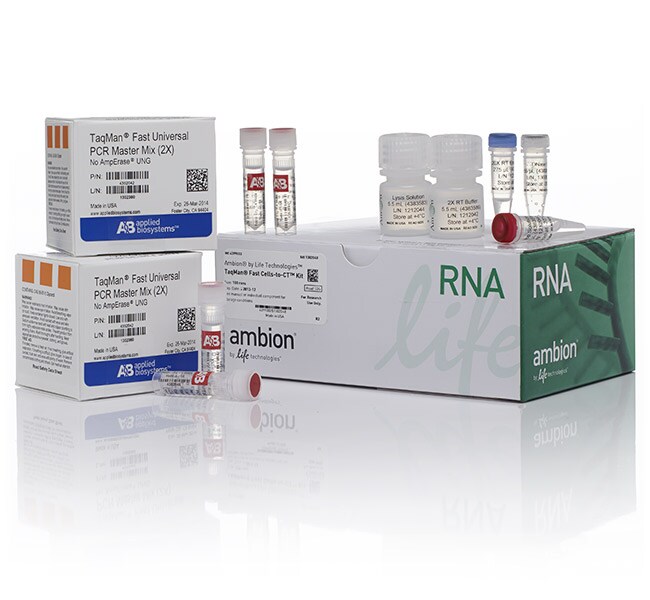
TaqMan™ Fast Cells-to-CT™ Kit
TaqMan™ Fast Cells-to-CT™キットで高速サイクリング、リアルタイムPCRケミストリー、および機器を使用して、RNAを精製することなく、培養細胞から直接遺伝子発現解析を実施できます。TaqMan™ Fast Cells-to-CTキットの特長:•詳細を見る
| 製品番号(カタログ番号) | 数量 |
|---|---|
| 4399003 | 100 reactions |
製品番号(カタログ番号) 4399003
価格(JPY)
227,000
Each
数量:
100 reactions
TaqMan™ Fast Cells-to-CT™キットで高速サイクリング、リアルタイムPCRケミストリー、および機器を使用して、RNAを精製することなく、培養細胞から直接遺伝子発現解析を実施できます。
TaqMan™ Fast Cells-to-CTキットの特長:
• 完全性—最適化されたワークフローには、gDNA除去、RT酵素ミックス、RTバッファー、およびTaqMan™高速ユニバーサルPCRマスターミックスを含む細胞溶解試薬が含まれます
• 高速—DNase処理を含め、室温にて7分間以内でサンプルを調製できます。TaqMan™高速ユニバーサルPCRマスターミックスでは約35分で、リアルタイムPCRの結果が得られます
• 使いやすい—チューブまたは、96ウェル/384ウェル培養プレートで直接サンプルを溶解します
• 安定性—1サンプルあたり10~100,000個の細胞で遺伝子発現解析が可能であり、結果は精製RNAを使用した場合と同等です
• 効率的—100の初期サンプルから500のリアルタイムPCR結果を生成するのに十分な試薬量
完全で検証済みのソリューション
TaqMan™ Cells-to-CT™テクノロジーはゲノムDNA(gDNA)を除去し、RNAの完全性を維持しながら培養細胞を溶解する独自の方法を特徴とする検証済みのソリューションです。さらに、このキットには、高速リアルタイムPCR分析用の逆転写(RT)試薬およびTaqMan™高速ユニバーサルPCRマスターミックスが含まれ、ゴールドスタンダードのTaqMan™遺伝子発現アッセイ(別売)で広範に試験および検証されています。すべてのキットコンポーネントは、一貫した信頼性の高い性能を実現するように最適化されており、サンプル調製、逆転写、および高速リアルタイムPCR用の個別キットの組み立てに伴う推測に頼る作業を不要にします。
高速で実行しやすいワークフロー
TaqMan™高速Cells-to-C T™キットには、7分間のシンプルなサンプル調製手順(図を参照)が付属し、96ウェルまたは384ウェル培養プレートまたはチューブ内で直接10~100,000個の培養細胞サンプルに対応しています。細胞をPBSで洗浄後、室温で5分間溶解します。同時にDNase処理も実施可能です。溶解は室温にて停止液を用い、2分間のインキュベーションで終了します。このキットは、時間と労力を要する従来のプロセスを大幅に簡素化し、7分に短縮します。
キットのライセートは、キットに含まれる最適化されたRTシステムにより、逆転写に使用できる状態になっています。以後の分析に向けて保存する場合、-20℃で最大5カ月まで可能です。付属のTaqMan™高速ユニバーサルPCRマスターミックスでは、標準的なPCR試薬および機器の約3倍の速度で、高感度かつ再現性のある結果が得られます。迅速かつシンプルなサンプル調製と、高速サイクリングによるリアルタイムPCRの結果(約35分)を組み合わせることで、従来よりも迅速に遺伝子ターゲットを定量できます。TaqMan™高速Cells-to-CT™キットのワークフローは、従来のRNA精製や標準的なリアルタイムPCRと比較して、サンプルから結果までの時間を40%以上短縮します。
確実で高感度かつ高信頼度の結果
さまざまな発現レベルの遺伝子に対する広域のサンプルインプットにわたっての正確な遺伝子発現解析が、従来の研究者にとって課題となっていました。そのため、少数または多数の細胞からRNAをプロファイリングするには堅固なソリューションが重要です。図は、TaqMan™高速Cells-to-CT™キットのライセートを使用して、5 logにわたる細胞インプット(1溶解反応あたり10~105の細胞)で観察された、高度なシグナル線形性(R2 = 0.997)の実例を示しています(図を参照)。このように、データの完全性を損なうPCR阻害剤の影響を回避し、限定的または高密度のサンプル中の遺伝子発現解析に単一のキットを使用できます。
TaqMan™高速Cells-to-CT™キットを使用した細胞ライセートのPCR性能は、提供されているTaqMan™高速ユニバーサルPCRマスターミックスを使用した精製RNAで得られた場合と同等でした(図を参照)。TaqMan™ Cells-to-CT™キットライセートおよび精製RNAは、5 logの細胞インプット量に相当する範囲で直線的に検出されることが示されました。TaqMan™ Fast Cells-to-CT™キットライセートは、精製RNAと比較して10細胞のインプットで感度が向上しており、同じRTおよびPCR試薬を用いることで、調製中に標的分子をより効率的に保持することが可能です。これにより、サンプルの転写や加熱に伴う典型的なRNAの損失がなくなります。
TaqMan™ Fast Cells-to-CT™キットは、逆転写された精製RNAや他社のQ’s RTおよび迅速マスターミックスで増幅されたPCRと比べて、さらに優れた性能を備えることが明らかにされています。高速サイクリングによる他社のQ’s試薬を使用したダイナミックレンジは、102~105の細胞数相当であるか、TaqMan™ Cells-to-CT™キットライセートまたはTaqMan™ Fast Universal PCRマスターミックスで増幅した精製RNAの1 log未満でした(図を参照)。TaqMan™ Fast Universal PCRマスターミックスは、標準的な試薬および機器で可能な限り迅速に高感度で再現性のある結果が得られるように調製されており、幅広いターゲット遺伝子および濃度にわたり頑強性を備えています。
TaqMan™ Fast Cells-to-CTキットの特長:
• 完全性—最適化されたワークフローには、gDNA除去、RT酵素ミックス、RTバッファー、およびTaqMan™高速ユニバーサルPCRマスターミックスを含む細胞溶解試薬が含まれます
• 高速—DNase処理を含め、室温にて7分間以内でサンプルを調製できます。TaqMan™高速ユニバーサルPCRマスターミックスでは約35分で、リアルタイムPCRの結果が得られます
• 使いやすい—チューブまたは、96ウェル/384ウェル培養プレートで直接サンプルを溶解します
• 安定性—1サンプルあたり10~100,000個の細胞で遺伝子発現解析が可能であり、結果は精製RNAを使用した場合と同等です
• 効率的—100の初期サンプルから500のリアルタイムPCR結果を生成するのに十分な試薬量
完全で検証済みのソリューション
TaqMan™ Cells-to-CT™テクノロジーはゲノムDNA(gDNA)を除去し、RNAの完全性を維持しながら培養細胞を溶解する独自の方法を特徴とする検証済みのソリューションです。さらに、このキットには、高速リアルタイムPCR分析用の逆転写(RT)試薬およびTaqMan™高速ユニバーサルPCRマスターミックスが含まれ、ゴールドスタンダードのTaqMan™遺伝子発現アッセイ(別売)で広範に試験および検証されています。すべてのキットコンポーネントは、一貫した信頼性の高い性能を実現するように最適化されており、サンプル調製、逆転写、および高速リアルタイムPCR用の個別キットの組み立てに伴う推測に頼る作業を不要にします。
高速で実行しやすいワークフロー
TaqMan™高速Cells-to-C T™キットには、7分間のシンプルなサンプル調製手順(図を参照)が付属し、96ウェルまたは384ウェル培養プレートまたはチューブ内で直接10~100,000個の培養細胞サンプルに対応しています。細胞をPBSで洗浄後、室温で5分間溶解します。同時にDNase処理も実施可能です。溶解は室温にて停止液を用い、2分間のインキュベーションで終了します。このキットは、時間と労力を要する従来のプロセスを大幅に簡素化し、7分に短縮します。
キットのライセートは、キットに含まれる最適化されたRTシステムにより、逆転写に使用できる状態になっています。以後の分析に向けて保存する場合、-20℃で最大5カ月まで可能です。付属のTaqMan™高速ユニバーサルPCRマスターミックスでは、標準的なPCR試薬および機器の約3倍の速度で、高感度かつ再現性のある結果が得られます。迅速かつシンプルなサンプル調製と、高速サイクリングによるリアルタイムPCRの結果(約35分)を組み合わせることで、従来よりも迅速に遺伝子ターゲットを定量できます。TaqMan™高速Cells-to-CT™キットのワークフローは、従来のRNA精製や標準的なリアルタイムPCRと比較して、サンプルから結果までの時間を40%以上短縮します。
確実で高感度かつ高信頼度の結果
さまざまな発現レベルの遺伝子に対する広域のサンプルインプットにわたっての正確な遺伝子発現解析が、従来の研究者にとって課題となっていました。そのため、少数または多数の細胞からRNAをプロファイリングするには堅固なソリューションが重要です。図は、TaqMan™高速Cells-to-CT™キットのライセートを使用して、5 logにわたる細胞インプット(1溶解反応あたり10~105の細胞)で観察された、高度なシグナル線形性(R2 = 0.997)の実例を示しています(図を参照)。このように、データの完全性を損なうPCR阻害剤の影響を回避し、限定的または高密度のサンプル中の遺伝子発現解析に単一のキットを使用できます。
TaqMan™高速Cells-to-CT™キットを使用した細胞ライセートのPCR性能は、提供されているTaqMan™高速ユニバーサルPCRマスターミックスを使用した精製RNAで得られた場合と同等でした(図を参照)。TaqMan™ Cells-to-CT™キットライセートおよび精製RNAは、5 logの細胞インプット量に相当する範囲で直線的に検出されることが示されました。TaqMan™ Fast Cells-to-CT™キットライセートは、精製RNAと比較して10細胞のインプットで感度が向上しており、同じRTおよびPCR試薬を用いることで、調製中に標的分子をより効率的に保持することが可能です。これにより、サンプルの転写や加熱に伴う典型的なRNAの損失がなくなります。
TaqMan™ Fast Cells-to-CT™キットは、逆転写された精製RNAや他社のQ’s RTおよび迅速マスターミックスで増幅されたPCRと比べて、さらに優れた性能を備えることが明らかにされています。高速サイクリングによる他社のQ’s試薬を使用したダイナミックレンジは、102~105の細胞数相当であるか、TaqMan™ Cells-to-CT™キットライセートまたはTaqMan™ Fast Universal PCRマスターミックスで増幅した精製RNAの1 log未満でした(図を参照)。TaqMan™ Fast Universal PCRマスターミックスは、標準的な試薬および機器で可能な限り迅速に高感度で再現性のある結果が得られるように調製されており、幅広いターゲット遺伝子および濃度にわたり頑強性を備えています。
研究用にのみ使用できます。診断用には使用いただけません。
仕様
使用対象 (装置)7500高速システム、7900HT高速システム、StepOne™、高速モード、StepOnePlus™、高速モード
フォーマットチューブ
反応数100反応
受動的参照色素ROX(プレミックス)
ポリメラーゼAmpliTaq DNAポリメラーゼ
製品ラインAmbion、Cells-to-CT、TaqMan
製品タイプ高速Cells-to-Cキット
数量100 reactions
逆転写酵素M-MLV
サンプルタイプ細胞
出荷条件ドライアイス
対応可能対象100反応
検出法プライマープローブ検出
使用対象(アプリケーション)遺伝子発現解析
GC-Rich PCR Performance低
PCR法2ステップRT-qPCR
反応速度高速
Unit SizeEach
組成および保存条件
内容:
•停止液:500 µLチューブ
• DNase I:55 µLチューブ
• 20X RT酵素ミックス:275 µLチューブ
• 溶解液:5.5 mlボトル
• 2X RTバッファー:5.5 mlボトル
• TaqMan™高速ユニバーサルPCRマスターミックス:4 × 1.25 mLボトル
停止液、DNase I、および20X RT酵素ミックスは、-20℃で保管してください。
溶解液、2X RTバッファー、および TaqMan™高速ユニバーサルPCRマスターミックスは4℃で保管してください。
•停止液:500 µLチューブ
• DNase I:55 µLチューブ
• 20X RT酵素ミックス:275 µLチューブ
• 溶解液:5.5 mlボトル
• 2X RTバッファー:5.5 mlボトル
• TaqMan™高速ユニバーサルPCRマスターミックス:4 × 1.25 mLボトル
停止液、DNase I、および20X RT酵素ミックスは、-20℃で保管してください。
溶解液、2X RTバッファー、および TaqMan™高速ユニバーサルPCRマスターミックスは4℃で保管してください。
よくあるご質問(FAQ)
I'm seeing PCR products in the minus-RT control after performing my Cells-to-CT experiment. What does this mean?
I'm getting PCR products in the no-template PCR control when performing a Cells-to-CT experiment. What could cause this?
I'm getting no PCR product or unexpected PCR products after performing a Cells-to-CT experiment. What could be the cause of this?
I ran out of stop solution for my Cells-to-CT experiment. Can I purchase it separately?
I have genomic DNA contamination in my Cells-to-CT reaction. How do I get rid of it?
引用および参考文献 (3)
引用および参考文献
Abstract
Human cardiac tissue induces transdifferentiation of adult stem cells towards cardiomyocytes.
Journal:Cytotherapy
PubMed ID:20230311
'The goal was to induce the transdifferentiation (or conversion) of human adipose-derived stem cells to cardiomyocytes using an intracellular extract obtained from adult human heart tissue. Human adult stem cells from lipoaspirates were transiently permeabilized, exposed to human atrial extracts and allowed to recover in culture. After 21 days, the
Impairment of peripheral circadian clocks precedes metabolic abnormalities in ob/ob mice.
Journal:Endocrinology
PubMed ID:21285316
'Recent studies have demonstrated relationships between the dysfunction of circadian clocks and the development of metabolic abnormalities, but the chicken-and-egg question remains unresolved. To address this issue, we investigated the cause-effect relationship in obese, diabetic ob/ob mice. Compared with control C57BL/6J mice, the daily mRNA expression profiles of the clock
Using osteoclast differentiation as a model for gene discovery in an undergraduate cell biology laboratory.
Journal:Biochem Mol Biol Educ
PubMed ID:21567867
A key goal of molecular/cell biology/biotechnology is to identify essential genes in virtually every physiological process to uncover basic mechanisms of cell function and to establish potential targets of drug therapy combating human disease. This article describes a semester-long, project-oriented molecular/cellular/biotechnology laboratory providing students, within a framework of bone cell