Search


Citations & References (1)
Invitrogen™
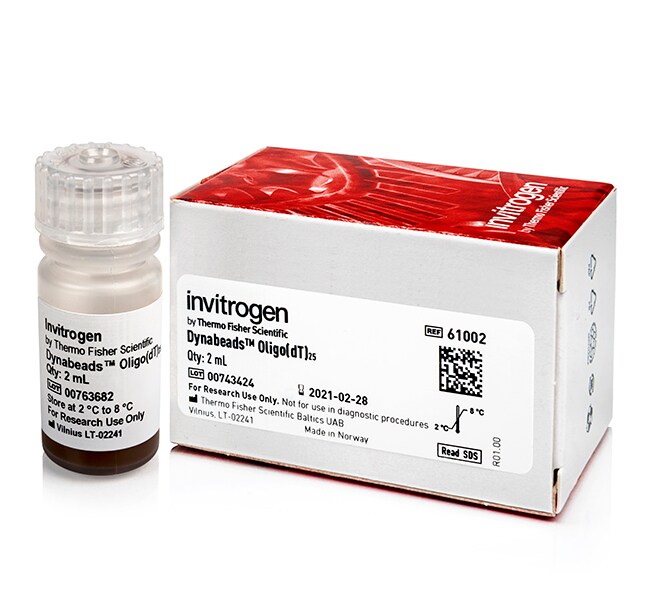
Dynabeads™ Oligo(dT)25
Dynabeads™ Oligo(dT)25 mRNA isolation beads specifically target and capture mRNA molecules from virtually any crude sample and eliminate the need to purify total RNA when the desired information-bearing nucleic acid is mRNA.


製品番号(カタログ番号) 61002
価格(JPY)
-
数量:
2 mL
完全なmRNAトランスクリプトームを15分で分離します。これらのmRNA分離ビーズは、事実上すべての未精製サンプルからmRNA分子を特異的に標的にして捕捉するので、mRNAに目的の情報がある場合に、トータルRNAを精製する必要がありません。細胞のトータルRNA中のmRNAはわずか ∼1-5%であるので、そのためにトータルRNAを単離する必要はあるでしょうか。トータルRNAを精製するために設計されたその他の技術を利用すると精製されたRNAのうち∼80%はリボソームRNAになるので、mRNAに膜への結合において、リボソームRNA、転移RNA、マイクロ RNA、核小体低分子RNAおよび小細胞質RNAとの競合を強いさせます。
DynabeadsオリゴdT 25(ビーズのみ、5 ml):
・高速で穏やかな手順により、純粋でインタクトなmRNAが得られます
・極めて純粋なmRNAの分離ができるので、cDNA合成のアップストリームの最良の選択になります
・極めて高感度のmRNA分離は、超微量の出発サンプルからのcDNA合成およびcDNAライブリーの構築を可能にします (単一細胞からのcDNAライブラリー構築を可能にします)
オリゴdT 25コーティングのDynabeads™は、極めて幅広い種類の未精製の出発サンプルからmRNA トランスクリプトームを特異的に標的にして捕捉します。リボソームRNA、DNA、タンパク質および低RNA分子(転移RNA、マイクロRNAおよび核小体RNAなど)は、ビーズに結合せずに捨て去られます。ポリアデニル化されたRNA(mRNA)のみが捕捉されます。単離されたmRNAは純粋なので、リボソームRNAの除去や抽出後のDNase 処理の必要がありません。
極めて広範なサンプルに利用できるように設計されています:
・精製されたトータルRNA
・細胞、血清、血漿からのウイルス性poly A付加 RNA
・哺乳類、両生類、魚類、および昆虫の組織: 脳、肺、肝臓、腸、心臓、腎臓、下垂体、膵臓、卵巣、筋肉、視床下部、卵子、昆虫のホールボディーなど…
・植物組織: ホールボディー、孔辺細胞(単一細胞)、胚、花、葉、胚珠、根、種子(糊粉、内胚乳)、柱頭など…
・酵母(Sacchromyces cerevisiae)
・未分画核酸サンプル(DNA + トータルRNA)
mRNAはあらゆるダウンストリームのアプリケーションに適しています:
・遺伝子クローニング
・cDNA合成、cDNAライブラリー構築
・RPA - リボヌクレアーゼプロテクションアッセイ
・サブトラクティブハイブリダイゼーション
・プライマーエクステンション
・SAGE、RACE、など...
カラムフリーのシステムにより、トランスクリプトームを最も効率よく回収することを確かにします:
・流動性のある磁性ビーズ上の物理的なmRNAの捕捉
・高速で穏やかな磁石による処理
・遠心中にmRNAを失うことはありません
・溶出中にmRNAのカラム膜へのトラップはありません
cDNAライブラリー構築に用いるmRNAの理想的な精製方法:
・トランスクルプトームの最高の回収率および濃縮率を確保します
・トータルRNAの分離を経て分離する方法で見込まれる量よりも、より多くのトランスクリプトームを捕捉します
さまざまな溶出方法が可能です:
・最小5μlまでのあらゆる量での溶出が可能です
-ダウンストリームでの酵素反応は、 Dynabeadsの存在により阻害されることはありません
-ビーズに直接cDNA合成を行い、再利用可能な固相cDNAライブラリーを作製することができます。
DynabeadsオリゴdT 25(ビーズのみ、5 ml):
・高速で穏やかな手順により、純粋でインタクトなmRNAが得られます
・極めて純粋なmRNAの分離ができるので、cDNA合成のアップストリームの最良の選択になります
・極めて高感度のmRNA分離は、超微量の出発サンプルからのcDNA合成およびcDNAライブリーの構築を可能にします (単一細胞からのcDNAライブラリー構築を可能にします)
オリゴdT 25コーティングのDynabeads™は、極めて幅広い種類の未精製の出発サンプルからmRNA トランスクリプトームを特異的に標的にして捕捉します。リボソームRNA、DNA、タンパク質および低RNA分子(転移RNA、マイクロRNAおよび核小体RNAなど)は、ビーズに結合せずに捨て去られます。ポリアデニル化されたRNA(mRNA)のみが捕捉されます。単離されたmRNAは純粋なので、リボソームRNAの除去や抽出後のDNase 処理の必要がありません。
極めて広範なサンプルに利用できるように設計されています:
・精製されたトータルRNA
・細胞、血清、血漿からのウイルス性poly A付加 RNA
・哺乳類、両生類、魚類、および昆虫の組織: 脳、肺、肝臓、腸、心臓、腎臓、下垂体、膵臓、卵巣、筋肉、視床下部、卵子、昆虫のホールボディーなど…
・植物組織: ホールボディー、孔辺細胞(単一細胞)、胚、花、葉、胚珠、根、種子(糊粉、内胚乳)、柱頭など…
・酵母(Sacchromyces cerevisiae)
・未分画核酸サンプル(DNA + トータルRNA)
mRNAはあらゆるダウンストリームのアプリケーションに適しています:
・遺伝子クローニング
・cDNA合成、cDNAライブラリー構築
・RPA - リボヌクレアーゼプロテクションアッセイ
・サブトラクティブハイブリダイゼーション
・プライマーエクステンション
・SAGE、RACE、など...
カラムフリーのシステムにより、トランスクリプトームを最も効率よく回収することを確かにします:
・流動性のある磁性ビーズ上の物理的なmRNAの捕捉
・高速で穏やかな磁石による処理
・遠心中にmRNAを失うことはありません
・溶出中にmRNAのカラム膜へのトラップはありません
cDNAライブラリー構築に用いるmRNAの理想的な精製方法:
・トランスクルプトームの最高の回収率および濃縮率を確保します
・トータルRNAの分離を経て分離する方法で見込まれる量よりも、より多くのトランスクリプトームを捕捉します
さまざまな溶出方法が可能です:
・最小5μlまでのあらゆる量での溶出が可能です
-ダウンストリームでの酵素反応は、 Dynabeadsの存在により阻害されることはありません
-ビーズに直接cDNA合成を行い、再利用可能な固相cDNAライブラリーを作製することができます。
研究用途にのみご使用ください。診断目的には使用できません。
仕様
使用対象(アプリケーション)RNA Extraction
形状Beads in Suspension
高スループット適合性High-throughput Compatible
リガンドタイプOligo-dT
製品ラインDYNAL, Dynabeads
製品タイプmRNA Isolation Bead
数量2 mL
品質保持期間36 months from date of manufacture
出荷条件Room Temperature
Unit SizeEach
組成および保存条件
Store 2°C to 8°C
2 mL Beads
2 mL Beads
よくあるご質問(FAQ)
I am getting DNA contamination after mRNA isolation using Dynabeads magnetic beads. Why is this?
I am getting rRNA contamination after mRNA isolation using Dynabeads magnetic beads. What should I do?
How long can I leave the isolated mRNA on Dynabeads Oligo(dT)25 magnetic beads?
My Dynabeads magnetic beads are not pelleting well with the magnet. Do you have any suggestions for me?
Can I use Dynabeads Oligo(dT)25 magnetic beads in real-time PCR?
引用および参考文献 (1)
引用および参考文献
Abstract
20 beta-hydroxysteroid dehydrogenase and CYP19A1 are differentially expressed during maturation in Atlantic cod (Gadus morhua).
Journal:J Mol Endocrinol
PubMed ID:17909270
In order to better quantify the molecular mechanisms regulating final oocyte maturation and spawning, complete coding sequences with partially or fully untranslated regions for the steroidogenic enzymes, cytochrome P450 aromatase and 20 beta-hydroxysteroid dehydrogenase, were cloned from ovaries of Atlantic cod (Gadus morhua). The nucleotide and amino acid sequences showed