Search


Citations & References (6)
Gibco™
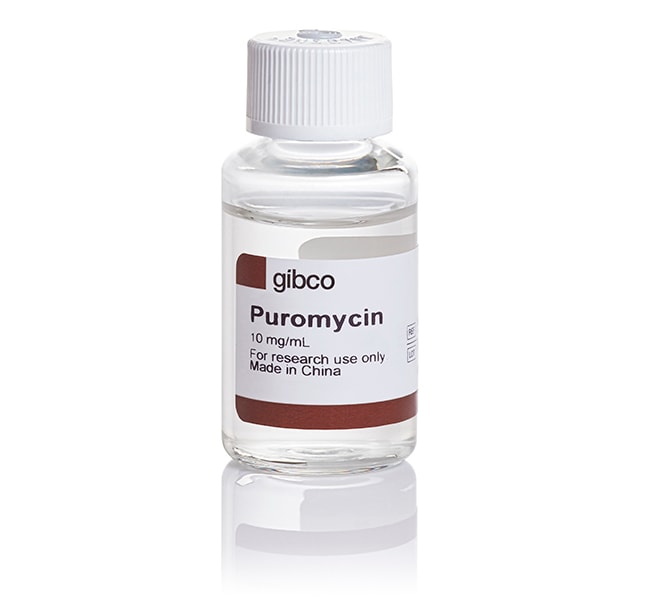
Puromycin Dihydrochloride
ピュロマイシン二塩酸塩は、Streptomyces albonigerによって産生されるアミノヌクレアシド抗生物質です。ピュロマイシンは、原核生物と真核生物の両方のリボソームでペプチジルの転写を阻害することで機能します。pac遺伝子の発現により、耐性がもたらされます。ピュロマイシンは哺乳類細胞培養システムの選択用抗生物質として、細胞生物学で広く使用されています。推奨される使用濃度は0.2~5.0詳細を見る


製品番号(カタログ番号) A1113802
価格(JPY)
93,500
Each
数量:
20 mL
ピュロマイシン二塩酸塩は、Streptomyces albonigerによって産生されるアミノヌクレアシド抗生物質です。ピュロマイシンは、原核生物と真核生物の両方のリボソームでペプチジルの転写を阻害することで機能します。pac遺伝子の発現により、耐性がもたらされます。
ピュロマイシンは哺乳類細胞培養システムの選択用抗生物質として、細胞生物学で広く使用されています。推奨される使用濃度は0.2~5.0 µg/mLですが、真核細胞には、1 µg/mLほどの低濃度でも毒性を示す可能性があります。Gibco™ピュロマイシン二塩酸塩は、20 mMのHEPESバッファー(pH 6.2~6.8)中に濃度10 mg/mLの10バイアルで提供されます(1バイアルは1 mL)。
その他の選択肢と詳細情報
当社は、粉末と液体の両方で幅広い抗生物質および抗真菌剤を提供しています。
詳細なリストを参照するか、以下の用途の各製品をご覧ください。
•汚染防止
• 真核および細菌の選択
選択抗生物質の使用濃度に関する推奨事項をご覧ください。
細胞培養における抗生物質および抗真菌剤の使用の詳細、および培養の汚染除去に関するガイドラインをご覧ください。
ピュロマイシンは哺乳類細胞培養システムの選択用抗生物質として、細胞生物学で広く使用されています。推奨される使用濃度は0.2~5.0 µg/mLですが、真核細胞には、1 µg/mLほどの低濃度でも毒性を示す可能性があります。Gibco™ピュロマイシン二塩酸塩は、20 mMのHEPESバッファー(pH 6.2~6.8)中に濃度10 mg/mLの10バイアルで提供されます(1バイアルは1 mL)。
その他の選択肢と詳細情報
当社は、粉末と液体の両方で幅広い抗生物質および抗真菌剤を提供しています。
詳細なリストを参照するか、以下の用途の各製品をご覧ください。
•汚染防止
• 真核および細菌の選択
選択抗生物質の使用濃度に関する推奨事項をご覧ください。
細胞培養における抗生物質および抗真菌剤の使用の詳細、および培養の汚染除去に関するガイドラインをご覧ください。
研究用にのみ使用できます。診断用には使用いただけません。
仕様
細胞タイプEukaryotic Cells, Prokaryotic Cells
濃度10 mg/mL
培養タイプMammalian Cell Culture, Insect Cell Culture
使用対象(アプリケーション)Eukaryotic Selection⁄Stable Cell Line Generation
製品ラインGibco
数量20 mL
品質保持期間12 Months
出荷条件Dry Ice
形状Liquid
製品タイプAntibiotic
無菌性Sterile-filtered
添加剤ありHEPES
Unit SizeEach
組成および保存条件
Storage conditions: -5 to -20°C
Shipping conditions: Frozen
Shelf life: 12 months from date of manufacture
Shipping conditions: Frozen
Shelf life: 12 months from date of manufacture
よくあるご質問(FAQ)
Which of your antibiotics (Geneticin, Zeocin, Hygromycin B, Blasticidin, and Puromycin) can be used together for stable selection in mammalian cells?
How light-sensitive is Puromycin Dihydrochloride?
How can I decontaminate my cultures?
What antibiotics do you offer to help control or eliminate cell culture contamination?
引用および参考文献 (6)
引用および参考文献
Abstract
Hypermethylation of
Journal:Cells
PubMed ID:32120844
'Epigenetic regulation plays an important role in the development and progression of nasopharyngeal carcinoma (NPC), but the epigenetic mechanisms underlying NPC metastasis remain poorly understood. Here, we demonstrate that hypermethylation of the'
MINA53 deficiency leads to glioblastoma cell apoptosis via inducing DNA replication stress and diminishing DNA damage response.
Journal:Cell Death Dis
PubMed ID:30333481
'MYC-induced nuclear antigen (MINA53) is a JmjC (jumonji C domain)-containing protein, which is highly expressed in many cancers including glioblastoma. We have revealed in our previous report that MINA53 is a poor prognostic indicator for glioblastoma patients, and knockdown of MINA53 could reduce glioblastoma malignancy. In this study, we found
The Mitotic and Metabolic Effects of Phosphatidic Acid in the Primary Muscle Cells of Turbot (
Journal:Front Endocrinol (Lausanne)
PubMed ID:29780359
'Searching for nutraceuticals and understanding the underlying mechanism that promote fish growth is at high demand for aquaculture industry. In this study, the modulatory effects of soy phosphatidic acids (PA) on cell proliferation, nutrient sensing, and metabolic pathways were systematically examined in primary muscle cells of turbot ('
The NAD
Journal:Cell Rep
PubMed ID:30157431
NAD
Inhibition of MUC1 biosynthesis via threonyl-tRNA synthetase suppresses pancreatic cancer cell migration.
Journal:Exp Mol Med
PubMed ID:29328069
Mucin1 (MUC1), a heterodimeric oncoprotein, containing tandem repeat structures with a high proportion of threonine, is aberrantly overexpressed in many human cancers including pancreatic cancer. Since the overall survival rate of pancreatic cancer patients has remained low for several decades, novel therapeutic approaches are highly needed. Intestinal mucin has been