Search


Citations & References (2)
Invitrogen™
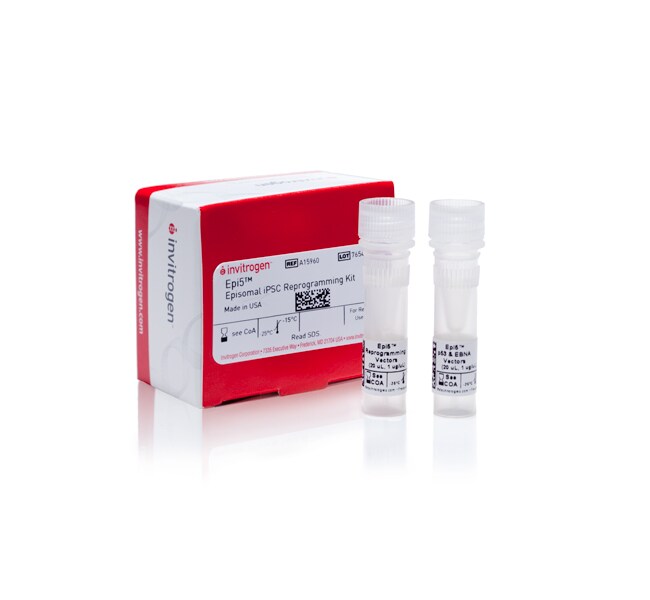
Epi5™ Episomal iPSC Reprogramming Kit
Epi5™エピソームiPSCリプログラミングキットには、京都大学iPS細胞研究所(CiRA)の山中教授の研究室で、沖田博士が設計した使いやすく効率の高い5種類のエピソームベクターセットが含まれます。このシステムは、リプログラミングする細胞の種類に応じて、0.04%~0.3%の範囲で効率の高い、導入遺伝子のないウイルスフリーのヒト人工多能性幹細胞(iPSC詳細を見る
| 製品番号(カタログ番号) | 数量 |
|---|---|
| A15960 | 1 kit |
製品番号(カタログ番号) A15960
価格(JPY)
172,900
Each
数量:
1 kit
Epi5™エピソームiPSCリプログラミングキットには、京都大学iPS細胞研究所(CiRA)の山中教授の研究室で、沖田博士が設計した使いやすく効率の高い5種類のエピソームベクターセットが含まれます。このシステムは、リプログラミングする細胞の種類に応じて、0.04%~0.3%の範囲で効率の高い、導入遺伝子のないウイルスフリーのヒト人工多能性幹細胞(iPSC)を生成します。
Epi5™エピソームiPSCリプログラミングキットの特長:
• 使いやすく、非常に効率的—リプログラミング時に小分子は必要ありません。p53抑制を加えたことで、iPSCの生成が向上します(1)
• iPSC研究のあらゆる段階に使用可能—導入遺伝子のないウイルスフリーのリプログラミングにより、基礎研究から前臨床研究まで使用できます
• 培地系の柔軟性—フィーダーフリーの培地系でもフィーダーベースの培地系でも使用できます
導入遺伝子とウイルスを含まないiPSCの作製
エピソームベクターは、導入遺伝子のないウイルスフリーのiPSCを作製するための十分に評価されたシステムで、多能性幹細胞研究のあらゆる段階でiPSCの原料になります。レンチウイルスなどの他のリプログラミング法には、宿主ゲノムに結合できる導入遺伝子が含まれているため、ゲノムが破壊されたり、予測できない結果が生じたりする可能性があります。
oriP/EBNA1ベクターのように、これらのエピソームベクターには、5種類のリプログラミング因子(Oct4、Sox2、Lin28、Klf4、L-Myc)が含まれ、各細胞周期に1回だけ余分な染色体を複製します。この複製速度では、細胞1世代あたり約5%の割合でエピソームが失われます。このシステムでは、p53を抑制することでiPSCの生成を強化し、L-Mycの取り込みが、ヒトiPSC作製時のc-Mycよりも強力で特異的なことが示されています(1)。
使いやすいシステム
この2バイアルキットは、エピソームベクターリプログラミングに最適なシステムであり、リプログラミング培地で低分子を使用する必要がありません。エピソームベクターを、エレクトロポレーションによって細胞に導入します。エレクトロポレーションには、Neon™トランスフェクションシステムの使用をお勧めします。これにより、リプログラミングに必要な容量と細胞数を柔軟に選択できます。
培地システムの選択における柔軟性
Epi5™エピソームiPSCリプログラミングキットは、複数の細胞タイプと培地系で使用できます。線維芽細胞およびCD34+血球用のプロトコルは、フィーダーベースまたはフィーダーフリーベースのリプログラミングのいずれにも利用できます。
1.Okita K, Matsumara Y, Sato Y, et al.A more efficient method to generate integration free human iPS cells.Nature Methods 8, 409-412, 2011.
Epi5™エピソームiPSCリプログラミングキットの特長:
• 使いやすく、非常に効率的—リプログラミング時に小分子は必要ありません。p53抑制を加えたことで、iPSCの生成が向上します(1)
• iPSC研究のあらゆる段階に使用可能—導入遺伝子のないウイルスフリーのリプログラミングにより、基礎研究から前臨床研究まで使用できます
• 培地系の柔軟性—フィーダーフリーの培地系でもフィーダーベースの培地系でも使用できます
導入遺伝子とウイルスを含まないiPSCの作製
エピソームベクターは、導入遺伝子のないウイルスフリーのiPSCを作製するための十分に評価されたシステムで、多能性幹細胞研究のあらゆる段階でiPSCの原料になります。レンチウイルスなどの他のリプログラミング法には、宿主ゲノムに結合できる導入遺伝子が含まれているため、ゲノムが破壊されたり、予測できない結果が生じたりする可能性があります。
oriP/EBNA1ベクターのように、これらのエピソームベクターには、5種類のリプログラミング因子(Oct4、Sox2、Lin28、Klf4、L-Myc)が含まれ、各細胞周期に1回だけ余分な染色体を複製します。この複製速度では、細胞1世代あたり約5%の割合でエピソームが失われます。このシステムでは、p53を抑制することでiPSCの生成を強化し、L-Mycの取り込みが、ヒトiPSC作製時のc-Mycよりも強力で特異的なことが示されています(1)。
使いやすいシステム
この2バイアルキットは、エピソームベクターリプログラミングに最適なシステムであり、リプログラミング培地で低分子を使用する必要がありません。エピソームベクターを、エレクトロポレーションによって細胞に導入します。エレクトロポレーションには、Neon™トランスフェクションシステムの使用をお勧めします。これにより、リプログラミングに必要な容量と細胞数を柔軟に選択できます。
培地システムの選択における柔軟性
Epi5™エピソームiPSCリプログラミングキットは、複数の細胞タイプと培地系で使用できます。線維芽細胞およびCD34+血球用のプロトコルは、フィーダーベースまたはフィーダーフリーベースのリプログラミングのいずれにも利用できます。
1.Okita K, Matsumara Y, Sato Y, et al.A more efficient method to generate integration free human iPS cells.Nature Methods 8, 409-412, 2011.
研究用にのみ使用できます。診断用には使用いただけません。
仕様
クローニング法なし
供給タイプTransfection
使用対象(アプリケーション)幹細胞エンジニアリングおよびリプログラミング
使用対象 (装置)エレクトロポレーター、Neonトランスフェクションシステム
主機能el
製品ラインEpi5
製品タイプEpisomal iPSCリプログラミングキット
プロモーターCAG
タンパク質タグなし
数量1 kit
複製開始点pUCオリジン
レポーター遺伝子なし
選択剤(真核生物)なし
ベクターEBNA OriP
Unit SizeEach
組成および保存条件
チューブ2本。–5~–20℃で保存。
よくあるご質問(FAQ)
Can I use pen/strep or other antibiotics for episomal reprogramming of cells?
Can I reprogram mouse cells with the Epi5 Episomal iPSC Reprograming Kit (Cat. No. A15960)?
When generating iPSCs using the Epi5 Episomal iPSC Reprogramming Kit (Cat. No. A15960), how confluent should my cells be on the day of transfection?
How many reprogramming experiments can I perform with the Epi5 Episomal iPSC Reprogramming Kit (Cat. No. A15960)?
Which kits do you offer for stem cell reprogramming?
引用および参考文献 (2)
引用および参考文献
Abstract
An optogenetic approach for assessing formation of neuronal connections in a co-culture system.
Journal:
PubMed ID:25742527
'Here we describe a protocol to generate a co-culture consisting of 2 different neuronal populations. Induced pluripotent stem cells (iPSCs) are reprogrammed from human fibroblasts using episomal vectors. Colonies of iPSCs can be observed 30 days after initiation of fibroblast reprogramming. Pluripotent colonies are manually picked and grown in neural
Generation of human iPSCs from cells of fibroblastic and epithelial origin by means of the oriP/EBNA-1 episomal reprogramming system.
Journal:
PubMed ID:26088261
The prospect of therapeutic applications of the induced pluripotent stem cells (iPSCs) is based on their ability to generate virtually any cell type present in human body. Generation of iPSCs from somatic cells has opened up new possibilities to investigate stem cell biology, to better understand pathophysiology of human diseases,