Search

Applied Biosystems™
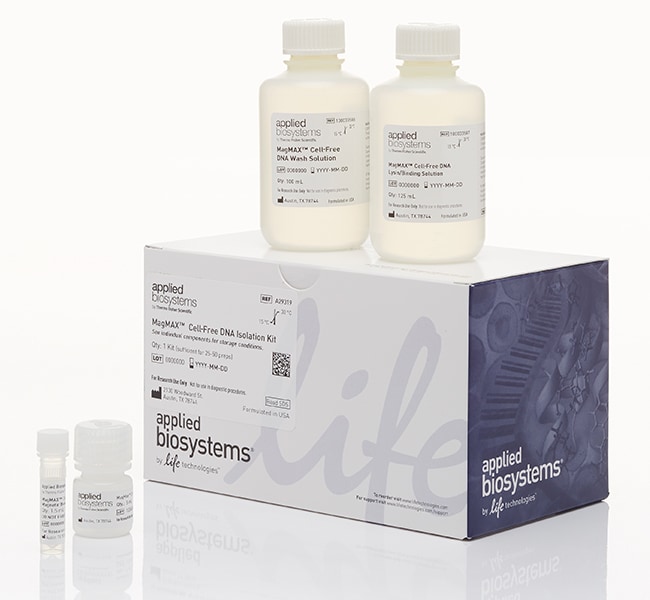
MagMAX™ Cell-Free DNA Isolation Kit
MagMAX™ Cell-Free DNA Isolation Kitは循環無細胞DNA(cfDNA)の濃縮用に設計され、血清や血漿などの生体サンプルで使用するように最適化されています。このキットはMagMAX™磁気ベースの技術に基づき、リアルタイムPCR詳細を見る
| 製品番号(カタログ番号) | 数量 |
|---|---|
| A29319 | 1キット |
製品番号(カタログ番号) A29319
価格(JPY)
112,400
Each
数量:
1キット
MagMAX™ Cell-Free DNA Isolation Kitは循環無細胞DNA(cfDNA)の濃縮用に設計され、血清や血漿などの生体サンプルで使用するように最適化されています。このキットはMagMAX™磁気ベースの技術に基づき、リアルタイムPCR、デジタルPCR、次世代シーケンシングを含む広範な用途に適した高品質DNAを再現性高く回収できるようにします。
血漿、血清、尿からの循環核酸のスケーラブルな単離
cfDNAは、無細胞サンプル中に存在する量が限られているため、その回収が困難です。MagMAXセルフリーDNA単離キットは、100 µL~10 mLの広範なサンプル入力量を簡単に処理できるようにする磁気ビーズを使用した精製フォーマットによってこれに対処します。KingFisher™ Duo PrimeまたはKingFisher™ Flexのいずれかの磁気粒子プロセッサーに使用した場合、2 mLの入力量の6~24個の血漿/血清サンプルを同時に単離できます。別の方法としては、磁気スタンドを使用してサンプルを手動で処理できます。
MagMAXセルフリーDNA単離キットの特長:
•cfDNAの手動と自動両方での単離を可能にする柔軟性の高いデザイン
• 大小の入力量の処理を可能にする拡張可能なフォーマット
• 直ちに自動化可能でフェノールを使わない抽出
• 24ディープウェルヘッドを搭載したKingFisher Duo Prime磁気粒子プロセッサーまたはKingFisher Flex磁気粒子プロセッサーに使用した場合、通常40分以内で6~24個のサンプル処理が可能な高速手順
• 500 µL~10 mLの血漿/血清または尿からの幅広いサンプル量入力範囲
• cfDNAの一貫した単離が可能なDynabeads™ MyOne™シランを含む
• 溶出量は15 µL~50 µL
無細胞DNAにより多くの情報を解明
血漿、血清、尿に由来する循環cfDNAを単離し解析することで、がんなどの疾患状態に関連する標的を検出およびモニターする非侵襲的アプローチになり得ます。この貴重な情報を入手するうえでの最初のステップは、大きなDNA分子を残しながら、循環cfDNAを特異的に回収する効率の良い核酸単離です。この方法により、短く断片化されたDNAを濃縮し、リアルタイムPCR、デジタルPCR、または次世代シーケンシングを用いた後工程の分析にすぐに利用できるようになります。
MagMAX磁気ビーズによる精製の利点
磁気ビーズには、循環cfDNAを単離する他の技術と比べて多くの利点があります。ビーズはガラス繊維フィルターよりも効率的にDNAを結合し、より高く、一貫性の高い収率を生じます。さらに、フィルターと真空マニホールドが使用されないため、抽出工程中に細胞の粒子状物質によってこれらの部分が詰まるリスクがありません。この目詰まり問題は、循環cfDNA研究で一般的に使用される血漿などのタンパク質濃度が高く、量の多いサンプルにとっては特に懸案事項です。
最適化した表面化学
MagMAXセルフリーDNA単離キットに含まれるDynabeads MyOneシランには、核酸捕捉において効率的な動態と高い感度を可能にする最適化されたシリカ様界面化学的性質があります。これらの特徴から、Dynabeads MyOneシランは、無細胞体液中に低濃度で存在する循環cfDNA標的の回収に最適と言えます。ビーズに結合したこれらの希少なDNA断片は15 µL~50 µLの少ない溶出量で溶出し、ダウンストリームアプリケーションに利用可能です。
血漿、血清、尿からの循環核酸のスケーラブルな単離
cfDNAは、無細胞サンプル中に存在する量が限られているため、その回収が困難です。MagMAXセルフリーDNA単離キットは、100 µL~10 mLの広範なサンプル入力量を簡単に処理できるようにする磁気ビーズを使用した精製フォーマットによってこれに対処します。KingFisher™ Duo PrimeまたはKingFisher™ Flexのいずれかの磁気粒子プロセッサーに使用した場合、2 mLの入力量の6~24個の血漿/血清サンプルを同時に単離できます。別の方法としては、磁気スタンドを使用してサンプルを手動で処理できます。
MagMAXセルフリーDNA単離キットの特長:
•cfDNAの手動と自動両方での単離を可能にする柔軟性の高いデザイン
• 大小の入力量の処理を可能にする拡張可能なフォーマット
• 直ちに自動化可能でフェノールを使わない抽出
• 24ディープウェルヘッドを搭載したKingFisher Duo Prime磁気粒子プロセッサーまたはKingFisher Flex磁気粒子プロセッサーに使用した場合、通常40分以内で6~24個のサンプル処理が可能な高速手順
• 500 µL~10 mLの血漿/血清または尿からの幅広いサンプル量入力範囲
• cfDNAの一貫した単離が可能なDynabeads™ MyOne™シランを含む
• 溶出量は15 µL~50 µL
無細胞DNAにより多くの情報を解明
血漿、血清、尿に由来する循環cfDNAを単離し解析することで、がんなどの疾患状態に関連する標的を検出およびモニターする非侵襲的アプローチになり得ます。この貴重な情報を入手するうえでの最初のステップは、大きなDNA分子を残しながら、循環cfDNAを特異的に回収する効率の良い核酸単離です。この方法により、短く断片化されたDNAを濃縮し、リアルタイムPCR、デジタルPCR、または次世代シーケンシングを用いた後工程の分析にすぐに利用できるようになります。
MagMAX磁気ビーズによる精製の利点
磁気ビーズには、循環cfDNAを単離する他の技術と比べて多くの利点があります。ビーズはガラス繊維フィルターよりも効率的にDNAを結合し、より高く、一貫性の高い収率を生じます。さらに、フィルターと真空マニホールドが使用されないため、抽出工程中に細胞の粒子状物質によってこれらの部分が詰まるリスクがありません。この目詰まり問題は、循環cfDNA研究で一般的に使用される血漿などのタンパク質濃度が高く、量の多いサンプルにとっては特に懸案事項です。
最適化した表面化学
MagMAXセルフリーDNA単離キットに含まれるDynabeads MyOneシランには、核酸捕捉において効率的な動態と高い感度を可能にする最適化されたシリカ様界面化学的性質があります。これらの特徴から、Dynabeads MyOneシランは、無細胞体液中に低濃度で存在する循環cfDNA標的の回収に最適と言えます。ビーズに結合したこれらの希少なDNA断片は15 µL~50 µLの少ない溶出量で溶出し、ダウンストリームアプリケーションに利用可能です。
研究用途にのみご使用ください。診断目的には使用できません。
仕様
使用対象(アプリケーション)次世代シーケンシング、リアルタイムPCR、PCR
高スループット適合性自動化プロトコル
製品ラインMagMAX
製品タイプDNA単離キット
数量1キット
サンプルタイプdsDNA、液体サンプル(血清など), Liquid Samples (e.g. Serum)
出荷条件室温
ターゲット無細胞DNA
検査時間40 分
フォーマットキット
Isolation Technology磁気ビーズ
Unit SizeEach
組成および保存条件
MagMAXセルフリーDNA磁気ビーズ1×1.5 mL
MagMAXセルフリーDNA溶解/結合溶液1×125 mL
MagMAXセルフリーDNA洗浄溶液1×100 mL
MagMAXセルフリーDNA溶出液1×5 mL
MagMAXセルフリーDNA溶解/結合溶液1×125 mL
MagMAXセルフリーDNA洗浄溶液1×100 mL
MagMAXセルフリーDNA溶出液1×5 mL