Search

Gibco™
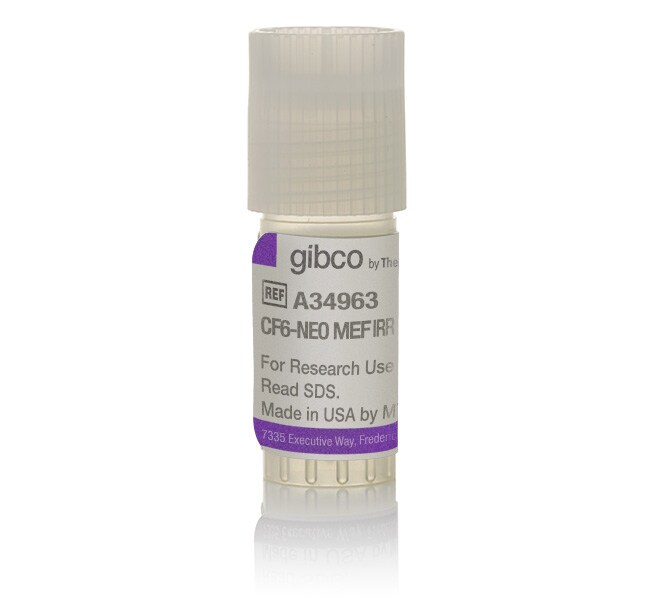
CF6-Neo Mouse Embryonic Fibroblasts, irradiated
照射済みGibco CF6-Neoマウス胚性線維芽細胞(MEF)は、ネオマイシン耐性支持細胞で、培養中のヒトおよびマウスの正常な未分化胚性幹細胞(ESC)および人工多能性幹細胞(iPSC)をサポートします詳細を見る
| 製品番号(カタログ番号) | 数量 |
|---|---|
| A34963 | 4 x 10⁶ cells |
製品番号(カタログ番号) A34963
価格(JPY)
9,800
Each
数量:
4 x 10⁶ cells
照射済みGibco CF6-Neoマウス胚性線維芽細胞(MEF)は、ネオマイシン耐性支持細胞で、培養中のヒトおよびマウスの正常な未分化胚性幹細胞(ESC)および人工多能性幹細胞(iPSC)をサポートします。MTI-GlobalStemにより製造され、MTI-GlobalStem(カタログNo. GSC-6005G、これらのMEF細胞は、CF1 x C57BL/6雑種マウスから分離され、照射処理によって分裂期に停止され、性能を確保し、汚染のリスクを最小限に抑えるのに役立つように試験されています。マイトマイシン処理によって不活性化されるネオマイシン耐性MEFについては、CF6-Neoマウス胚性線維芽細胞、MitC処理を参照してください。また、お客様のアプリケーションに合わせて、当社のその他のMEF製品を選択することもできます。
•事前に不活性化されたすぐに使えるMEFで貴重な時間を節約します
• 細心の注意を払って試験された支持細胞を使用して、ESCやiPSCを自信を持って培養することができます
•ネオマイシン耐性細胞を用いた薬剤選択を伴う研究を行うことができます
すぐに使えるMEFで時間を節約できます
照射済みCF6-ネオMEFは、毎日、毎週、動物施設を扱い、煩雑で時間のかかる解剖を行い、細胞を増殖・検査する時間と手間を省くのに役立ちます。これらの事前不活性化済みのすぐに使用可能なフィーダーを使用して、研究に集中できます。
細心の注意を払って試験された支持細胞で培養できます
CF6-Neo MEFの各ロットは、汚染のリスクを最小限に抑えるために、細菌、真菌、マイコプラズマ、マウス病原体のために試験されています。各ロットはまた、研究における堅牢で一貫した性能を確保するのに役立つように、解凍後の生存率(通常は95 %超)とマウスおよびヒトES細胞をサポートする能力についても試験されています。これらのMEFは他種のESC/iPSCとの併用に成功していますが、このようなアプリケーションに使用する場合には互換性の試験を行う必要があります。
ネオマイシン耐性細胞を用いた薬剤選択を伴う研究を行うことができます
CF6-Neo MEFは、ネオマイシンおよびジェネティシン(G418)に対して強い耐性をもたらす、pPGKneobPa導入遺伝子からneoRを発現します。各ロットは、さまざまなG418濃度に対する耐性について試験され、生存のための閾値範囲は、実験の設計を支援するためにCoAで報告されています。これらの支持細胞を使用して、G418選択を行いながら未分化ESCまたはiPSC培養をサポートします。
•事前に不活性化されたすぐに使えるMEFで貴重な時間を節約します
• 細心の注意を払って試験された支持細胞を使用して、ESCやiPSCを自信を持って培養することができます
•ネオマイシン耐性細胞を用いた薬剤選択を伴う研究を行うことができます
すぐに使えるMEFで時間を節約できます
照射済みCF6-ネオMEFは、毎日、毎週、動物施設を扱い、煩雑で時間のかかる解剖を行い、細胞を増殖・検査する時間と手間を省くのに役立ちます。これらの事前不活性化済みのすぐに使用可能なフィーダーを使用して、研究に集中できます。
細心の注意を払って試験された支持細胞で培養できます
CF6-Neo MEFの各ロットは、汚染のリスクを最小限に抑えるために、細菌、真菌、マイコプラズマ、マウス病原体のために試験されています。各ロットはまた、研究における堅牢で一貫した性能を確保するのに役立つように、解凍後の生存率(通常は95 %超)とマウスおよびヒトES細胞をサポートする能力についても試験されています。これらのMEFは他種のESC/iPSCとの併用に成功していますが、このようなアプリケーションに使用する場合には互換性の試験を行う必要があります。
ネオマイシン耐性細胞を用いた薬剤選択を伴う研究を行うことができます
CF6-Neo MEFは、ネオマイシンおよびジェネティシン(G418)に対して強い耐性をもたらす、pPGKneobPa導入遺伝子からneoRを発現します。各ロットは、さまざまなG418濃度に対する耐性について試験され、生存のための閾値範囲は、実験の設計を支援するためにCoAで報告されています。これらの支持細胞を使用して、G418選択を行いながら未分化ESCまたはiPSC培養をサポートします。
研究用途にのみご使用ください。診断目的には使用できません。
仕様
ドナー源プールされた
セル数4 x 10⁶ cells
製品タイプFeeder Cells
数量4 x 10⁶ cells
出荷条件ドライアイスで出荷
AgeEmbryonic
細胞タイプフィーダーセル、線維芽細胞
形状凍結保存済み
種マウス
Unit SizeEach
組成および保存条件
凍結保存マウス胚性線維芽細胞
液体窒素で保管。
液体窒素で保管。