Search


Citations & References (5)
Invitrogen™
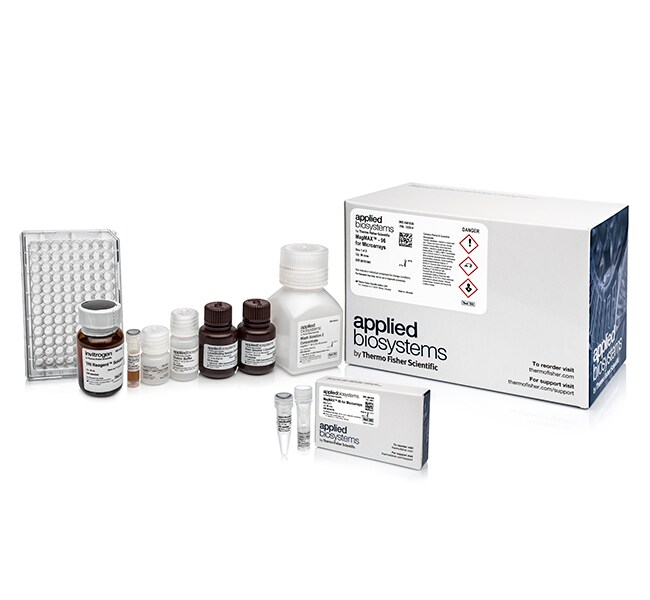
MagMAX™-96 for Microarrays Total RNA Isolation Kit
MagMAX™-96マイクロアレイ用トータルRNA単離キットは、哺乳類の細胞および組織から、RNAを96ウェルプレートで迅速かつハイスループットに精製することを目的としています。このキットは、有機抽出と磁気ビーズベースの精製を組み合わせており、マイクロアレイ解析などの最も厳しいアプリケーションに適した非常に高品質なRNAを生成します。本キットには96回の反応分の試薬が含まれています。MagMAX™-96マイクロアレイ用トータルRNA単離キットには以下のような利点があります。•実験間で一貫性のある結果により、遺伝子発現研究を改善します•詳細を見る
| 製品番号(カタログ番号) | 数量 |
|---|---|
| AM1839 | 96 preps |
製品番号(カタログ番号) AM1839
価格(JPY)
95,400
Each
数量:
96 preps
MagMAX™-96マイクロアレイ用トータルRNA単離キットは、哺乳類の細胞および組織から、RNAを96ウェルプレートで迅速かつハイスループットに精製することを目的としています。このキットは、有機抽出と磁気ビーズベースの精製を組み合わせており、マイクロアレイ解析などの最も厳しいアプリケーションに適した非常に高品質なRNAを生成します。本キットには96回の反応分の試薬が含まれています。MagMAX™-96マイクロアレイ用トータルRNA単離キットには以下のような利点があります。
•実験間で一貫性のある結果により、遺伝子発現研究を改善します
• TRI Reagent™と優れた磁気ビーズベースの技術を組み合わせています
• RNAの収量や品質を犠牲にすることなく、効率的なRNA精製を実現します
• 他社製のキットよりもハンズオンタイムが短縮されています
• 確立されたロボットプラットフォームと統合できます
• 困難なサンプルや大量のサンプルに最適なMagMAX™キットです
MagMAX™磁気ビーズを使用した精製の利点
磁気ビーズには、RNAを単離する他の技術と比べて多くの利点があります。ビーズはガラス繊維フィルターよりも効率的にRNAを結合するため、より高いRNA収量を一貫して提供します。さらに、フィルターを使用しないため、サンプル中の細胞の粒子状物質によってフィルターが詰まるリスクがありません。高効率の結合に必要な磁気ビーズは少量であるため、結合RNAはわずか20~50 µLのヌクレアーゼフリー水で溶出でき、大きな希釈サンプルからRNAを濃縮できます。
高品質なRNAを実現する非常に厳格な条件
MagMAX™-96マイクロアレイ用トータルRNA単離キット(特許出願中)の手順は、堅牢で信頼性の高い溶解/変性TRI Reagent™とMagMAX™磁気ビーズベースRNA精製技術を組み合わせたものであり、RNAの収量や品質を犠牲にすることなく、効率的なRNA精製を実現します。TRI Reagent™は、RNAの完全性を維持するためにヌクレアーゼを変性させながら、困難な細胞や組織でも簡単に溶解します。このキットは、定量的な逆転写酵素PCR(qRT-PCR)およびマイクロアレイ解析に直接使用できる、高純度でインタクトなRNAを高収率で提供します。MagMAX™-96マイクロアレイ用トータルRNA単離キットを使用した場合のRNAの収量と品質を示す付属データをご覧ください。また、AffymetrixがGeneChips™で使用するRNAの生成方法として推奨している手法と、MagMAX™-96マイクロアレイ用キットが採用している手法との間の高い相関性もデータによって示されています。
迅速で柔軟な手順
キットには、2種類の代替プロトコルが付属しています。「スピン」法はステップ数が少なく、DNase処理が不要なため、多数のサンプルを処理できます。「非スピン」法はサンプル処理が少なく、ロボットリキッドハンドラーと容易に統合できます。手順は迅速(1時間未満)かつシンプルで、自動化に最適です。このキットは一度に96個未満のサンプルを処理する場合にも使用でき、マルチチャンネルピペットを使用した手動処理やロボットリキッドハンドラーを使用した処理にも対応しています。このキットを特定のリキッドハンドリングシステムで使用するためのプロトコルは、当社の自動化リソースからダウンロードできます。
関連製品
このキットを使用するには、96ウェル磁気リングスタンドが必要です。磁気スタンド96(カタログ番号AM10027)および96ウェル磁気リングスタンド(カタログ番号AM10050)は、標準的な96ウェル、U底マイクロプレートから常磁性ビーズを沈殿させる目的で設計されています。磁気リングスタンドは磁気ビーズを円状にペレット化し、ロボットやマルチチャンネルピペットによる上清の回収を容易にします。追加の処理プレートについては、Matrix 96ウェルU底ポリプロピレン製プレート(Thermo Scientific、アイテム#4917)が推奨されます
•実験間で一貫性のある結果により、遺伝子発現研究を改善します
• TRI Reagent™と優れた磁気ビーズベースの技術を組み合わせています
• RNAの収量や品質を犠牲にすることなく、効率的なRNA精製を実現します
• 他社製のキットよりもハンズオンタイムが短縮されています
• 確立されたロボットプラットフォームと統合できます
• 困難なサンプルや大量のサンプルに最適なMagMAX™キットです
MagMAX™磁気ビーズを使用した精製の利点
磁気ビーズには、RNAを単離する他の技術と比べて多くの利点があります。ビーズはガラス繊維フィルターよりも効率的にRNAを結合するため、より高いRNA収量を一貫して提供します。さらに、フィルターを使用しないため、サンプル中の細胞の粒子状物質によってフィルターが詰まるリスクがありません。高効率の結合に必要な磁気ビーズは少量であるため、結合RNAはわずか20~50 µLのヌクレアーゼフリー水で溶出でき、大きな希釈サンプルからRNAを濃縮できます。
高品質なRNAを実現する非常に厳格な条件
MagMAX™-96マイクロアレイ用トータルRNA単離キット(特許出願中)の手順は、堅牢で信頼性の高い溶解/変性TRI Reagent™とMagMAX™磁気ビーズベースRNA精製技術を組み合わせたものであり、RNAの収量や品質を犠牲にすることなく、効率的なRNA精製を実現します。TRI Reagent™は、RNAの完全性を維持するためにヌクレアーゼを変性させながら、困難な細胞や組織でも簡単に溶解します。このキットは、定量的な逆転写酵素PCR(qRT-PCR)およびマイクロアレイ解析に直接使用できる、高純度でインタクトなRNAを高収率で提供します。MagMAX™-96マイクロアレイ用トータルRNA単離キットを使用した場合のRNAの収量と品質を示す付属データをご覧ください。また、AffymetrixがGeneChips™で使用するRNAの生成方法として推奨している手法と、MagMAX™-96マイクロアレイ用キットが採用している手法との間の高い相関性もデータによって示されています。
迅速で柔軟な手順
キットには、2種類の代替プロトコルが付属しています。「スピン」法はステップ数が少なく、DNase処理が不要なため、多数のサンプルを処理できます。「非スピン」法はサンプル処理が少なく、ロボットリキッドハンドラーと容易に統合できます。手順は迅速(1時間未満)かつシンプルで、自動化に最適です。このキットは一度に96個未満のサンプルを処理する場合にも使用でき、マルチチャンネルピペットを使用した手動処理やロボットリキッドハンドラーを使用した処理にも対応しています。このキットを特定のリキッドハンドリングシステムで使用するためのプロトコルは、当社の自動化リソースからダウンロードできます。
関連製品
このキットを使用するには、96ウェル磁気リングスタンドが必要です。磁気スタンド96(カタログ番号AM10027)および96ウェル磁気リングスタンド(カタログ番号AM10050)は、標準的な96ウェル、U底マイクロプレートから常磁性ビーズを沈殿させる目的で設計されています。磁気リングスタンドは磁気ビーズを円状にペレット化し、ロボットやマルチチャンネルピペットによる上清の回収を容易にします。追加の処理プレートについては、Matrix 96ウェルU底ポリプロピレン製プレート(Thermo Scientific、アイテム#4917)が推奨されます
研究用にのみ使用できます。診断用には使用いただけません。
仕様
最終産物タイプトータルRNA
使用対象(アプリケーション)マイクロアレイ解析、リアルタイム定量PCR(qPCR)、逆転写酵素PCR(RT-PCR)、ノーザンブロッティング
使用対象 (装置)MagMAX™ Express 24および96、ロボットリキッドハンドリングシステム、MagMAX™ Express-96標準磁性粒子プロセッサ
高スループット適合性ハイスループット対応、自動化プロトコル
反応数96プレップ
製品ラインAmbion、MagMAX
精製時間<1時間
数量96 preps
出発物質量最大5×10^6個の細胞、最大100 mgの組織
フォーマット96ウェルプレート
Isolation Technology磁気ビーズ, 有機抽出
サンプルタイプ細胞, 哺乳類細胞, 植物サンプル, 組織(哺乳類), 酵母
TargetトータルRNA
Unit SizeEach
組成および保存条件
キットの内容(保存温度):
• 処理プレート1枚および蓋(室温)
• 12 ml溶解/結合液濃縮液(室温)
• 18 ml洗浄溶液1濃縮液(室温)
• 72.5 mL洗浄溶液2濃縮液(室温)
• 14 ml溶出バッファー(室温)
• 6 ml MagMAX™ TURBO™ DNaseバッファー(4℃または室温)
• 4×25 ml TRI Reagent™(4℃)
• 1.1 mL RNA結合ビーズ(4℃)
• 1.1 mL溶解/結合エンハンサー(-20℃)
• 215 µl TURBO™ DNase、10 U/µl(-20℃)
96個のサンプルからRNAを単離するのに十分な試薬が含まれています。
• 処理プレート1枚および蓋(室温)
• 12 ml溶解/結合液濃縮液(室温)
• 18 ml洗浄溶液1濃縮液(室温)
• 72.5 mL洗浄溶液2濃縮液(室温)
• 14 ml溶出バッファー(室温)
• 6 ml MagMAX™ TURBO™ DNaseバッファー(4℃または室温)
• 4×25 ml TRI Reagent™(4℃)
• 1.1 mL RNA結合ビーズ(4℃)
• 1.1 mL溶解/結合エンハンサー(-20℃)
• 215 µl TURBO™ DNase、10 U/µl(-20℃)
96個のサンプルからRNAを単離するのに十分な試薬が含まれています。
よくあるご質問(FAQ)
I am working with your MagMAX Microarray Total RNA Isolation Kit (Cat. No. AM1839) for gene expression analysis. I would now like to isolate miRNA. Can I still use this kit?
Are MagMax kits compatible with RNAlater reagent-treated samples?
I am getting MagMAX bead carryover in some wells of my plate. What might be causing this and how can I resolve it?
Do I need any additional consumables when using MagMAX kits on the MagMAX Express-96 instrument or a KingFisher instrument?
Where can I find Bindlt script protocol (.bdz) files for use of MagMAX kits with the KingFisher Flex Purification System and KingFisher Duo Prime Purification System?
引用および参考文献 (5)
引用および参考文献
Abstract
A multiplex real-time reverse transcription polymerase chain reaction assay for detection and differentiation of Bluetongue virus and Epizootic hemorrhagic disease virus serogroups.
Journal:J Vet Diagn Invest
PubMed ID:19901276
'Bluetongue virus (BTV) causes disease in domestic and wild ruminants and results in significant economic loss. The closely related Epizootic hemorrhagic disease virus (EHDV) has been associated with bluetongue-like disease in cattle. Although U.S. EHDV strains have not been experimentally proven to cause disease in cattle, there is serologic evidence
Experimental inoculation of pigs with pandemic H1N1 2009 virus and HI cross-reactivity with contemporary swine influenza virus antisera.
Journal:Influenza Other Respi Viruses
PubMed ID:20167045
A novel A/H1N1 was identified in the human population in North America in April 2009. The gene constellation of the virus was a combination from swine influenza A viruses (SIV) of North American and Eurasian lineages that had never before been identified in swine or other species.
Deep sequencing for de novo construction of a marine fish (Sparus aurata) transcriptome database with a large coverage of protein-coding transcripts.
Journal:BMC Genomics
PubMed ID:23497320
The gilthead sea bream (Sparus aurata) is the main fish species cultured in the Mediterranean area and constitutes an interesting model of research. Nevertheless, transcriptomic and genomic data are still scarce for this highly valuable species. A transcriptome database was constructed by de novo assembly of gilthead sea bream sequences
Spleen transcriptome response to infection with avian pathogenic Escherichia coli in broiler chickens.
Journal:BMC Genomics
PubMed ID:21951686
Avian pathogenic Escherichia coli (APEC) is detrimental to poultry health and its zoonotic potential is a food safety concern. Regulation of antimicrobials in food-production animals has put greater focus on enhancing host resistance to bacterial infections through genetics. To better define effective mechanism of host resistance, global gene expression in
Sockeye salmon retain immunoglobulin-secreting plasma cells throughout their spawning journey and post-spawning.
Journal:Dev Comp Immunol
PubMed ID:23434463
Antibody-producing plasma cells are a major source of protective immunity in vertebrates, including salmon. During the spawning phase, salmon undergo drastic, hormonally driven changes in their physiology, including elevated levels of cortisol, which are known to suppress the immune system. As adult fish need to survive their long journey to