Search


Citations & References (2)
Invitrogen™
Tyramide Conjugates
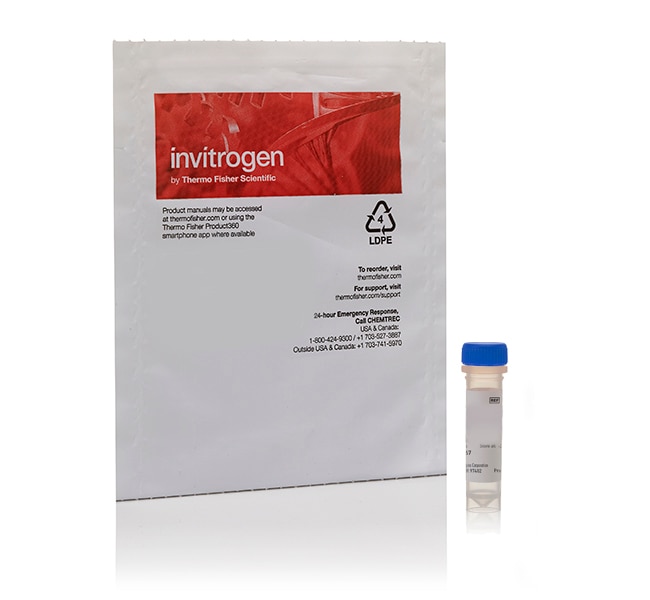
Thermo Fisher Scientific offers a wide variety of bright Alexa Fluor™, Alexa Fluor™ Plus or Biotin XX tyramide conjugates. These tyramide conjugates are used in tyramide signal amplification (TSA), also called catalyzed reporter deposition (CARD).


| 製品番号(カタログ番号) | コンジュゲート | 励起/発光 |
|---|---|---|
| B40953 | Alexa Fluor™ 488 | 495/519 nm |
| B40952 | Alexa Fluor™ 350 | 347/442 nm |
| B40954 | Alexa Fluor™ 546 | 556/573 nm |
| B40955 | Alexa Fluor™ 555 | 555/565 nm |
| B40956 | Alexa Fluor™ 568 | 579/604 nm |
| B40957 | Alexa Fluor™ 594 | 591/617 nm |
| B40958 | Alexa Fluor™ 647 | 650/668 nm |
| B56131 | Alexa Fluor™ Plus 750 | 750/790 nm |
| B40951 | Biotin-XX |
製品番号(カタログ番号) B40953
価格(JPY)
101,200
Each
コンジュゲート:
Alexa Fluor™ 488
励起/発光:
495/519 nm
Thermo Fisher Scientific offers a wide variety of bright Alexa Fluor™, Alexa Fluor™ Plus or Biotin XX tyramide conjugates. These tyramide conjugates are used in tyramide signal amplification (TSA), also called catalyzed reporter deposition (CARD). TSA is used to amplify signals up to 200 fold versus standard imaging methods. This reagent can be used with any antibody conjugated to HRP for tyramide signal amplification to detect low abundance targets. Up to seven-plex is possible in multiplexable fluorescent imaging.
These tyramide reagents are used in tyramide signal amplification (TSA), also called catalyzed reporter deposition (CARD). TSA is used to amplify signal up to 200-fold versus standard imaging methods. These reagents are provided stand-alone, but are also available as part of our SuperBoost™ tyramide signal amplification kits (available separately). They can be used with any antibody conjugated to HRP for tyramide signal amplification for detection of low abundance targets. Up to seven-plex is possible in multiplex fluorescent immunocytochemistry (ICC), immunohistochemistry (IHC), and in situ hybridization (ISH).
Features include:
• Superior sensitivity for detection of low-level or hard-to-detect targets by fluorescent imaging
• Simple protocol and detection using standard filters
• Suitable for high-resolution multiplex images—co-label with TO-PRO-3, secondary antibodies, and other SuperBoost kits
• Requires 10–100 times less primary antibody then standard ICC/IHC/ISH experiments
Tyramide reagents, when used as directed, can increase sensitivity up to 200 times over standard imaging methods. These reagents help sharpen your results for clear visibility into critical areas that standard imaging methods fail to reveal. They are simple to use and easily adapted to standard ICC, IHC, or FISH experimental protocols, using any cell or tissue type. Cells labeled using a tyramide reagent can be imaged using any type of microscope, producing high-resolution multiplex images.
Dissolve the Alexa Fluor™ or Biotin-XX tyramide reagent in 150 μL of DMSO to prepare 100X stock. Tyramide may coat the sides of the vial so invert the vial several times to ensure all reagent is dissolved in solution.
For Research Use Only. Not for use in diagnostic procedures.
仕様
コンジュゲートAlexa Fluor™ 488
検出法Fluorescence
励起/発光495/519 nm
出荷条件室温またはウェットアイスでの出荷
ClonalityNone
使用対象(アプリケーション)Immunohistochemistry (IHC), Immunofluorescence (IF), Immunocytochemistry (ICC), ISH
製品ラインSuperBoost
数量バイアル1本、スライド150枚
Unit SizeEach
組成および保存条件
150枚のスライドに十分なAlexa Fluorチラミド試薬1バイアル
2~8℃で保存してください。指示通りに保存した場合、製品は受け取り後6カ月間安定です。)
2~8℃で保存してください。指示通りに保存した場合、製品は受け取り後6カ月間安定です。)
引用および参考文献 (2)
引用および参考文献
Abstract
Sensitive immunofluorescent staining of cells via generation of fluorescent nanoscale polymer films in response to biorecognition.
Journal:J Histochem Cytochem
PubMed ID:21339175
Immunofluorescent staining is central to nearly all cell-based research, yet only a few fluorescent signal amplification approaches for cell staining exist, each with distinct limitations. Here, the authors present a novel, fluorescent polymerization-based amplification (FPBA) method that is shown to enable similar signal intensities as the highly sensitive, enzyme-based tyramide
Immunohistochemical Identification of Human Skeletal Muscle Macrophages.
Journal:Bio Protoc
PubMed ID:30148186
Macrophages have well-characterized roles in skeletal muscle repair and regeneration. Relatively little is known regarding the role of resident macrophages in skeletal muscle homeostasis, extracellular matrix remodeling, growth, metabolism and adaptation to various stimuli including exercise and training. Despite speculation into macrophage contributions during these processes, studies characterizing macrophages in