Search


Citations & References (4)
Invitrogen™
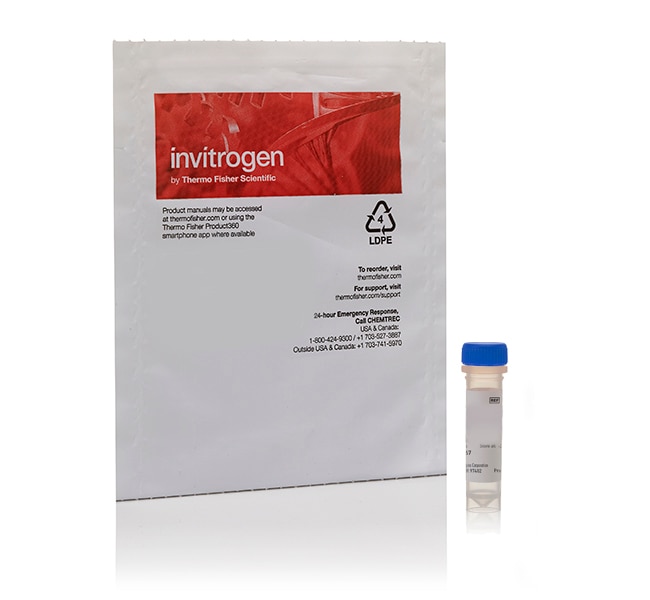
CellLight™ Null (control), BacMam 2.0
CellLight™ Null Controlは、当社のCellLight™蛍光タンパク質生細胞染色試薬のネガティブな形質導入コントロールとして設計されています。CellLight™ Null Controlには、哺乳類プロモーターおよびトランス遺伝子は含まれていません。CellLight™試薬は、蛍光タンパク質の有用性と選択性をBacMamテクノロジーの形質導入効率と組み合わせ詳細を見る
| 製品番号(カタログ番号) | 数量 |
|---|---|
| C10615 | 1バイアル |
製品番号(カタログ番号) C10615
価格(JPY)
54,000
Each
数量:
1バイアル
価格(JPY)
54,000
Each
CellLight™ Null Controlは、当社のCellLight™蛍光タンパク質生細胞染色試薬のネガティブな形質導入コントロールとして設計されています。CellLight™ Null Controlには、哺乳類プロモーターおよびトランス遺伝子は含まれていません。CellLight™試薬は、蛍光タンパク質の有用性と選択性をBacMamテクノロジーの形質導入効率と組み合わせ、哺乳類生細胞におけるオルガネラ、細胞構造、およびプロセスを明確に染色できます。これらは、細胞株、初代細胞、幹細胞、神経細胞における高効率な発現を備えた、すぐに使用可能な—添加、インキュベート、およびタグ付け—で提供されます。.
CellLight™ Null Controlとは:
•非常に効率的:初代細胞、幹細胞、神経細胞など、さまざまな哺乳類細胞株の90%超の形質導入
• 迅速で便利:CellLight™ Null Control試薬を細胞に添加して一晩インキュベートするだけで、BacMamの形質導入に対する細胞の忍容性がどの程度認められるかを評価
•安全性:CellLight™試薬は、哺乳類細胞で複製されず、明白な細胞障害効果が認められないため、生物学的安全レベル(BSL)1の取り扱いに適している
CellLight™試薬の原理
その他のCellLight™試薬は、主要なemGFP、TagRFP、CFPを含むシグナルペプチドまたは細胞構造タンパク質の融合コンストラクトで、細胞内のコンパートメントや構造を正確かつ特異的に標的にします。細胞骨格、ミトコンドリア、分泌コンパートメントなどのさまざまな標的を利用して、マルチプレックス化、共局在研究、高い空間分解能および時間分解能が求められる動的細胞プロセスのイメージングを容易に行えます。CellLight™試薬はホルムアルデヒドによる固定に対する忍容性が認められ、固定処理した細胞の分析に対応しています。
BacMamテクノロジー
BacMamテクノロジーは、昆虫ウイルス(バキュロウイルス)がベースになっており、哺乳類細胞の効率的な形質導入と一過性発現を実現します。バキュロウイルスは、CellLight™融合コンストラクトを含む発現カセットを含むように改変されています。
BacMam 2.0には、形質導入効率と発現レベルを大幅に向上させる要素が組み込まれています。これは、より効率的な細胞エントリーを実現するための偽型カプシドタンパク質、強化されたCMVプロモーター、およびWoodchuck肝炎転写後調節因子(WPRE)です。
バキュロウイルスは哺乳類細胞で複製されないため、優れた安全性プロファイルを持ち、細胞変性効果がありません。
ワークフローの利便性
発現ベクターと違って、BacMam試薬では滴定可能で再現性のあるタンパク質を一時的に発現させることができます。過酷なトランスフェクション法や面倒なクローニングは必要ありません。幹細胞、ニューロン、初代細胞などの高感度細胞でも効率よく発現を実現するには、完全培地内の細胞にCellLight™試薬を加え、インキュベートして、その翌日に画像を取得するだけです。あるいは、プレーティング時にCellLight™試薬と細胞を混合します。
共導入効率が高いため、複数の構造または経路を標識する必要がある場合に、複数のCellLight™試薬を同一実験で容易に使用できます。CellLight™試薬はホルムアルデヒドによる固定処理にも忍容性が認められ、抗体ベースの固定細胞分析にも対応しています。
通常、一時的に形質導入された細胞は融合タンパク質を約5日間発現しますが、一部の初代細胞などの細胞をゆっくりと分裂させることで、最大2週間の発現が実証されています。末端分化したニューロンでは、形質導入後3週間以上の画像を記録しています。
CellLight™ Null Controlとは:
•非常に効率的:初代細胞、幹細胞、神経細胞など、さまざまな哺乳類細胞株の90%超の形質導入
• 迅速で便利:CellLight™ Null Control試薬を細胞に添加して一晩インキュベートするだけで、BacMamの形質導入に対する細胞の忍容性がどの程度認められるかを評価
•安全性:CellLight™試薬は、哺乳類細胞で複製されず、明白な細胞障害効果が認められないため、生物学的安全レベル(BSL)1の取り扱いに適している
CellLight™試薬の原理
その他のCellLight™試薬は、主要なemGFP、TagRFP、CFPを含むシグナルペプチドまたは細胞構造タンパク質の融合コンストラクトで、細胞内のコンパートメントや構造を正確かつ特異的に標的にします。細胞骨格、ミトコンドリア、分泌コンパートメントなどのさまざまな標的を利用して、マルチプレックス化、共局在研究、高い空間分解能および時間分解能が求められる動的細胞プロセスのイメージングを容易に行えます。CellLight™試薬はホルムアルデヒドによる固定に対する忍容性が認められ、固定処理した細胞の分析に対応しています。
BacMamテクノロジー
BacMamテクノロジーは、昆虫ウイルス(バキュロウイルス)がベースになっており、哺乳類細胞の効率的な形質導入と一過性発現を実現します。バキュロウイルスは、CellLight™融合コンストラクトを含む発現カセットを含むように改変されています。
BacMam 2.0には、形質導入効率と発現レベルを大幅に向上させる要素が組み込まれています。これは、より効率的な細胞エントリーを実現するための偽型カプシドタンパク質、強化されたCMVプロモーター、およびWoodchuck肝炎転写後調節因子(WPRE)です。
バキュロウイルスは哺乳類細胞で複製されないため、優れた安全性プロファイルを持ち、細胞変性効果がありません。
ワークフローの利便性
発現ベクターと違って、BacMam試薬では滴定可能で再現性のあるタンパク質を一時的に発現させることができます。過酷なトランスフェクション法や面倒なクローニングは必要ありません。幹細胞、ニューロン、初代細胞などの高感度細胞でも効率よく発現を実現するには、完全培地内の細胞にCellLight™試薬を加え、インキュベートして、その翌日に画像を取得するだけです。あるいは、プレーティング時にCellLight™試薬と細胞を混合します。
共導入効率が高いため、複数の構造または経路を標識する必要がある場合に、複数のCellLight™試薬を同一実験で容易に使用できます。CellLight™試薬はホルムアルデヒドによる固定処理にも忍容性が認められ、抗体ベースの固定細胞分析にも対応しています。
通常、一時的に形質導入された細胞は融合タンパク質を約5日間発現しますが、一部の初代細胞などの細胞をゆっくりと分裂させることで、最大2週間の発現が実証されています。末端分化したニューロンでは、形質導入後3週間以上の画像を記録しています。
研究用にのみ使用できます。診断用には使用いただけません。
仕様
色無色
検出法蛍光
染色剤タイプ非コンジュゲート
発光可視
使用対象 (装置)共焦点顕微鏡, 蛍光顕微鏡
形状液体
製品ラインCellLight
数量1バイアル
出荷条件湿氷
標識タイプ非標識
製品タイプNull Control
Unit SizeEach
組成および保存条件
2°C∼6°Cで保管し、遮光してください。冷凍しないでください。
よくあるご質問(FAQ)
CellLight や Premo FUCCI cell cycle sensor などの BacMam 2.0試薬にて、どのようにすれば形質転換効率を上げることができますか?
How can I increase the transduction efficiency with the BacMam 2.0 reagents such as the the CellLight and Premo products?
Is there any way to preserve the CellLights labeling beyond 5 days?
Are the CellLights products toxic to cells?
For how long will the CellLights products label my cells?
引用および参考文献 (4)
引用および参考文献
Abstract
Carbon nanotube rope with electrical stimulation promotes the differentiation and maturity of neural stem cells.
Journal:Small
PubMed ID:22753249
'In recent years, the utilization of nanomaterials such as carbon nanotubes (CNTs) in the field of neuroscience has forever changed the approach to nerve-related research. The array of novel properties CNTs possess allows them to interact with neurons at the nanodimensional scale. In this study, a CNT rope substrate is
Immunobiotic lactic acid bacteria beneficially regulate immune response triggered by poly(I:C) in porcine intestinal epithelial cells.
Journal:Vet Res
PubMed ID:22046952
ABSTRACT: This study analyzed the functional expression of TLR3 in various gastrointestinal tissues from adult swine and shows that TLR3 is expressed preferentially in intestinal epithelial cells (IEC), CD172a+CD11R1high and CD4+ cells from ileal Peyer's patches. We characterized the inflammatory immune response triggered by TLR3 activation in a clonal porcine
BacMam technology and its application to drug discovery.
Journal:Expert Opin Drug Discov
PubMed ID:23488908
The recombinant baculovirus/insect cell system was firmly established as a leading method for recombinant protein production when a new potential use for these viruses was revealed in 1995. It was reported that engineered recombinant baculoviruses could deliver functional expression cassettes to mammalian cell types; a system which has come to
Baculovirus-mediated gene transfer into mammalian cells.
Journal:Proc Natl Acad Sci U S A
PubMed ID:8637876
This paper describes the use of the baculovirus Autographa californica multiple nuclear polyhedrosis virus (AcMNPV) as a vector for gene delivery into mammalian cells. A modified AcMNPV virus was prepared that carried the Escherichia coli lacZ reporter gene under control of the Rous sarcoma virus promoter and mammalian RNA processing