Search


Citations & References (1)
Invitrogen™
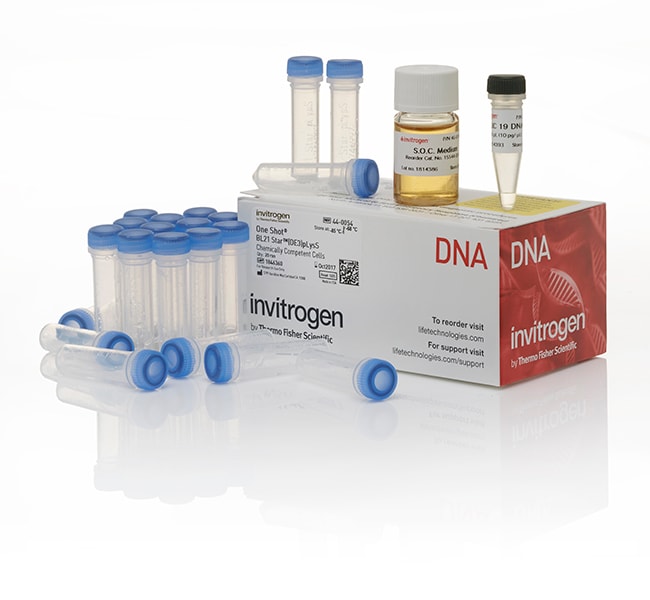
BL21 Star™ (DE3)pLysS One Shot™ Chemically Competent E. coli
One Shot™ BL21 Star™(DE3 ) pLysS E. coli詳細を見る
| 製品番号(カタログ番号) | 数量 |
|---|---|
| C602003 | 20x50 μL |
製品番号(カタログ番号) C602003
価格(JPY)
94,700
Each
数量:
20x50 μL
One Shot™ BL21 Star™(DE3 ) pLysS E. coli は、高コピー数の T7 プロモーターベース発現システム(pRSET T7 ベクターなど)からの非毒性組換えタンパク質の高レベル発現を必要とするアプリケーション用に設計されたケミカルコンピテント細胞です。One Shot™ BL21 Star™(DE3) pLysS ケミカルコンピテント細胞の形質転換効率は >1 x 10⁸ cfu/ µg プラスミド DNA です。
•mRNA の高い 安定性によりタンパク質の収量が増加します。
•T7 プロモーターベースプラスミドの高コピー数での使用に最適です。
•未誘導細胞内でのバックグラウンド発現が少なくなります。
mRNA の安定性が増すとタンパク質の収量が向上します。
One Shot™ BL21 Star (DE3) pLysS 大腸菌は、mRNA の安定性を高め、タンパク質発現に豊富な mRNA の利用を可能にします。この強化された安定性は、mRNA の分解に関与する RNaseE 遺伝子 (rne131) の変異によるものです。
非毒性の組換えタンパク質の高発現。
One Shot™ BL21 Star™ (DE3) pLysS 細胞は、高コピー数の T7 プロモーターベース発現システムからの、非毒性ではあるが成長を阻害する可能性のある組換えタンパク質の高レベル発現に最適です。BL21 Star™ (DE3) pLysS 株によって運ばれる pLysS CamR プラスミドは、非誘導細胞での漏出発現を防ぐ T7RNA ポリメラーゼ阻害剤である T7 リゾチームを発現します。pLysS の p15a 由来により、このプラスミドは pUC または pBR322 由来のプラスミドと適合性があります。この株には、lacUV5 プロモーターの制御下で T7 RNA ポリメラーゼ遺伝子を運ぶ DE3 溶原菌も含まれており、T7RNA ポリメラーゼの発現を誘導するには IPTG が必要です。One Shot™ BL21 Star™(DE3) pLysS 細胞は、lon プロテアーゼを含んでおらず、外膜プロテアーゼ OmpT にも不十分です。これらのプロテアーゼが存在しないと、異種タンパク質の分解が減少します。
注:BL21 Star™株は、mRNAの安定性が向上しているため、BL21株よりも異種遺伝子の基礎発現が高くなります。そのため、これらの菌株は毒性遺伝子の発現には有用ではない可能性があります。ただし、BL21 Star™( DE3™) pLysS 株は BL21 Star 株よりも発現レベルが低くなります。
遺伝子型:
F-ompT hsdsb( rB-、mB-) galdcmrne131( DE3) pLysS( CamR)
使いやすいシングルチューブフォーマット。
シングルチューブ、シングルユースフォーマットは、プレーティングまでのあらゆるステップの形質転換を同じチューブで行うことができます。これにより、時間を節約し、汚染を防止できます。
必要なひずみとフォーマットを見つけ出してください。
当社 は、お客様固有の形質転換ニーズを満たすために、他の多くの異なる菌株と化学的コンピテントセルのフォーマットも提供しています。毒性タンパク質の発現には、BL21-AI™ One Shot™ ケミカルコンピテント大腸菌をお選びください。低コピー数からの無毒性組換えタンパク質の発現には(Champion™ pETベクターなど)、T7プロモーターを用いた発現システム、One Shot™ BL21 Star™(DE3)ケミカルコンピテントセルをお選びください。
研究用途にのみご使用ください。動物やヒトの診断や治療には使用できません。
•mRNA の高い 安定性によりタンパク質の収量が増加します。
•T7 プロモーターベースプラスミドの高コピー数での使用に最適です。
•未誘導細胞内でのバックグラウンド発現が少なくなります。
mRNA の安定性が増すとタンパク質の収量が向上します。
One Shot™ BL21 Star (DE3) pLysS 大腸菌は、mRNA の安定性を高め、タンパク質発現に豊富な mRNA の利用を可能にします。この強化された安定性は、mRNA の分解に関与する RNaseE 遺伝子 (rne131) の変異によるものです。
非毒性の組換えタンパク質の高発現。
One Shot™ BL21 Star™ (DE3) pLysS 細胞は、高コピー数の T7 プロモーターベース発現システムからの、非毒性ではあるが成長を阻害する可能性のある組換えタンパク質の高レベル発現に最適です。BL21 Star™ (DE3) pLysS 株によって運ばれる pLysS CamR プラスミドは、非誘導細胞での漏出発現を防ぐ T7RNA ポリメラーゼ阻害剤である T7 リゾチームを発現します。pLysS の p15a 由来により、このプラスミドは pUC または pBR322 由来のプラスミドと適合性があります。この株には、lacUV5 プロモーターの制御下で T7 RNA ポリメラーゼ遺伝子を運ぶ DE3 溶原菌も含まれており、T7RNA ポリメラーゼの発現を誘導するには IPTG が必要です。One Shot™ BL21 Star™(DE3) pLysS 細胞は、lon プロテアーゼを含んでおらず、外膜プロテアーゼ OmpT にも不十分です。これらのプロテアーゼが存在しないと、異種タンパク質の分解が減少します。
注:BL21 Star™株は、mRNAの安定性が向上しているため、BL21株よりも異種遺伝子の基礎発現が高くなります。そのため、これらの菌株は毒性遺伝子の発現には有用ではない可能性があります。ただし、BL21 Star™( DE3™) pLysS 株は BL21 Star 株よりも発現レベルが低くなります。
遺伝子型:
F-ompT hsdsb( rB-、mB-) galdcmrne131( DE3) pLysS( CamR)
使いやすいシングルチューブフォーマット。
シングルチューブ、シングルユースフォーマットは、プレーティングまでのあらゆるステップの形質転換を同じチューブで行うことができます。これにより、時間を節約し、汚染を防止できます。
必要なひずみとフォーマットを見つけ出してください。
当社 は、お客様固有の形質転換ニーズを満たすために、他の多くの異なる菌株と化学的コンピテントセルのフォーマットも提供しています。毒性タンパク質の発現には、BL21-AI™ One Shot™ ケミカルコンピテント大腸菌をお選びください。低コピー数からの無毒性組換えタンパク質の発現には(Champion™ pETベクターなど)、T7プロモーターを用いた発現システム、One Shot™ BL21 Star™(DE3)ケミカルコンピテントセルをお選びください。
研究用途にのみご使用ください。動物やヒトの診断や治療には使用できません。
研究用途にのみご使用ください。診断目的には使用できません。
仕様
抗生物質耐性菌Yes (Chloramphenicol)
青/白スクリーニング不可
メチル化DNAのクローニング不可
F'エピソームを含むF’エピソームが欠落しています
高スループット適合性ハイスループット非対応(手動)
プラスミドの品質を向上不可
Improves Protein StabilityYes (lon, ompT)
Improves RNA StabilityYes (rne131, pLysS)
非メチル化DNAの調製Yes (dcm)
製品ラインOne Shot
製品タイプコンピテントセル
数量20x50 μL
組換えを抑制不可
出荷条件Dry Ice
T1ファージ-耐性(tonA)不可
Toxic ProteinsNo
形質転換効率レベル中効率 (10^8-10^9 cfu⁄µg)
フォーマットOne Shot
プロモーターT7
種E. coli
Unit SizeEach
組成および保存条件
BL21 Star™(DE3)およびBL21 Star™(DE3)pLysSケミカルコンピテント大腸菌は、S.O.C. 培地およびスーパーコイルコントロールプラスミドを用いた、50 μLのシングルユースアリコートで提供されています。コンピテントセルを-80℃で保存します。
よくあるご質問(FAQ)
My gene of interest is toxic to bacterial cells. Are there any precautions you can suggest?
I'm trying to express my protein using a bacterial expression system. How do I know if I'm seeing degradation of my protein or if what I’m seeing is codon usage bias?
I'm trying to express my protein using a bacterial expression system and am getting inclusion bodies. What should I do?
I'm getting low protein yield from my bacterial expression system. What can I do to improve this?
My cells are growing very slowly, and I'm not getting any protein expression from my baterial expression system. What can I do to fix this?
引用および参考文献 (1)
引用および参考文献
Abstract
Mertk triggers uptake of photoreceptor outer segments during phagocytosis by cultured retinal pigment epithelial cells.
Journal:J Biol Chem
PubMed ID:11861639
The RCS rat is a widely studied model of recessively inherited retinal degeneration. The genetic defect, known as rdy (retinal dystrophy), results in failure of the retinal pigment epithelium (RPE) to phagocytize shed photoreceptor outer segment membranes. We previously used positional cloning and in vivo genetic complementation to demonstrate that