Search


Citations & References (1)
Invitrogen™
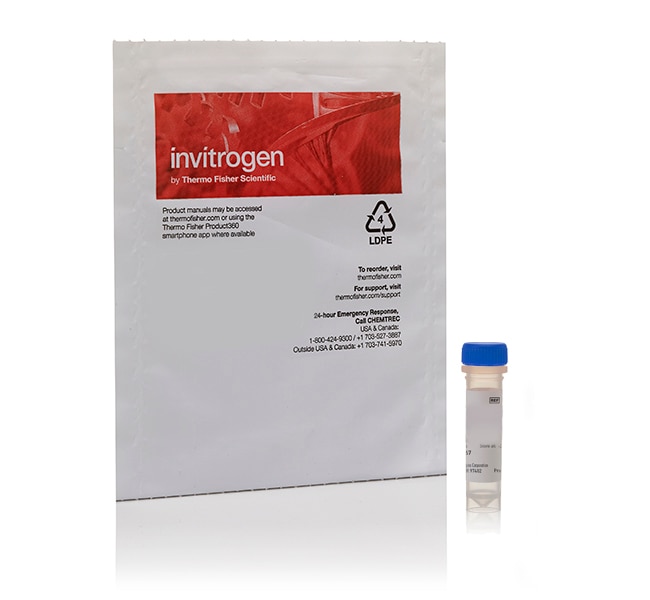
Escherichia coli BioParticles™ Opsonizing Reagent
高純度のウサギポリクローナルIgG抗体に由来
| 製品番号(カタログ番号) | 数量 |
|---|---|
| E2870 | 1 unit |
製品番号(カタログ番号) E2870
価格(JPY)
33,500
온라인 행사
Ends: 25-Sep-2026
55,900割引額 22,400 (40%)
Each
数量:
1 unit
大腸菌BioParticles™オプソニン試薬は、高純度のウサギポリクローナルIgG抗体に由来し、大腸菌BioParticals™コンジュゲートの取り込みを強化するよう特別に設計されています。
研究用にのみ使用できます。診断用には使用いただけません。
仕様
検出法蛍光
染色剤タイプUnconjugated
形状固体
数量1 unit
出荷条件室温
種E. coli
使用対象 (装置)Fluorescence Microscope
製品ラインBioParticles
製品タイプオプソニン試薬
Unit SizeEach
組成および保存条件
冷凍庫(-5~-30℃)に保存。
よくあるご質問(FAQ)
Are the Invitrogen BioParticles products sterile?
What is the type of bond that attaches the dyes to the BioParticles probes?
引用および参考文献 (1)
引用および参考文献
Abstract
Multipotent stem cells from trabecular meshwork become phagocytic TM cells.
Journal:Invest Ophthalmol Vis Sci
PubMed ID:22297497
'To isolate and characterize stem cells from human trabecular meshwork (TM) and to investigate the potential of these stem cells to differentiate into TM cells. Human trabecular meshwork stem cells (TMSCs) were isolated as side population cells by fluorescence-activated cell sorting or isolated by clonal cultures. Passaged TMSCs were compared