Search

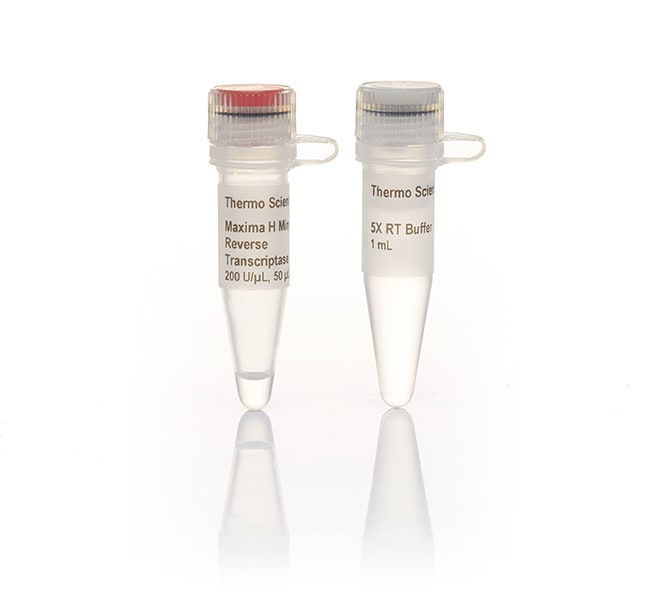


Thermo Scientific Maxima H Minus逆転写酵素(RT)は、M-MuLV RTのin vitro進化で得られました。この酵素はRNA依存性およびDNA依存性ポリメラーゼ活性を持っていますが、M-MuLV RTのRNase Hドメイン内の突然変異によりRNase H活性はありません。人工酵素は、劇的に改善した高い耐熱性、50倍高い処理能力、確実な増幅性、野生型M-MuLV RTと比べて高い合成速度を特長とします。
除去されたRNase H活性により、酵素は最大20 kbの非常に長いRNA転写物を生成できます。この酵素は熱安定性が高いため、逆転写反応全体で完全な活性を維持し、高いcDNA収量を生成します。反応温度は、高度な二次構造を有するRNA領域の効率的な転写または遺伝子特異的プライマーを使用した特異性の改善のため、最大65℃に上昇させることができます。Maxima H Minus酵素の処理能力が非常に高いため、グアニジン、ホルムアミド、エタノールなどの一般的な反応阻害剤に対する耐性が向上します。
特長
• 熱安定性 — 反応混合物中50℃で60分間インキュベーション後、90%が活性です。
•65℃まで活性
• 20 kbまでの完全長cDNAの高収量
• 高感度 — 広範囲な量(1 pg~5 µg)のトータルRNAから再現可能なcDNA合成
• 効率的 — 15~30分で完全なcDNA合成が可能
• 一般的な反応阻害物質に対する耐性が向上
• 修飾ヌクレオチドを取り込みます
アプリケーション
• RT-PCRおよびリアルタイムRT-PCRのファーストストランドcDNA合成。
•高温での逆転写により、二次構造の影響を低減します。
•クローニングおよび発現用のcDNAの合成。
•マイクロアレイ用の標識cDNAプローブの生成。
•プライマーの伸長によるRNAの分析。
注
•次のものもご利用いただけます:: Maxima H Minus First Strand cDNA Synthesis Kit。
除去されたRNase H活性により、酵素は最大20 kbの非常に長いRNA転写物を生成できます。この酵素は熱安定性が高いため、逆転写反応全体で完全な活性を維持し、高いcDNA収量を生成します。反応温度は、高度な二次構造を有するRNA領域の効率的な転写または遺伝子特異的プライマーを使用した特異性の改善のため、最大65℃に上昇させることができます。Maxima H Minus酵素の処理能力が非常に高いため、グアニジン、ホルムアミド、エタノールなどの一般的な反応阻害剤に対する耐性が向上します。
特長
• 熱安定性 — 反応混合物中50℃で60分間インキュベーション後、90%が活性です。
•65℃まで活性
• 20 kbまでの完全長cDNAの高収量
• 高感度 — 広範囲な量(1 pg~5 µg)のトータルRNAから再現可能なcDNA合成
• 効率的 — 15~30分で完全なcDNA合成が可能
• 一般的な反応阻害物質に対する耐性が向上
• 修飾ヌクレオチドを取り込みます
アプリケーション
• RT-PCRおよびリアルタイムRT-PCRのファーストストランドcDNA合成。
•高温での逆転写により、二次構造の影響を低減します。
•クローニングおよび発現用のcDNAの合成。
•マイクロアレイ用の標識cDNAプローブの生成。
•プライマーの伸長によるRNAの分析。
注
•次のものもご利用いただけます:: Maxima H Minus First Strand cDNA Synthesis Kit。
研究用途にのみご使用ください。診断目的には使用できません。
仕様
最終産物タイプFirst-Strand cDNA
フォーマットStand-alone Enzyme
最適反応温度50°C∼55°C
数量10,000 Units
反応形態Separate components
試薬タイプReverse Transcription
逆転写酵素Maxima H Minus
リボヌクレアーゼH活性低減
出荷条件ドライアイス
サイズ(最終製品)20 kb以下
原料RNA
技術Reverse Transcription
濃度200 U/μL
GC-Rich PCR Performance高
反応速度15 to 30 min.
Unit SizeEach
組成および保存条件
Maxima H Minus Reverse Transcriptase(200 U/µL濃度での10000単位として提供)には、5X RT Buffer(250 mMのTris-HCl(25℃でpH 8.3)、375 mmのKCl、15 mmのMgCl2、50 mmのDTT)が付属しています。
-20℃で保管してください。
-20℃で保管してください。