Search


Citations & References (1)
Invitrogen™
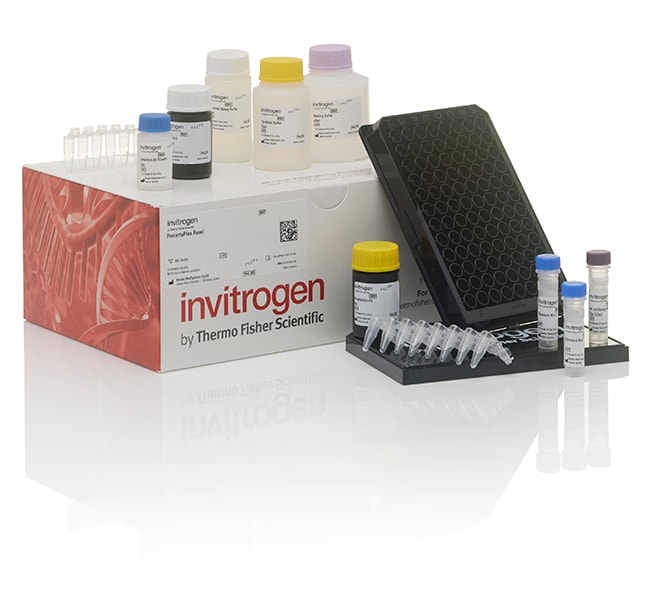
ProcartaPlex™ Human Immune Monitoring Panel for MAGPIX, 65plex
MAGPIX用ヒト免疫モニタリング65-Plex ProcartaPlexパネル は、Luminex xMAPテクノロジーを使用して、65個のサイトカイン、ケモカイン、および増殖因子を測定する、事前設定されたマルチプレックスイムノアッセイキットです。免疫応答プロファイリング詳細を見る
| 製品番号(カタログ番号) | 数量 |
|---|---|
| EPX650-16500-901 | 96テスト |
製品番号(カタログ番号) EPX650-16500-901
価格(JPY)
1,688,000
Each
数量:
96テスト
MAGPIX用ヒト免疫モニタリング65-Plex ProcartaPlexパネル は、Luminex xMAPテクノロジーを使用して、65個のサイトカイン、ケモカイン、および増殖因子を測定する、事前設定されたマルチプレックスイムノアッセイキットです。免疫応答プロファイリング、バイオマーカー探索、および検証のためにこれらの65種類のターゲットを同時に分析します。このキットは、MAGPIX機器で使用するために特別に設計された43-Plexキットと22-Plexキットの2つのキットで構成されており、最大50個のターゲットを同時に検出できます。Luminex 100ユーザーおよびFLEXMAP 3Dユーザーは、免疫モニタリング65 Plexパネル(カタログ番号EPX650-10065-901)を使用する必要があります。これには、1つのパネルに65のすべてのターゲットが含まれています。パネル(43-Plexおよび 22-Plex)は、1倍の濃度で調製されたキャプチャー試薬および検出試薬の個々のバイアルで、すぐに使用できるフォーマットで提供され、ピペット操作や実験の設定がほとんど不要です。
ProcartaPlex事前設定済みパネルは、検体の組み合わせ性、干渉、交差反応性について広範にテストされており、最高レベルの検証と精度を提供します。すべての ProcartaPlex パネルには、アッセイの実行に必要な試薬が付属しています。
ProcartaPlexマルチプレックスパネルは、6種の生物種(ヒト、マウス、ラット、ヒト以外の霊長類、ブタ、イヌ)にわたって複数のフォーマットで利用可能です。
ターゲットリスト[ビーズ領域]:
22-Plex:APRIL [52]、BAFF [65]、BLC(CXCL13)[15]、CD30 [34]、ENA-78(CXCL5)[55]、エオタキシン-2(CCL24)[37]、エオタキシン-3(CCL26)[77]、FGF-2 [75]、フラクタルカイン(CX3CL1)[39]、IL-16 [47]、IL-2R(CD25)[22]、IL-20 [26]、I-TAC(CXCL11)[46]、MCP-2(CCL8)[18]、MCP-3(CCL7)[66]、MDC(CCL22)[30]、MIF [67]、MIG(CXCL9)[54]、TNF-RII [45]、TRAIL(CD253)[29]、TSLP [61]、TWEAK [35]
43-Plex:CD40L(CD154)[74]、エオタキシン(CCL11)[33]、Gro-α(CXCL1)[61]、G-CSF(CSF-3)[42]、GM-CSF [44]、HGF [46]、IFNα[48]、IP-10(CXCL10)[22]、IFNγ[43]、IL-1α[62]、IL-1γ[18]、IL-2 [19]、IL-3 [73]、IL-4 [20]、IL-5 [21]、IL-6 [25]、IL-7 [26]、IL-8(CXCL8)[27]、IL-9 [52]、IL-10 [28]、IL-12p70 [34]、IL-13 [35]、IL-15 [65]、IL-17A(CTLA-8)[36]、IL-18 [66]、IL-21 [72]、IL-22 [76]、IL-23 [63]、IL-27 [14]、IL-31 [37]、LIF [15]、M-CSF [67]、MCP-1(CCL2)[51]、MIP-1α(CCL3)[12]、MIP-1β(CCL4)[47]、MIP-3α(CCL20)[56]、MMP-1 [64]、NGFγ[55]、SDF-1α(CXCL12)[13]、SCF [39]、TNFα[45]、TNFγ[54]、VEGF-A [78]
Luminexプラットフォーム用ProcartaPlexアッセイについて
ProcartaPlexイムノアッセイは、サンドイッチELISAの原則に基づいており、1つのタンパク質の複数のエピトープに結合した2つの特異的抗体を使用して、すべてのタンパク質ターゲットを同時に定量化します。ProcartaPlex マルチプレックスアッセイは、わずか 25 µL の血漿または血清、あるいは 50 µL の細胞培養上清のみを必要とし、分析結果を得るために要する時間もわずか 4 時間です。
次の特長があります。
• タンパク質標的の結合性や交差反応性試験など、業界最高水準のパネルとして検証された再現性と信頼性の高い結果
• 1つのサンプルあたりより多くの結果—25~50 µLの1つのサンプルで複数のタンパク質標的を同時に測定します
• タンパク質の検出および定量化のためのL確立されたLuminexテクノロジーを使用した高度な参照マルチプレックスプラットフォーム
ProcartaPlexアッセイでは、1つの25~50 µLのサンプルで血漿、血清、細胞培養上清、その他の体液から、—最大65個のタンパク質標的の同時検出および定量化のために、Luminex xMAP(多項目同時測定プロファイリング)テクノロジーを利用します。
ProcartaPlex事前設定済みパネルは、検体の組み合わせ性、干渉、交差反応性について広範にテストされており、最高レベルの検証と精度を提供します。すべての ProcartaPlex パネルには、アッセイの実行に必要な試薬が付属しています。
ProcartaPlexマルチプレックスパネルは、6種の生物種(ヒト、マウス、ラット、ヒト以外の霊長類、ブタ、イヌ)にわたって複数のフォーマットで利用可能です。
ターゲットリスト[ビーズ領域]:
22-Plex:APRIL [52]、BAFF [65]、BLC(CXCL13)[15]、CD30 [34]、ENA-78(CXCL5)[55]、エオタキシン-2(CCL24)[37]、エオタキシン-3(CCL26)[77]、FGF-2 [75]、フラクタルカイン(CX3CL1)[39]、IL-16 [47]、IL-2R(CD25)[22]、IL-20 [26]、I-TAC(CXCL11)[46]、MCP-2(CCL8)[18]、MCP-3(CCL7)[66]、MDC(CCL22)[30]、MIF [67]、MIG(CXCL9)[54]、TNF-RII [45]、TRAIL(CD253)[29]、TSLP [61]、TWEAK [35]
43-Plex:CD40L(CD154)[74]、エオタキシン(CCL11)[33]、Gro-α(CXCL1)[61]、G-CSF(CSF-3)[42]、GM-CSF [44]、HGF [46]、IFNα[48]、IP-10(CXCL10)[22]、IFNγ[43]、IL-1α[62]、IL-1γ[18]、IL-2 [19]、IL-3 [73]、IL-4 [20]、IL-5 [21]、IL-6 [25]、IL-7 [26]、IL-8(CXCL8)[27]、IL-9 [52]、IL-10 [28]、IL-12p70 [34]、IL-13 [35]、IL-15 [65]、IL-17A(CTLA-8)[36]、IL-18 [66]、IL-21 [72]、IL-22 [76]、IL-23 [63]、IL-27 [14]、IL-31 [37]、LIF [15]、M-CSF [67]、MCP-1(CCL2)[51]、MIP-1α(CCL3)[12]、MIP-1β(CCL4)[47]、MIP-3α(CCL20)[56]、MMP-1 [64]、NGFγ[55]、SDF-1α(CXCL12)[13]、SCF [39]、TNFα[45]、TNFγ[54]、VEGF-A [78]
Luminexプラットフォーム用ProcartaPlexアッセイについて
ProcartaPlexイムノアッセイは、サンドイッチELISAの原則に基づいており、1つのタンパク質の複数のエピトープに結合した2つの特異的抗体を使用して、すべてのタンパク質ターゲットを同時に定量化します。ProcartaPlex マルチプレックスアッセイは、わずか 25 µL の血漿または血清、あるいは 50 µL の細胞培養上清のみを必要とし、分析結果を得るために要する時間もわずか 4 時間です。
次の特長があります。
• タンパク質標的の結合性や交差反応性試験など、業界最高水準のパネルとして検証された再現性と信頼性の高い結果
• 1つのサンプルあたりより多くの結果—25~50 µLの1つのサンプルで複数のタンパク質標的を同時に測定します
• タンパク質の検出および定量化のためのL確立されたLuminexテクノロジーを使用した高度な参照マルチプレックスプラットフォーム
ProcartaPlexアッセイでは、1つの25~50 µLのサンプルで血漿、血清、細胞培養上清、その他の体液から、—最大65個のタンパク質標的の同時検出および定量化のために、Luminex xMAP(多項目同時測定プロファイリング)テクノロジーを利用します。
研究用途にのみご使用ください。診断目的には使用できません。
仕様
アッセイ範囲分析証明書を参照
アッセイ感度15%未満
検出法Fluorescence
使用対象 (装置)Luminex™ 装置
フォーマットMultiplex Kit
製品ラインProcartaPlex
サンプルタイプ血清、血漿、細胞培養上清, Plasma, Cell Culture Supernatants
サンプル量血清、血漿:25 μL、CCS:50 μL
出荷条件湿氷
CombinabilityNon-Combinable
製品タイプマルチプレックスパネル
数量96テスト
Research AreaImmunology
種Human
Unit SizeEach
組成および保存条件
- ヒト標準ミックスM(凍結乾燥)バイアル4本
- キャプチャービーズミックスM1(1X)バイアル1本
- キャプチャービーズミックスM2(1X)バイアル1本
- ビオチン化検出抗体ミックスM1(1X)バイアル1本
- ビオチン化検出抗体ミックスM2(1X)バイアル1本
- ヒトコントロール-Highバイアル4本
- ヒトコントロール-Lowバイアル4本
- 読み取りバッファー(1X)ボトル1本
- 洗浄バッファー(10X)ボトル1本
- ストレプトアビジン-PE(1X)ボトル1本
- ユニバーサルアッセイバッファー(1X)ボトル1本
- 8チューブストリップ
- 接着フィルム
- 平底96ウェルプレート2枚、黒
- 2℃~8℃で保存してください
よくあるご質問(FAQ)
What is the size of the Luminex beads you currently use?
I am interested in performing Luminex assays using BioSource kits, and I have a Luminex xMAP system. Besides the kits and system, what other reagents and equipment will I need?
Do the Luminex beads require special care in handling?
Why would the Luminex acquisition software display "Sample Empty" messages during analysis?
What are the Luminex beads made of?
引用および参考文献 (1)
引用および参考文献
Abstract
Multiplexing protein and gene level measurements on a single Luminex platform.
Journal:Methods
PubMed ID:30742996
'The ability to simultaneously measure multiple secreted proteins and the corresponding gene expression levels from a single sample is valuable for comprehensive analysis. Bottlenecks to traditional immunoassays and gene expression assays include large sample consumption, time consuming experimental procedures, and complex data analysis.'