Search

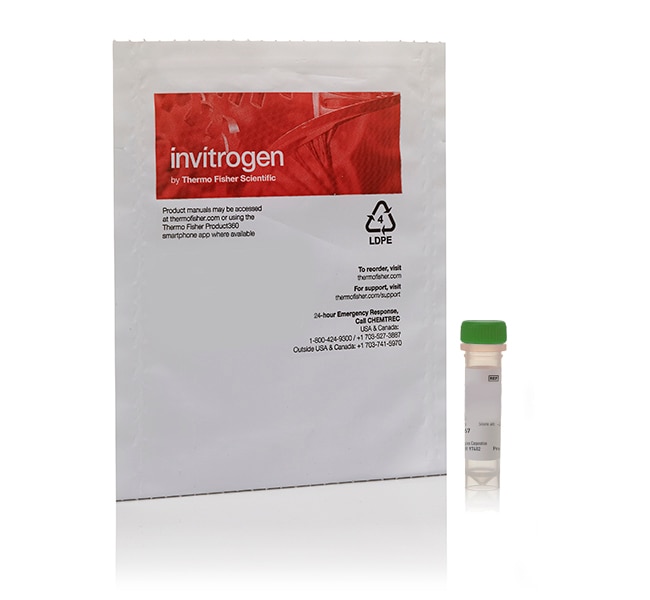


Image-iT Green Hypoxia Reagent is a novel, fixable fluorogenic compound for measuring hypoxia in live cells. It is non-fluorescent when live cells are in an environment with normal oxygen concentrations and becomes fluorescent when oxygen levels are decreased. Image-iT Green Hypoxia Reagent sustains its fluorescence when cells/tissue return to normal oxygen levels, allowing the cells/tissue to be fixed with minimal loss of fluorescent signal.
Image-iT Green Hypoxia Reagentは、生細胞中の低酸素状態を測定するための、固定可能な新しい蛍光性化合物です。生細胞が正常な酸素濃度環境にある場合は無蛍光で、酸素濃度が低下すると蛍光を発します。Image-iT Green Hypoxia Reagentは、細胞/組織が正常な酸素濃度に戻っても蛍光は持続するため、蛍光シグナルの損失を最小限に抑えながら細胞/組織を固定できます。
Image-iT Green Hypoxia Reagentの特長:
•低酸素環境で蛍光を発することにより、生細胞中の低酸素状態を示唆
• 固定可能—細胞/組織が正常な酸素濃度に戻っても蛍光シグナルは持続
• 使いやすい—細胞培養培地に添加して画像を取得するだけ
Image-iT Green Hypoxia Reagentは生細胞透過性のある蛍光性化合物で、低酸素濃度環境で蛍光を発します。これらの特性により、この試薬は低酸素状態の細胞や組織を検出するのに非常に有用なツールです。Image-iT Green Hypoxia Reagentは非常に高感度な酸素検出試薬です。Image-iT Green Hypoxia Reagentは、非常に低い酸素濃度にのみ反応するピモニダゾール付加物とは異なり、周囲の酸素濃度が5%未満になると蛍光し始めます。このような環境に迅速に反応し、酸素濃度が正常に戻っても蛍光は持続します。これらの特性により、Image-iT Green Hypoxia Reagentは、腫瘍、3D培養、スフェロイド、ニューロンなどの低酸素状態を検出するのに最適なツールです。
Image-iT Green Hypoxia Reagentの特長:
•低酸素環境で蛍光を発することにより、生細胞中の低酸素状態を示唆
• 固定可能—細胞/組織が正常な酸素濃度に戻っても蛍光シグナルは持続
• 使いやすい—細胞培養培地に添加して画像を取得するだけ
Image-iT Green Hypoxia Reagentは生細胞透過性のある蛍光性化合物で、低酸素濃度環境で蛍光を発します。これらの特性により、この試薬は低酸素状態の細胞や組織を検出するのに非常に有用なツールです。Image-iT Green Hypoxia Reagentは非常に高感度な酸素検出試薬です。Image-iT Green Hypoxia Reagentは、非常に低い酸素濃度にのみ反応するピモニダゾール付加物とは異なり、周囲の酸素濃度が5%未満になると蛍光し始めます。このような環境に迅速に反応し、酸素濃度が正常に戻っても蛍光は持続します。これらの特性により、Image-iT Green Hypoxia Reagentは、腫瘍、3D培養、スフェロイド、ニューロンなどの低酸素状態を検出するのに最適なツールです。
研究用途にのみご使用ください。診断目的には使用できません。
仕様
数量1バイアル
試薬タイプ低酸素試薬
出荷条件氷水またはドライアイスでの出荷が承認されています
製品ラインImage-iT
製品タイプ試薬
Unit SizeEach
組成および保存条件
-5~-30℃で保存。遮光。受け取り後6カ月間は安定しています。
よくあるご質問(FAQ)
Can Image-it Green Hypoxia Reagent be used in cells expressing fluorescent proteins?
Our Image-iT Green Hypoxia Reagent is already highly fluorescent before using the product. What could have caused this?
What is different between the use of the Hypoxia Green Reagent for Flow Cytometry (Cat No. H20035) versus imaging using the Image-iT Green Hypoxia Reagent (Cat Nos. I14833, I14834)?
Is Hypoxia Green Reagent for Flow Cytometry (Cat No. H20035) the same reagent as the Image-iT Green Hypoxia Reagent (Cat Nos. I14833, I14834)?
May I include a total cell stain (to stain all cells) along with Image-iT Hypoxia Reagent?
引用および参考文献 (1)
引用および参考文献
Abstract
Restricted exchange microenvironments for cell culture.
Journal:Biotechniques
PubMed ID:29570441
'Metabolite diffusion in tissues produces gradients and heterogeneous microenvironments that are not captured in standard 2D cell culture models. Here we describe restricted exchange environment chambers (REECs) in which diffusive gradients are formed and manipulated on length scales approximating those found in vivo. In REECs, cells are grown in 2D