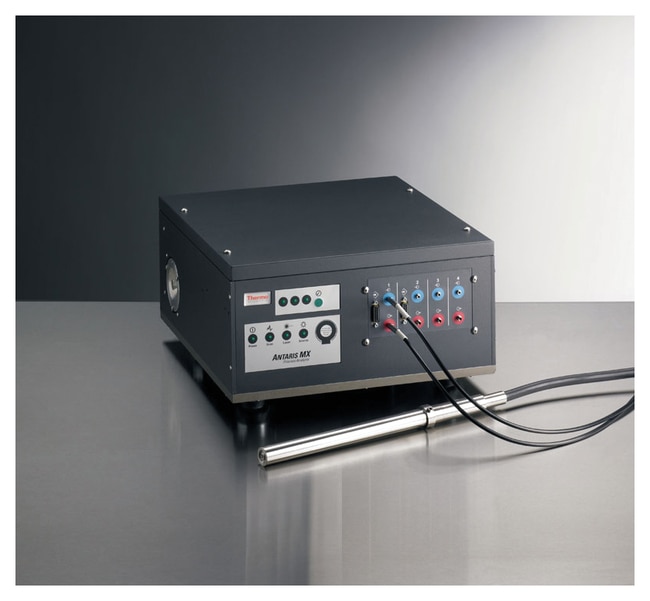
Antaris™ MX FT-NIR プロセスアナライザー
Thermo Scientific™

Antaris™ MX FT-NIR プロセスアナライザー

Antaris™ MX FT-NIR プロセスアナライザーは、光ファイバー同時多重通信技術を使用して、QC テストを最適化し、プロセスをリモートでモニタリングします。

製品番号(カタログ番号)分析計タイプ光源タイプスペクトル領域
IQLAADGABCFADUMAAZフーリエ変換近赤外長寿命、高輝度ハロゲン NIR ソース。システムにスペアソース付属。フィラメントイメージアライメントを保証12,000 ~ 3,800 cm-1(833 ~ 2,500 nm)
製品番号(カタログ番号) IQLAADGABCFADUMAAZ
価格(JPY)
-
見積もりを依頼する
分析計タイプ:
フーリエ変換近赤外
光源タイプ:
長寿命、高輝度ハロゲン NIR ソース。システムにスペアソース付属。フィラメントイメージアライメントを保証
スペクトル領域:
12,000 ~ 3,800 cm-1(833 ~ 2,500 nm)

Thermo Scientific™ Antaris™ MX FT-NIR プロセスアナライザーは、光ファイバー同時多重通信技術とリアルタイムフィードバック通信技術を使用して、プロセスを遠隔モニタリングしながら QC テストを最適化します。Antaris MX FT-NIR プロセスアナライザーは、現場の原材料分析およびオンラインプロセスモニタリングアプリケーション用の目的に適したソリューション一式を提供します。

操作が簡単な NIR アナライザーは、単一のプロセスを複数のポイントまたは複数のプロセスで同時にモニタリングできます。Antaris MX プロセスアナライザーは、バックグラウンド収集や適格性確認のためにプローブをプロセス中から取り出す必要もありません。

Antaris MX FT-NIR プロセスアナライザーの特徴:

  • Thermo Scientific™ ValPro™ 装置適合性確認パッケージ
  • 内部バックグラウンド常時オン
  • 光ファイバー用 SMA905 業界標準コネクタ — プロセスに最適なプローブを選択
  • プロセス通信用 OPC、4 ~ 20 mA およびデジタル入出力

ご注文情報:

Antaris MX FT-NIR プロセスアナライザーは、お客様特有のアプリケーションニーズに合わせて構成されたシステムとして販売されます。詳細については Thermo Scientific の販売代理店にお問い合わせください。

推奨用途:

  • プロセス内液体分析
  • プロセス内個体分析
  • ラボ内液体分析
  • ラボ内個体分析 


仕様
分析計タイプフーリエ変換近赤外
概要Antaris MX FT-NIR プロセスアナライザーは、光ファイバー同時多重通信技術を使用して、QC テストを最適化し、プロセスをリモートでモニタリングします。
検出高感度で高安定性の InGaAs
高さ(ヤードポンド法)18.97 ft x 15.98 ft x 9.72 ft
高さ(メートル法)24.7 cm
インターフェースPC を直接イーサネットに接続することにより、ファイルシステムおよび OPC 通信が可能
干渉計無摩擦で高安定性、かつ長寿命の 定評あるマイケルソン干渉計
動作温度範囲15°~35°C (59°~95°F)
測光線形性スロープ 1.0 ±0.05 およびインターセプト 0.0 ±0.05
分解能4cm-1フルスペクトルレンジ (1,250 nm において0.6 nm)、2 cm-1オプションフルスペクトルレンジ (1,250 nm において0.3 nm)
サンプリングモード光ファイバー多重通信
密閉および乾燥済みあり
光源タイプ長寿命、高輝度ハロゲン NIR ソース。システムにスペアソース付属。フィラメントイメージアライメントを保証
スペクトル領域12,000 ~ 3,800 cm-1(833 ~ 2,500 nm)
システム状態インジケーターインジケータランプにより、スキャン、レーザー、電源、およびソースステータスを継続的に通知
電圧90~264 VAC
波数確度±0.1 cm-1(1,250 nm において 0.02 nm)
波数反復性(システム間) 0.05 cm-1以上 (1,250 nm において 0.008)
波数再現性(システム間) 10 測定の基準偏差 <0.006 cm-1
重量 (ヤードポンド法)105.16 lb.
重量(メートル法)25.8 kg
Unit SizeEach

よくあるご質問(FAQ)

How are probes used for in-line NIR analysis?

Fiber optic probes can be used for analyzing liquid samples in transmission or solid samples in reflection. For samples that have bubbles or solids or change state between liquid and solid, a transflectance probe works the best. A fitting attached to the probe mates it with a port on a tank, pipe, reactor, hopper, or above a conveyor. The common fittings used with probes are Swagelok, sanitary tri-clamp or bolt-on.

How can I use an Antaris FT-NIR analyzer for in-line process analysis?

If the process environment has water hose down, CIP, dust, high temperature, corrosive or explosive chemicals, the Antaris FT-NIR analyzer needs to be placed in a safe area or enclosed in an environmentally stabilized enclosure. Fiber optics run from the NIR analyzer to probes or flow cells installed in production process pipes, tanks, hoppers, conveyors, reactors, etc. The fiber optics carry the NIR source light to the probe sampling window and then carry the light after it has interacted with the sample back to the NIR analyzer detector. The end of the probe will have a window or an air gap for reflection or transmission analysis. The product being analyzed must be self-cleaning or the probe engineered to automatically clean itself by high pressure air. The computer that controls the NIR analyzer is also located in the safe area with Thermo Scientific RESULT Software exporting NIR results to text or Microsoft Excel files, LIMS, OPC or by 4-20 mA.

Can current calibrations from a different manufacturer be transferred to the Antaris FT-NIR analyzer?

Yes, using the Thermo Scientific Standards converter utility program, spectra from other NIR manufacturers can be converted to a format directly compatible with the Antaris FT-NIR analyzer. The utility program converts spectra from wavelength to wave number as well as converts to a standard absorbance format. Then it automatically transfers the converted spectra and all associated wet chemistry data into Thermo Scientific TQ Analyst calibration development software. The method developer then sets the spectral processing and regions in TQ Analyst and calibrates the method into Antaris format.

What is Raman spectroscopy?

In Raman spectroscopy, an unknown sample of material is illuminated with monochromatic (single wavelength or single frequency) laser light, which can be absorbed, transmitted, reflected, or scattered by the sample. Light scattered from the sample is due to either elastic collisions of the light with the sample's molecules (Rayleigh scatter) or inelastic collisions (Raman scatter). Whereas Rayleigh scattered light has the same frequency (wavelength) of the incident laser light, Raman scattered light returns from the sample at different frequencies corresponding to the vibrational frequencies of the bonds of the molecules in the sample.

If you wish to learn more about Raman spectroscopy, visit our online Raman Spectroscopy Academy (https://www.thermofisher.com/us/en/home/industrial/spectroscopy-elemental-isotope-analysis/spectroscopy-elemental-isotope-analysis-learning-center/molecular-spectroscopy-information/raman-technology.html), where you will find basic Raman tutorials, advanced Raman webinars on sample applications, and a helpful instrument guide.