Search
 元素の検索
元素の検索 構造の検索
構造の検索


Thermo Scientific Chemicals
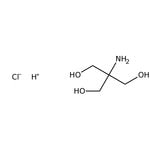
TE buffer, pH 8.0, RNAse free
CAS: 1185-53-1 | C4H12ClNO3 | 157.594 g/mol



仕様
CAS1185-53-1
化å¦ç‰©è³ªåã¾ãŸã¯æ質TE buffer
IUPACå2-amino-2-(hydroxymethyl)propane-1,3-diol;hydrochloride
InChIã‚ーQKNYBSVHEMOAJP-UHFFFAOYSA-N
MDL番å·MFCD00236359
さらに表示
Trizma is used in the formulation of buffer solutions in the pH range between 7.5 and 8.5. Tris buffer solutions are widely used in cell and molecular biology for processes such as protein and nucleic acid extraction and purification. Tris-EDTA (TE) buffer solution, pH 8.0 may also be used as a washing buffer. TE buffer is often used to store DNA and RNA while protecting it from degradation. Some protocols use TE 10:0.1 with 0.1 mM EDTA to reduce the interaction of the EDTA with downstream applications.
This Thermo Scientific Chemicals brand product was originally part of the Alfa Aesar product portfolio. Some documentation and label information may refer to the legacy brand. The original Alfa Aesar product / item code or SKU reference has not changed as a part of the brand transition to Thermo Scientific Chemicals.
Applications
Trizma is used in the formulation of buffer solutions in the pH range between 7.5 and 8.5. Tris buffer solutions are widely used in cell and molecular biology for processes such as protein and nucleic acid extraction and purification. Tris-EDTA (TE) buffer solution, pH 8.0 may also be used as a washing buffer. TE buffer is often used to store DNA and RNA while protecting it from degradation. Some protocols use TE 10:0.1 with 0.1 mM EDTA to reduce the interaction of the EDTA with downstream applications.
Solubility
Not miscible or difficult to mix in water.
Notes
200mM Tris-HCl with 20mM EDTA
Trizma is used in the formulation of buffer solutions in the pH range between 7.5 and 8.5. Tris buffer solutions are widely used in cell and molecular biology for processes such as protein and nucleic acid extraction and purification. Tris-EDTA (TE) buffer solution, pH 8.0 may also be used as a washing buffer. TE buffer is often used to store DNA and RNA while protecting it from degradation. Some protocols use TE 10:0.1 with 0.1 mM EDTA to reduce the interaction of the EDTA with downstream applications.
Solubility
Not miscible or difficult to mix in water.
Notes
200mM Tris-HCl with 20mM EDTA
RUO – Research Use Only
General References:
- H Ito, et al. Transformation of intact yeast cells treated with alkali cations.J. Bacteriol.,1983,153,(1), 163-168.
- Hamilton O. Smith and Max L. Birnstiel. A simple method for DNA restriction site mapping. Nucl. Acids Res.,1976,3,(9), 2387-2398.