Search

Invitrogen™
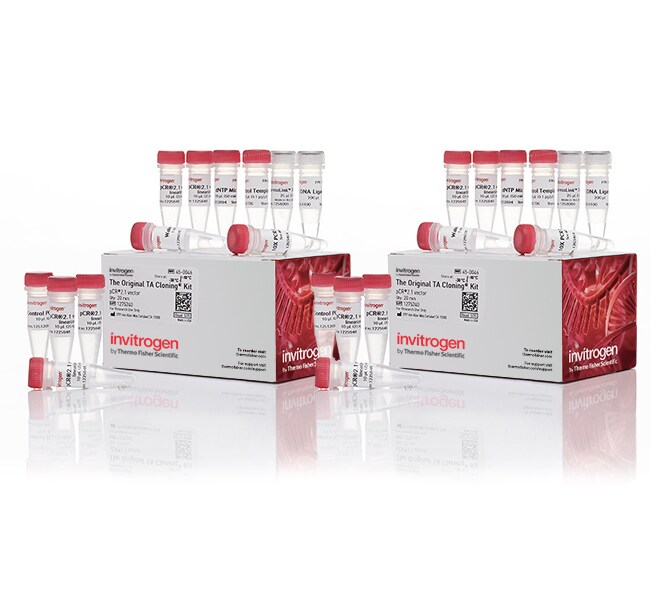
TA Cloning™ Kit, with pCR™2.1 Vector, without competent cells
PCR™2.1ベクター付きTAクローニング™キットは、Taq増幅PCR産物をプラスミドベクターに直接挿入するための迅速なワンステップクローニング戦略を実現します。TAクローニングキットは、PCR™2.1クローニングベクターとExpressLink T4 DNAリガーゼを使用して、15分間の室温でのライゲーションステップでライゲーション産物を生成します。反応では通常、インサートを含む>80%の組み換え体を生成します。pCR™2.1ベクター付きTA詳細を見る


製品番号(カタログ番号) K202040
価格(JPY)
51,100
Online offer
Ends: 25-Dec-2026
85,300割引額 34,200 (40%)
Each
反応数:
40反応
PCR™2.1ベクター付きTAクローニング™キットは、Taq増幅PCR産物をプラスミドベクターに直接挿入するための迅速なワンステップクローニング戦略を実現します。TAクローニングキットは、PCR™2.1クローニングベクターとExpressLink T4 DNAリガーゼを使用して、15分間の室温でのライゲーションステップでライゲーション産物を生成します。反応では通常、インサートを含む>80%の組み換え体を生成します。
pCR™2.1ベクター付きTA Cloning™キットの特長:
•高速で便利—室温での15分間のライゲーション
• 効率的—青/白スクリーニングおよび正しいインサートを使用した80%を超えるクローン
• 柔軟性—カナマイシン耐性またはアンピシリン耐性を選択できるため、抗生物質の選択が柔軟です
• 手間なし—PCR産物の酵素的修飾を排除します
• 合理化—制限部位を含むPCRプライマーを使用する必要はありません
pCR™2.1ベクターの特長:
• Taq増幅PCR産物の直接ライゲーションのための3'-Tオーバーハング
• in vitro RNA転写およびシーケンシング用のT7プロモーター
• インサート配列を簡単に切り出すためのEcoR I部位に隣接する多用途ポリリンカーシーケンス用の Taq 増幅PCR産物 T7 プロモーターの直接ライゲーションに使用
• シーケンシング用のM13フォワード/リバースプライマー部位
TAクローニング™の仕組み
Taqポリメラーゼにはテンプレートに依存しない活性があり、単一のデオキシアデノシン(A)をPCR産物の3'末端に付加します。このキットで提供される線形化ベクターには、単一の3'デオキシアデノシン(T)残基があります。PCRインサートでベクターによって効率的にライゲーションできます
キット構成
TAクローニング™キットは、さまざまな構成で提供されます:コンピテントセルなし(K2020-20および K2020-40)、One Shot™ INVFのケミカルコンピテント大腸菌あり(K2000-01およびK2000-40)、One Shot™ TOP10Fのケミカルコンピテント大腸菌あり(K2030-01およびK2030-40)、One Shot™ TOP10ケミカルコンピテント大腸菌あり(K2040-01およびK2040-40)、20-と40-の反応キット。
pCR™2.1ベクター付きTA Cloning™キットの特長:
•高速で便利—室温での15分間のライゲーション
• 効率的—青/白スクリーニングおよび正しいインサートを使用した80%を超えるクローン
• 柔軟性—カナマイシン耐性またはアンピシリン耐性を選択できるため、抗生物質の選択が柔軟です
• 手間なし—PCR産物の酵素的修飾を排除します
• 合理化—制限部位を含むPCRプライマーを使用する必要はありません
pCR™2.1ベクターの特長:
• Taq増幅PCR産物の直接ライゲーションのための3'-Tオーバーハング
• in vitro RNA転写およびシーケンシング用のT7プロモーター
• インサート配列を簡単に切り出すためのEcoR I部位に隣接する多用途ポリリンカーシーケンス用の Taq 増幅PCR産物 T7 プロモーターの直接ライゲーションに使用
• シーケンシング用のM13フォワード/リバースプライマー部位
TAクローニング™の仕組み
Taqポリメラーゼにはテンプレートに依存しない活性があり、単一のデオキシアデノシン(A)をPCR産物の3'末端に付加します。このキットで提供される線形化ベクターには、単一の3'デオキシアデノシン(T)残基があります。PCRインサートでベクターによって効率的にライゲーションできます
キット構成
TAクローニング™キットは、さまざまな構成で提供されます:コンピテントセルなし(K2020-20および K2020-40)、One Shot™ INVFのケミカルコンピテント大腸菌あり(K2000-01およびK2000-40)、One Shot™ TOP10Fのケミカルコンピテント大腸菌あり(K2030-01およびK2030-40)、One Shot™ TOP10ケミカルコンピテント大腸菌あり(K2040-01およびK2040-40)、20-と40-の反応キット。
研究用にのみ使用できます。診断用には使用いただけません。
仕様
菌株または酵母株含まれない
クローニング法TAクローニング
使用対象(アプリケーション)PCRクローニング
反応数40反応
製品ラインTAクローニング
製品タイプCloning Kit
プロモーターT7
数量40 rxns
ベクターpCR2.1
フォーマットキット
Unit SizeEach
組成および保存条件
TA Cloning™キットには、線形化PCR™ 2.1ベクター、ExpressLink™ T4 DNAリガーゼ、5X ExpressLink™ T4 DNAライゲーションバッファー、dNTP、10X PCRバッファー、滅菌水、およびコントロールが含まれています。
すべてのコンポーネントを-20°Cで保管してください。すべての試薬は、適切な保管条件であれば、6カ月間安定していることが保証されています。
すべてのコンポーネントを-20°Cで保管してください。すべての試薬は、適切な保管条件であれば、6カ月間安定していることが保証されています。