Search


Citations & References (19)
Invitrogen™
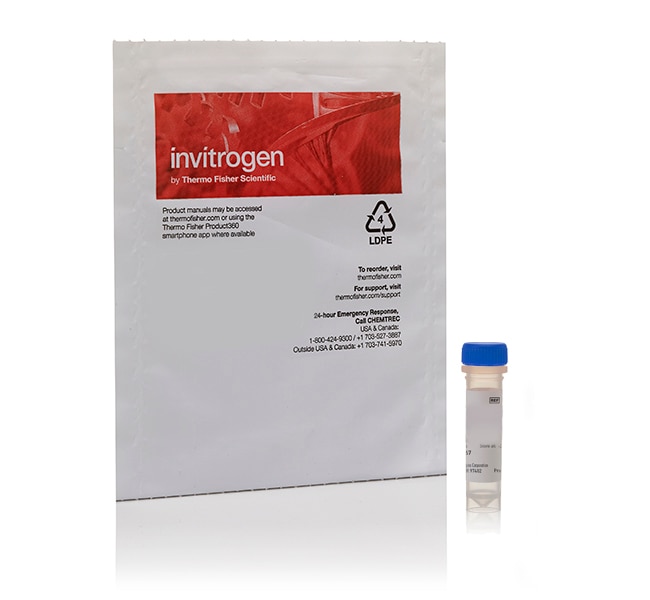
Low Density Lipoprotein From Human Plasma, Acetylated, Alexa Fluor™ 488 Conjugate (Alexa Fluor™ 488 AcLDL)
ヒト低密度リポタンパク質(LDL)は、脊椎動物細胞の表面にある特定の受容体に結合し、受容体媒介性エンドサイトーシスを介してコレステロールを送達する、大きなタンパク質複合体(約500,000 Da)です—標識されたLDL複合体は、この現象を研究するための便利なツールです詳細を見る
| 製品番号(カタログ番号) | 数量 |
|---|---|
| L23380 | 200 μL |
製品番号(カタログ番号) L23380
価格(JPY)
94,100
Online offer
Ends: 25-Sep-2026
134,500割引額 40,400 (30%)
Each
数量:
200 μL
ヒト低密度リポタンパク質(LDL)は、脊椎動物細胞の表面にある特定の受容体に結合し、受容体媒介性エンドサイトーシスを介してコレステロールを送達する、大きなタンパク質複合体(約500,000 Da)です—標識されたLDL複合体は、この現象を研究するための便利なツールです。これらの実験は、通常、蛍光標識されたLDLを培養細胞に添加し、顕微鏡またはフローサイトメトリーでそれらを分析することによって行われます。あるいは、蛍光標識されたLDLを試験動物に注入し、指定された時間後に標識の分布を分析することもできます。当社は、非標識LDLと2つのクラスの標識済みLDLを提供しています。未修飾のアポタンパク質を含むもの(正常なコレステロールの送達と内在化を研究するために使用)、およびアセチル化(Ac)アポタンパク質を含むもの(このアセチル化バージョンに特異的な受容体を発現する細胞タイプ(すなわち、内皮細胞とミクログリア細胞)を研究するために使用)。
LDLの仕様:
•標識(Ex/Em):Alexa Fluor™ 488(495/519)
• アセチル化:あり
• 量:200 µL(1.0 mg/mL)
の新鮮なLDLを継続的に製造
当社は、約2カ月ごとに新鮮なヒト血漿からLDLおよびAcLDL製品を調製しています。非アセチル化LDL製品は、調整後2週間以内に出荷されます。すべてのアセチル化LDL製品は継続的に入手可能です。
非アセチル化LDLとアセチル化LDL
未修飾のアポタンパク質を含むLDLは、正常なコレステロールの送達と内在化を研究するために使用されます。LDLアポタンパク質のリジン残基がアセチル化されている場合、LDL複合体はLDL受容体に結合せず、その修飾型に特異的な「スカベンジャー」受容体を持つ内皮細胞およびミクログリア細胞に取り込まれます。
標識LDLの主要な用途
標識したLDL複合体の用途には、次のようなものがあります。
•細胞表面のLDL受容体を数え、それらの動きを分析し、次の内在化をクラスター化します
• 線維芽細胞におけるLDL受容体活性の定量化(放射性標識LDLアッセイの交換)
• さまざまな細胞株におけるLDL発現の調査とLDL受容体欠損の特定
本製品は研究用試薬です。ヒトまたは動物の治療もしくは診断用には使用できません。
LDLの仕様:
•標識(Ex/Em):Alexa Fluor™ 488(495/519)
• アセチル化:あり
• 量:200 µL(1.0 mg/mL)
の新鮮なLDLを継続的に製造
当社は、約2カ月ごとに新鮮なヒト血漿からLDLおよびAcLDL製品を調製しています。非アセチル化LDL製品は、調整後2週間以内に出荷されます。すべてのアセチル化LDL製品は継続的に入手可能です。
非アセチル化LDLとアセチル化LDL
未修飾のアポタンパク質を含むLDLは、正常なコレステロールの送達と内在化を研究するために使用されます。LDLアポタンパク質のリジン残基がアセチル化されている場合、LDL複合体はLDL受容体に結合せず、その修飾型に特異的な「スカベンジャー」受容体を持つ内皮細胞およびミクログリア細胞に取り込まれます。
標識LDLの主要な用途
標識したLDL複合体の用途には、次のようなものがあります。
•細胞表面のLDL受容体を数え、それらの動きを分析し、次の内在化をクラスター化します
• 線維芽細胞におけるLDL受容体活性の定量化(放射性標識LDLアッセイの交換)
• さまざまな細胞株におけるLDL発現の調査とLDL受容体欠損の特定
本製品は研究用試薬です。ヒトまたは動物の治療もしくは診断用には使用できません。
研究用にのみ使用できます。診断用には使用いただけません。
仕様
濃度1 mg⁄ml
検出法蛍光
染色剤タイプAlexa Fluor Dyes
形状Liquid
数量200 μL
出荷条件Wet Ice
製品ラインAlexa Fluor
製品タイプSupplement
Unit SizeEach
組成および保存条件
Store in refrigerator (2–8°C) and protect from light.
よくあるご質問(FAQ)
If the Low Density Lipoprotein (LDL) from Human Plasma was accidentally frozen, can I still use it?
Can I use Low Density Lipoprotein (LDL) from Human Plasma on other species?
引用および参考文献 (19)
引用および参考文献
Abstract
Somatic cell plasticity and Niemann-Pick type C2 protein: fibroblast activation.
Journal:J Biol Chem
PubMed ID:21084287
A growing body of evidence points toward activated fibroblasts, also known as myofibroblasts, as one of the leading mediators in several major human pathologies including proliferative fibrotic disorders, invasive tumor growth, rheumatoid arthritis, and atherosclerosis. Niemann-Pick Type C2 (NPC2) protein has been recently identified as a product of the second
Silence of TRIB3 suppresses atherosclerosis and stabilizes plaques in diabetic ApoE-/-/LDL receptor-/- mice.
Journal:Diabetes
PubMed ID:22275087
'Insulin resistance triggers the developments of diabetes mellitus and atherosclerosis. Tribbles homolog 3 (TRIB3) is involved in insulin resistance. We aimed to investigate whether TRIB3 is implicated in diabetic atherosclerosis. Sixty 3-week-old apolipoprotein E (ApoE-/-)/LDR receptor (LDLR-/-) mice were randomly divided into chow and diabetes groups. Diabetes was induced by
Deficient p27 phosphorylation at serine 10 increases macrophage foam cell formation and aggravates atherosclerosis through a proliferation-independent mechanism.
Journal:Arterioscler Thromb Vasc Biol
PubMed ID:21885849
Genetic ablation of the growth suppressor p27(Kip1) (p27) in the mouse aggravates atherosclerosis coinciding with enhanced arterial cell proliferation. However, it is unknown whether molecular mechanisms that limit p27's protective function contribute to atherosclerosis development and whether p27 exerts proliferation-independent activities in the arterial wall. This study aims to provide
cGMP increases antioxidant function and attenuates oxidant cell death in mouse lung microvascular endothelial cells by a protein kinase G-dependent mechanism.
Journal:Am J Physiol Lung Cell Mol Physiol
PubMed ID:20453163
Increasing evidence suggests that endothelial cytotoxicity from reactive oxygen species (ROS) contributes to the pathogenesis of acute lung injury. Treatments designed to increase intracellular cGMP attenuate ROS-mediated apoptosis and necrosis in several cell types, but the mechanisms are not understood, and the effect of cGMP on pulmonary endothelial cell death
ILK mediates LPS-induced vascular adhesion receptor expression and subsequent leucocyte trans-endothelial migration.
Journal:Cardiovasc Res
PubMed ID:20164118
The inflammatory response to injurious agents is tightly regulated to avoid adverse consequences of inappropriate leucocyte accumulation or failed resolution. Lipopolysaccharide (LPS)-activated endothelium recruits leucocytes to the inflamed tissue through controlled expression of membrane-associated adhesion molecules. LPS responses in macrophages are known to be regulated by integrin-linked kinase (ILK); in