Search




Citations & References (4)
Invitrogen™
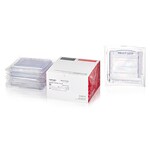
NuPAGE™ Bis-Tris Mini Protein Gels, 10%, 1.0–1.5 mm
Invitrogen NuPAGE ビス-トリスタンパク質ゲルはプレキャストポリアクリルアミドゲルであり、高分解能とサンプルの完全性で、分子量の広いタンパク質分離を実現します。これらのプレキャストゲルは、タンパク質の完全性が重要なアプリケーションに最適です。


| 製品番号(カタログ番号) | ウェル | Gel Thickness | 数量 |
|---|---|---|---|
| NP0303BOX | 15ウェル | 1.0 mm | 10ゲル/箱 |
| NP0301BOX | 10ウェル | 1.0 mm | 10ゲル/箱 |
| NP0301PK2 | 10ウェル | 1.0 mm | 2ゲル/箱 |
| NP0302BOX | 12ウェル | 1.0 mm | 10ゲル/箱 |
| NP0302PK2 | 12ウェル | 1.0 mm | 2ゲル/箱 |
| NP0304BOX | 1ウェル | 1.0 mm | 10ゲル/箱 |
| NP0306BOX | 2Dウェル | 1.0 mm | 10ゲル/箱 |
| NP0307BOX | 9ウェル | 1.0 mm | 10ゲル/箱 |
| NP0315BOX | 10ウェル | 1.5 mm | 10ゲル/箱 |
| NP0316BOX | 15ウェル | 1.5 mm | 10ゲル/箱 |
製品番号(カタログ番号) NP0303BOX
価格(JPY)
27,900
Each
ウェル:
15ウェル
Gel Thickness:
1.0 mm
数量:
10ゲル/箱
Invitrogen NuPAGE ビス-トリスタンパク質ゲルはプレキャストポリアクリルアミドゲルであり、高分解能とサンプルの完全性で、分子量の広いタンパク質分離を実現します。これらのプレキャストゲルは、タンパク質の完全性が重要なアプリケーションに最適です。従来のトリス-グリシンゲルとは異なり、NuPAGEビス-トリスゲルのpH環境は中性であるため、タンパク質修飾を最小限に抑えます。NuPAGE ビス-トリスゲルは、シーケンシング、質量分析、およびタンパク質の完全性が重要なその他の技術用にタンパク質を調製する場合に使用します。
NuPAGE Bis-Trisゲルの特長:
•より優れたタンパク質の統合性—最適化されたサンプル調製プロセスタンパク質により、タンパク質が保護されます
• 分子量の幅広い分離—適切なゲルと泳動バッファーを選択して、タンパク質を最適に分離します。
• 迅速な泳動—タンパク質の分離をわずか 35分で行えます。
• 長い製品寿命—NuPAGE ビス-トリスゲルは室温で 12ヵ月以上保存できます。
タンパク質分離に適した NuPAGE ビス-トリスゲルを選択してください。
ゲルと泳動バッファーの適切な組み合わせを選択することで、タンパク質の最適な分離が得られます。NuPAGEビス-トリスタンパク質ゲルには、4種類のポリアクリルアミド濃度があります:8%、10%、12%、および 4–12% のグラジエント。ゲルのサイズは、ミニ(8 cm×8 cm)またはミディ(8.7 cm×13.3 cm)の2種類があり、厚さは1.0 mm(ミニゲルおよびミディゲル)または1.5 mm(ミニゲルフォーマットのみ)です。また、NuPAGE Bis-Trisゲルには、複数のウェルフォーマットがあります。
NuPAGE Bis-Trisゲルは、変性ゲル電気泳動アプリケーション用に調製されています。最適なサンプル調製には、NuPAGE LDSサンプルバッファー(NP0007)およびNuPAGEサンプル還元剤(NP0004)をご使用ください。泳動バッファーにNuPAGE抗酸化剤(NP0005)を使用すると、泳動中のタンパク質の還元状態を維持し、バンドのシャープさを最大限に高めます。このゲルは、NuPAGE MES SDS Running Buffer(NP0002)を使用して泳動することで、少量のタンパク質の分離を促します。また、NuPAGE MOPS SDS Running Buffer(NP000102)を使用して中~大きいサイズのタンパク質を分離することができます。
タンパク質を膜に転写する場合は、Mini Blot Module(B1000)またはXCell II Blot Module(EI9051)を用いて、従来のウェットトランスファーにNuPAGE Transfer Buffer(NP00061)を使用することを推奨します。また、高速セミドライ転写にはInvitrogen Power Blotter、または高速ドライ転写にはiBlot 2 Gel転写装置(IB210010)を使用することも可能です。
For Research Use Only. Not for use in diagnostic procedures.
仕様
使用対象 (装置)XCell SureLock Mini-Cell
Gel Thickness1.0 mm
長さ(メートル法)8 cm
分離モード分子量
数量10ゲル/箱
推奨アプリケーション変性
サンプル充填量最大15 µL
品質保持期間12カ月
出荷条件室温
保存要件4–25 ℃ にて保管してください。冷凍不可。
幅(メートル法)8 cm
ゲル濃度10%
ゲルサイズミニ
ゲルタイプBis-Tris
製品ラインNuPAGE
分離範囲3.5~260 kDa
分離タイプ変性
ウェル15ウェル
Unit SizeEach
よくあるご質問(FAQ)
Can I prepare my protein sample with the reducing agent and store it for future use?
My LDS or SDS sample buffer precipitates when stored at 4 degrees C. Can I warm it up? Can I store it at room temperature?
How are Bolt gels different than NuPAGE gels?
What is the advantage of NuPAGE Gels over regular Tris-Glycine gels?
What does it mean when bands appear to be getting narrower (or "funneling") as they progress down a protein gel?
引用および参考文献 (4)
引用および参考文献
Abstract
Oligomerization of the fifth transmembrane domain from the adenosine A2A receptor.
Journal:Protein Sci
PubMed ID:15987888
The human adenosine A2A receptor (A(2A)R) belongs to one of the largest family of membrane proteins, the G-protein coupled receptors (GPCRs), characterized by seven transmembrane (TM) helices. Little is known about the determinants of their structures, folding, assembly, activation mechanisms, and oligomeric states. Previous studies in our group showed that
Identification and expression of immunogenic proteins of a disease-associated marine turtle herpesvirus.
Journal:J Virol
PubMed ID:12239336
Herpesviruses are associated with several diseases of marine turtles, including lung-eye-trachea disease (LETD) and fibropapillomatosis. Two approaches were used to identify immunodominant antigens of LETV, the LETD-associated herpesvirus. The first approach targeted glycoprotein B, which is known to be immunogenic and neutralizing in other species. The second strategy identified LETV
Rapid exchange of actin-bound nucleotide in perfused rat heart.
Journal:Am J Physiol Heart Circ Physiol
PubMed ID:15020303
In the rat heart the actin-bound nucleotide contained both ATP and ADP. The ratio of bound ATP to bound ADP depended on the functional state of the heart; it was higher in hearts stopped reversibly in diastole (low Ca(2+), high Mg(2+), or high K(+)), than in stimulated (inotropic agents or
A regulatory light chain of ciliary outer arm dynein in Tetrahymena thermophila.
Journal:J Biol Chem
PubMed ID:11274140
Ciliary beat frequency is primarily regulated by outer arm dyneins (22 S dynein). Chilcote and Johnson (Chilcote, T. J., and Johnson, K. A. (1990) J. Biol. Chem. 256, 17257-17266) previously studied isolated Tetrahymena 22 S dynein, identifying a protein p34, which showed cAMP-dependent phosphorylation. Here, we characterize the molecular biochemistry