Search


Citations & References (7)
Invitrogen™
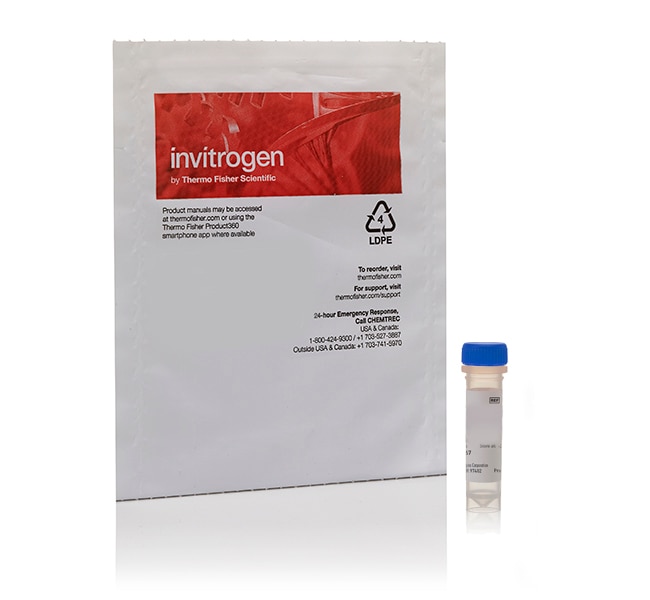
Qtracker™ 800 Vascular Labels
Qtracker™非標的量子ドットは、小動物in vivoイメージング(SAIVI)技術を用いた血管構造の研究のために、マウスの尾静脈に注入するように設計されています。これらのナノ結晶は、組織への浸透性を高めるためにレッドにシフトした発光を伴う強い蛍光を示し、非特異的な相互作用を最小限に抑え、組織による免疫応答を低減するために特別に開発されたPEG表面コーティングを有しています詳細を見る
| 製品番号(カタログ番号) | 数量 |
|---|---|
| Q21071MP | 200 μL |
製品番号(カタログ番号) Q21071MP
価格(JPY)
140,300
Each
数量:
200 μL
Qtracker™非標的量子ドットは、小動物in vivoイメージング(SAIVI)技術を用いた血管構造の研究のために、マウスの尾静脈に注入するように設計されています。これらのナノ結晶は、組織への浸透性を高めるためにレッドにシフトした発光を伴う強い蛍光を示し、非特異的な相互作用を最小限に抑え、組織による免疫応答を低減するために特別に開発されたPEG表面コーティングを有しています。PEG表面コーティングには反応官能基が含まれていないため、 には反応官能基が含まれていないため、QTracker™非標的量子ドットはより長く循環した状態で保持され、1回の注入で最大3時間、または追加の注入でより長い時間イメージングできます。
異なる蛍光スペクトルや長いトラッキングが必要ですか?その他の哺乳類細胞トラッキング製品をご覧ください。
主な特性:
•Qtracker™ 800ラベルは、Ex/Em(405~760/800)nmを有しています
• 小動物in vivoイメージングのために設計されています
• 尾静脈注射を介して導入され、注入後3時間までのためにイメージングすることができます
• 4色で利用可能—565 nm、655 nm、705 nm、または800 nm発光で
SAIVIとQdot™ ナノ結晶のアプリケーションの詳細をご覧ください。
研究用途専用です。ヒトまたは動物の治療もしくは診断用には使用できません。
異なる蛍光スペクトルや長いトラッキングが必要ですか?その他の哺乳類細胞トラッキング製品をご覧ください。
主な特性:
•Qtracker™ 800ラベルは、Ex/Em(405~760/800)nmを有しています
• 小動物in vivoイメージングのために設計されています
• 尾静脈注射を介して導入され、注入後3時間までのためにイメージングすることができます
• 4色で利用可能—565 nm、655 nm、705 nm、または800 nm発光で
SAIVIとQdot™ ナノ結晶のアプリケーションの詳細をご覧ください。
研究用途専用です。ヒトまたは動物の治療もしくは診断用には使用できません。
研究用にのみ使用できます。診断用には使用いただけません。
仕様
濃度2 μM
染色剤タイプQdotナノ結晶
製品ラインQTRACKER、Qdot
数量200 μL
試薬タイプ血管イメージング試薬
出荷条件室温
技術In Vivoイメージング
製品タイプ標識
Unit SizeEach
組成および保存条件
200 μl Qtracker™非標的量子ドット(μ50 mmホウ酸バッファー中の 2 M溶液、pH 8.3)を含みます。2–6°℃で保管してください。冷凍不可。6カ月以上安定。
よくあるご質問(FAQ)
When I label with Qtracker cell labeling reagents, I get a punctate label pattern. How do I make it more uniform?
How long after injection should I start imaging my mouse?
What happens to unconjugated dye in the mouse after small animal in vivo imaging?
What amount of Qtracker non-targeted reagent should I inject to image vasculature?
I want to track my cells with a nucleic acid stain, like DAPI or Hoechst dye. Do you recommend this?
引用および参考文献 (7)
引用および参考文献
Abstract
Noninvasive vascular imaging in fluorescent tumors using multispectral unmixing.
Journal:Biotechniques
PubMed ID:18855773
Noninvasive imaging of tumor vascularization in animal models provides an important tool for studying the biology of tumor angiogenesis as well as monitoring the effects of antiangiogenic therapies. Through the use of in vivo multispectral fluorescent imaging, we have discovered a distinct spectral signature associated with blood vessels present in
The chemokine receptors ACKR2 and CCR2 reciprocally regulate lymphatic vessel density.
Journal:EMBO J
PubMed ID:25271254
Skeletal myofiber VEGF regulates contraction-induced perfusion and exercise capacity but not muscle capillarity in adult mice.
Journal:Am J Physiol Regul Integr Comp Physiol
PubMed ID:27225953
Intravital fluorescence imaging of mouse brain using implantable semiconductor devices and epi-illumination of biological tissue.
Journal:Biomed Opt Express
PubMed ID:26137364
Indocyanine green nanoparticles undergo selective lymphatic uptake, distribution and retention and enable detailed mapping of lymph vessels, nodes and abnormalities.
Journal:J Drug Target
PubMed ID:29388438