Search



Citations & References (12)
Invitrogen™
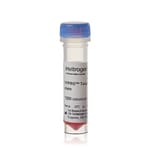
SYPRO™ Protein Gel Stains
SYPRO protein gel stains are sensitive, easy-to-use fluorescent stains for total proteins separated by polyacrylamide gel electrophoresis (PAGE).
Have Questions?
Change view

| Catalog Number | Color | Quantity |
|---|---|---|
| S12010 | Tangerine | 500 μL |
| S6650 | Orange | 500 μL |
| S6651 | Orange | 10 x 50 μL |
| S6653 | Red | 500 μL |
| S6654 also known as S-6654 | Red | 10 x 50 μL |
| S12001 | Ruby | 200 mL |
| S12000 | Ruby | 1 L |
| S21900 | Ruby | 5 L |
| S12000X3 | Ruby | 3 x 1 L |
Catalog number S12010
Price (USD)
338.65
Online exclusive
353.00Save 14.35
Each
Color:
Tangerine
Quantity:
500 μL
Price (USD)
338.65
Online exclusive
353.00Save 14.35
Each
SYPRO protein gel stains are sensitive, easy-to-use fluorescent stains for total proteins separated by polyacrylamide gel electrophoresis (PAGE). Stained proteins can be viewed with a standard UV or blue-light transilluminator, or imaging equipment containing the appropriate filters or laser. SYPRO protein gel stains offer many advantages over Coomassie Blue and silver staining, including a fast, one-step staining protocol requiring no destaining, a linear dynamic range over three orders of magnitude, and very little protein-to-protein variation in staining.
SYPRO Ruby Protein Gel Stain features include:
- Convenient—ready-to-use formulation
- High sensitivity—detection to 0.25 to 1 ng
- Effective staining for 1D and 2D gels
- Can be multiplexed with other gel stains such as Pro-Q Diamond phosphoprotein gel stain or Pro-Q Emerald 300 glycoprotein gel stain
- Compatible with subsequent analysis of proteins by Edman-based sequencing or mass spectrometry
SYPRO Orange and SYPRO Red protein gel stain features include:
- Sensitive—detection to 4 to 8 ng
- Fast—rapid staining time of 10–60 min
- Best for 1D gels
- SYPRO Orange: Ex: 300, 470 nm, Em: 570 nm
- SYPRO Red: Ex: 300, 550 nm, Em: 630 nm
SYPRO Tangerine Protein Gel Stain features include:
- Sensitive—detection to 4 to 8 ng
- Fast—rapid staining time of 10 to 60 minutes
- Best for 1D gels
- Does not require fixation with acetic acid
- Compatible with subsequent gel staining, western blotting, zymography, electroelution or mass spectrometry
For Research Use Only. Not for use in diagnostic procedures.
Specifications
Concentration5000X in DMSO
Detection LocationIn-Gel Detection
Detection MethodFluorescence
Excitation/Emission300, 490/640 nm
Quantity500 μL
Shelf Life3 Months
Shipping ConditionRoom Temperature
Target MoleculeProtein
ColorTangerine
Label or DyeSYPRO Tangerine
Product LineSYPRO
Product TypeProtein Gel Stain
Unit SizeEach
Contents & Storage
Store at room temperature and protect from light.
Citations & References (12)
Citations & References
Abstract
Translational regulation of prostaglandin endoperoxide H synthase-1 mRNA in megakaryocytic MEG-01 cells. Specific protein binding to a conserved 20-nucleotide CIS element in the 3'-untranslated region.
Journal:J Biol Chem
PubMed ID:12237309
Prostaglandin endoperoxide H synthase-1 (PGHS-1) is an abundant enzyme in platelets, where it plays a key role in the cascade of prostanoid formation. In platelets, the primary site of PGHS-1 synthesis is in precursor megakaryocytic cells. We have previously shown that in megakaryocytic MEG-01 cells, TPA induces an increase of
Social exploitation of vitellogenin.
Journal:Proc Natl Acad Sci U S A
PubMed ID:12566563
'Vitellogenin is a female-specific glucolipoprotein yolk precursor produced by all oviparous animals. Vitellogenin expression is under hormonal control, and the protein is generally synthesized directly before yolk deposition. In the honeybee (Apis mellifera), vitellogenin is not only synthesized by the reproductive queen, but also by the functionally sterile workers. In
Virulence-associated trimeric autotransporters of Haemophilus parasuis are antigenic proteins expressed in vivo.
Journal:Vet Res
PubMed ID:19995512
Glässer's disease is a re-emerging swine disease characterized by a severe septicaemia. Vaccination has been widely used to control the disease, although there is a lack of extended cross-protection. Trimeric autotransporters, a family of surface exposed proteins implicated in host-pathogen interactions, are good vaccine candidates. Members of this family have
A method for the isolation of covalent DNA-protein crosslinks suitable for proteomics analysis.
Journal:Anal Biochem
PubMed ID:16091282
The covalent crosslinking of protein to DNA is a form of DNA damage induced by a number of commonly encountered agents, including metals, aldehydes, and radiation as well as chemotherapeutic drugs. DNA-protein crosslinks (DPCs) are potentially bulky and helix distorting and have the potential to block the progression of translocating
Identification of mammalian proteins cross-linked to DNA by ionizing radiation.
Journal:J Biol Chem
PubMed ID:16093242
Ionizing radiation (IR) is an important environmental risk factor for various cancers and also a major therapeutic agent for cancer treatment. Exposure of mammalian cells to IR induces several types of damage to DNA, including double- and single-strand breaks, base and sugar damage, as well as DNA-DNA and DNA-protein cross-links