Search


Citations & References (2)
Invitrogen™
ProcartaPlex™ NHP Cytokine & Chemokine Panel, 30plex
非ヒト霊長類サイトカイン&ケモカイン30‐プレックスProcartaPlexパネルは、Luminex xMAP技術を使用して1つのウェルで30つのタンパク質ターゲットを分析することにより、免疫機能の研究を可能にします。このパネルは 非ヒト霊長類サイトカイン/ケモカイン/増殖因子37-プレックスProcartaPlexパネルのサブセットである3つのモジュール式サブパネルで構成されています。(カタログ番号EPX370-40045-901)。このキットは詳細を見る
| 製品番号(カタログ番号) | 数量 |
|---|---|
| EPX300-40044-901 | 96テスト |
製品番号(カタログ番号) EPX300-40044-901
価格(JPY)お問い合わせください ›
937,700
Each
数量:
96テスト
非ヒト霊長類サイトカイン&ケモカイン30‐プレックスProcartaPlexパネルは、Luminex xMAP技術を使用して1つのウェルで30つのタンパク質ターゲットを分析することにより、免疫機能の研究を可能にします。このパネルは 非ヒト霊長類サイトカイン/ケモカイン/増殖因子37-プレックスProcartaPlexパネルのサブセットである3つのモジュール式サブパネルで構成されています。(カタログ番号EPX370-40045-901)。このキットは、37プレックスパネルの標的に対応する他のサブパネルまたは個別シンプレックスアッセイと完全に組み合わせ可能です。
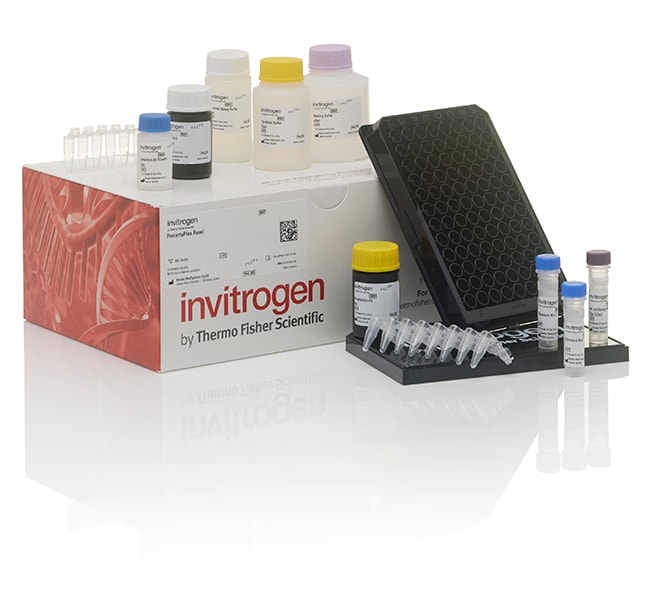
ProcartaPlex事前設定済みパネルは、検体の組み合わせ性、干渉、交差反応性について広範にテストされており、最高レベルの検証と精度を提供します。すべての ProcartaPlex パネルには、アッセイの実行に必要な試薬が付属しています。
ProcartaPlexマルチプレックスパネルは、6 種の生物種(ヒト、マウス、ラット、ヒト以外の霊長類、ブタ、イヌ)にわたって複数のフォーマットで利用可能です。詳細と利用可能な製品については、ProcartaPlexイムノアッセイページをご覧ください。
ターゲットリスト[ビーズ領域]:
Tヘルパー:GM-CSF [44], IFNγ [43], IL-1β [18], IL-2 [19], IL-4 [20], IL-5 [21], IL-6 [25], IL-8 (CXCL8) [27], IL-10 [28], IL-12p70 [34], IL-13 [35], IL-17A (CTLA-8) [36], IL-18 [66], IL-23 [63], TNFα [45]
サイトカイン:CD40L [74], G-CSF (CSF-3) [42], IFNα [48], IL-1RA [38], IL-7 [26], IL-15 [65]
ケモカイン:BLC(CXCL13)[15]、エオタキシン(CCL11)[33]、IP-10(CXCL10)[22]、I-TAC(CXCL11)[46]、MCP-1(CCL2)[51]、MIG (CXCL9)[54]、MIP-1α(CCL3)[12]、MIP-1β(CCL4)[47]、SDF-1α[13]
Luminexプラットフォーム用ProcartaPlexアッセイについて
ProcartaPlex免疫測定法はサンドイッチELISAの原理に基づいており、1つのタンパク質の異なるエピトープに結合する2つの高特異性抗体を使用して、Luminex装置により、すべてのタンパク質標的を同時に定量できます。ProcartaPlexマルチプレックスアッセイは、25 µLの血漿または血清、または50 µLの細胞培養上清のみが必要で、わずか4時間で分析結果が得られます。
次の特長があります。
• 再現性と信頼性の高い結果—タンパク質標的の結合性や交差反応性試験など、業界最高水準のパネルとして検証済み
• サンプルあたりの結果の増加—25~50 µLのサンプル1つで複数のタンパク質標的を同時に測定
• 定評のあるLuminex技術高参照マルチプレックスプラットフォームによるタンパク質の検出および定量
ProcartaPlexアッセイでは、Luminex xMAP(多項目同時測定プロファイリング)技術を利用して、25~50 µLのサンプル1つで最大65のタンパク質標的(血漿、血清、細胞培養上清、およびその他の体液)を同時に検出および定量できます。
ProcartaPlex アッセイの Luminex ビーズは、赤および赤外フルオロフォアの正確な比率で内部染色されており、Luminex xMAP 検出システム(Luminex 200、FLEXMAP 3D、MAGPIX など)により識別できるスペクトル的に固有なシグネチャを生じます。サンドイッチ ELISA と同様に、ProcartaPlex アッセイはマッチした抗体ペアを使用して目的のタンパク質を同定します。マルチプレックスアッセイでは、各スペクトルに固有のビーズは単一の標的タンパク質に特異的な抗体で標識され、結合したタンパク質はビオチン化抗体およびストレプトアビジン-R-フィコエリトリン( RPE)で同定されます。タンパク質特異的抗体の特異的なビーズへの結合により、1 つのウェルで複数のターゲットの分析が可能になります。
ProcartaPlex アッセイと ELISA の最も大きな違いは、ProcartaPlex アッセイの捕捉抗体がビーズに結合され、マイクロプレートウェルに吸着されないことです。そのため、ProcartaPlex アッセイ試薬は溶液中で自由に浮遊します。たとえば、Luminex 200装置は検出用に2つのレーザーを備えています。1つは各ビーズのスペクトル特性を識別するためのレーザーで、もう1つはサンプル中のタンパク質量に比例したRPE蛍光量を定量するためのレーザーです。ProcartaPlexマルチプレックスアッセイは、従来のサンドウィッチELISAの実行に要する時間で、大幅に少ないサンプル量を使用して、より多くのターゲットタンパク質をプロファイルできます。
ProcartaPlexマルチプレックスパネルは、6種の生物種(ヒト、マウス、ラット、ヒト以外の霊長類、ブタ、イヌ)にわたって複数のフォーマットで利用可能です。詳細および利用可能な製品については、thermofisher.com/procartaplex をご覧ください。
ProcartaPlex事前設定済みパネルは、検体の組み合わせ性、干渉、交差反応性について広範にテストされており、最高レベルの検証と精度を提供します。すべての ProcartaPlex パネルには、アッセイの実行に必要な試薬が付属しています。
ProcartaPlexマルチプレックスパネルは、6 種の生物種(ヒト、マウス、ラット、ヒト以外の霊長類、ブタ、イヌ)にわたって複数のフォーマットで利用可能です。詳細と利用可能な製品については、ProcartaPlexイムノアッセイページをご覧ください。
ターゲットリスト[ビーズ領域]:
Tヘルパー:GM-CSF [44], IFNγ [43], IL-1β [18], IL-2 [19], IL-4 [20], IL-5 [21], IL-6 [25], IL-8 (CXCL8) [27], IL-10 [28], IL-12p70 [34], IL-13 [35], IL-17A (CTLA-8) [36], IL-18 [66], IL-23 [63], TNFα [45]
サイトカイン:CD40L [74], G-CSF (CSF-3) [42], IFNα [48], IL-1RA [38], IL-7 [26], IL-15 [65]
ケモカイン:BLC(CXCL13)[15]、エオタキシン(CCL11)[33]、IP-10(CXCL10)[22]、I-TAC(CXCL11)[46]、MCP-1(CCL2)[51]、MIG (CXCL9)[54]、MIP-1α(CCL3)[12]、MIP-1β(CCL4)[47]、SDF-1α[13]
Luminexプラットフォーム用ProcartaPlexアッセイについて
ProcartaPlex免疫測定法はサンドイッチELISAの原理に基づいており、1つのタンパク質の異なるエピトープに結合する2つの高特異性抗体を使用して、Luminex装置により、すべてのタンパク質標的を同時に定量できます。ProcartaPlexマルチプレックスアッセイは、25 µLの血漿または血清、または50 µLの細胞培養上清のみが必要で、わずか4時間で分析結果が得られます。
次の特長があります。
• 再現性と信頼性の高い結果—タンパク質標的の結合性や交差反応性試験など、業界最高水準のパネルとして検証済み
• サンプルあたりの結果の増加—25~50 µLのサンプル1つで複数のタンパク質標的を同時に測定
• 定評のあるLuminex技術高参照マルチプレックスプラットフォームによるタンパク質の検出および定量
ProcartaPlexアッセイでは、Luminex xMAP(多項目同時測定プロファイリング)技術を利用して、25~50 µLのサンプル1つで最大65のタンパク質標的(血漿、血清、細胞培養上清、およびその他の体液)を同時に検出および定量できます。
ProcartaPlex アッセイの Luminex ビーズは、赤および赤外フルオロフォアの正確な比率で内部染色されており、Luminex xMAP 検出システム(Luminex 200、FLEXMAP 3D、MAGPIX など)により識別できるスペクトル的に固有なシグネチャを生じます。サンドイッチ ELISA と同様に、ProcartaPlex アッセイはマッチした抗体ペアを使用して目的のタンパク質を同定します。マルチプレックスアッセイでは、各スペクトルに固有のビーズは単一の標的タンパク質に特異的な抗体で標識され、結合したタンパク質はビオチン化抗体およびストレプトアビジン-R-フィコエリトリン( RPE)で同定されます。タンパク質特異的抗体の特異的なビーズへの結合により、1 つのウェルで複数のターゲットの分析が可能になります。
ProcartaPlex アッセイと ELISA の最も大きな違いは、ProcartaPlex アッセイの捕捉抗体がビーズに結合され、マイクロプレートウェルに吸着されないことです。そのため、ProcartaPlex アッセイ試薬は溶液中で自由に浮遊します。たとえば、Luminex 200装置は検出用に2つのレーザーを備えています。1つは各ビーズのスペクトル特性を識別するためのレーザーで、もう1つはサンプル中のタンパク質量に比例したRPE蛍光量を定量するためのレーザーです。ProcartaPlexマルチプレックスアッセイは、従来のサンドウィッチELISAの実行に要する時間で、大幅に少ないサンプル量を使用して、より多くのターゲットタンパク質をプロファイルできます。
ProcartaPlexマルチプレックスパネルは、6種の生物種(ヒト、マウス、ラット、ヒト以外の霊長類、ブタ、イヌ)にわたって複数のフォーマットで利用可能です。詳細および利用可能な製品については、thermofisher.com/procartaplex をご覧ください。
研究用途にのみご使用ください。診断目的には使用できません。
仕様
アッセイ範囲分析証明書を参照
アッセイ感度15%未満
使用対象 (装置)Luminex™ 装置
フォーマットMultiplex Kit
製品ラインProcartaPlex
サンプルタイプ血清、血漿、細胞培養上清, Plasma, Cell Culture Supernatants
サンプル量血清、血漿:25 μL、CCS:50 μL
出荷条件湿氷
CombinabilityCombinable
製品タイプマルチプレックスパネル
数量96テスト
Research AreaImmunology, Cytokines, Chemokines
種Non-Human Primate
Unit SizeEach
組成および保存条件
- NHP標準ミックスA(凍結乾燥)バイアル2本
- キャプチャービーズミックスA(1X)バイアル1本
- キャプチャービーズミックスB(1X)バイアル1本
- キャプチャービーズミックスC(1X)バイアル1本
- ビオチン化検出抗体ミックスA(50X)バイアル1本
- ビオチン化検出抗体ミックスB(50X)バイアル1本
- ビオチン化検出抗体ミックスC(50X)バイアル1本
- 読み取りバッファー(1X)ボトル1本
- 洗浄バッファー(10X)ボトル1本
- ストレプトアビジン-PE(1X)ボトル1本
- ユニバーサルアッセイバッファー(1X)ボトル1本
- 検出抗体希釈液(1X)ボトル1本
- 8チューブストリップ
- 接着フィルム
- 平底96ウェルプレート、黒
よくあるご質問(FAQ)
What is the size of the Luminex beads you currently use?
I am interested in performing Luminex assays using BioSource kits, and I have a Luminex xMAP system. Besides the kits and system, what other reagents and equipment will I need?
Do the Luminex beads require special care in handling?
Why would the Luminex acquisition software display "Sample Empty" messages during analysis?
What are the Luminex beads made of?
引用および参考文献 (2)
引用および参考文献
Abstract
TLR-adjuvanted nanoparticle vaccines differentially influence the quality and longevity of responses to malaria antigen Pfs25.
Journal:JCI Insight
PubMed ID:29769448
Transmission-blocking vaccines (TBVs) are considered an integral element of malaria eradication efforts. Despite promising evaluations of Plasmodium falciparum Pfs25-based TBVs in mice, clinical trials have failed to induce robust and long-lived Ab titers, in part due to the poorly immunogenic nature of Pfs25. Using nonhuman primates, we demonstrate that multiple
SARS-CoV-2 infection of African green monkeys results in mild respiratory disease discernible by PET/CT imaging and shedding of infectious virus from both respiratory and gastrointestinal tracts.
Journal:PLoS Pathog
PubMed ID:32946524
Vaccines are urgently needed to combat the global coronavirus disease 2019 (COVID-19) pandemic, and testing of candidate vaccines in an appropriate non-human primate (NHP) model is a critical step in the process. Infection of African green monkeys (AGM) with a low passage human isolate of SARS-CoV-2 by aerosol or mucosal