Search


Citations & References (43)
Invitrogen™
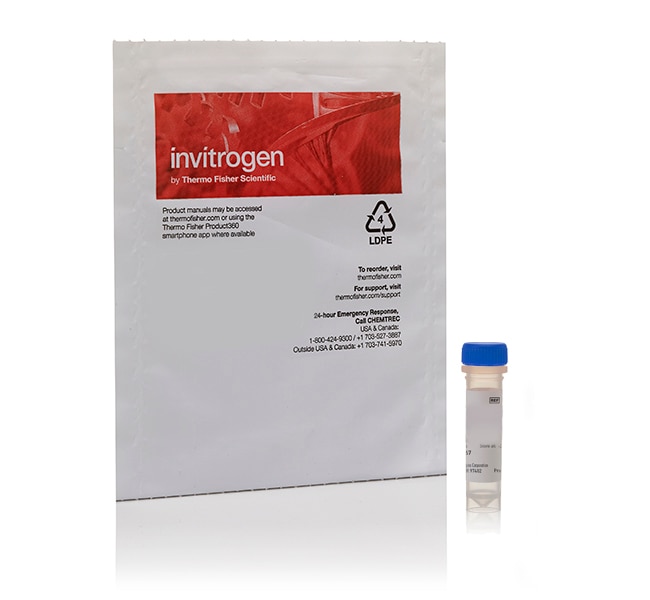
FluoZin™-3, AM, cell permeant
FluoZin™-3インジケータは、fluo-4に類似した構造を持つ Zn 2+選択的インジケータです。FluoZin™-3は、Zn2+結合親和性が高く、少なくとも1 μMまでは、Ca2+濃度には影響されません。また詳細を見る
| 製品番号(カタログ番号) | 数量 |
|---|---|
| F24195 | 100 μg |
製品番号(カタログ番号) F24195
価格(JPY)
54,300
Each
数量:
100 μg
FluoZin™-3インジケータは、fluo-4に類似した構造を持つ Zn 2+選択的インジケータです。FluoZin™-3は、Zn2+結合親和性が高く、少なくとも1 μMまでは、Ca2+濃度には影響されません。また、FluoZin™-3は、Zn2+の飽和レベルに応じて蛍光が50倍以上増加します。FluoZin™-3のイメージングアプリケーションが主流ですが、細胞ベースのマイクロプレートアッセイやフローサイトメトリープロトコルも開発されています。FluoZin™-3インジケータは、細胞透過型および細胞不透過の形態で提供されています。
カルシウム、カリウム、pH、および膜電位インジケータを含むイオンインジケータの詳細については、こちらを参照してください›
蛍光亜鉛インジケータ仕様:
•ラベル(Ex/EM):FluoZin™-3(約494/516 nm)
• Kd(Zn2+)(バッファー内):約15 nM
•凍結乾燥した製品はDMSOに溶解して使用できます
•製品は通常、細胞を含む培地に溶解したインジケーターを添加することにより、細胞にロードされます
亜鉛およびその他の金属イオンの蛍光インジケータを探します
当社は、細胞内の多価陽イオン濃度を測定する、イオンチャネルを介した金属イオン輸送の追跡する、環境サンプルを測定するための蛍光インジケータを多数提供しています。これらの製品の詳細については、『分子プローブ™ハンドブック』の「Zn2+およびその他の金属イオン用蛍光インジケータ—セクション19.7」を参照してください。
研究用途にのみご使用ください。ヒトまたは動物の治療もしくは診断目的には使用できません。
カルシウム、カリウム、pH、および膜電位インジケータを含むイオンインジケータの詳細については、こちらを参照してください›
蛍光亜鉛インジケータ仕様:
•ラベル(Ex/EM):FluoZin™-3(約494/516 nm)
• Kd(Zn2+)(バッファー内):約15 nM
•凍結乾燥した製品はDMSOに溶解して使用できます
•製品は通常、細胞を含む培地に溶解したインジケーターを添加することにより、細胞にロードされます
亜鉛およびその他の金属イオンの蛍光インジケータを探します
当社は、細胞内の多価陽イオン濃度を測定する、イオンチャネルを介した金属イオン輸送の追跡する、環境サンプルを測定するための蛍光インジケータを多数提供しています。これらの製品の詳細については、『分子プローブ™ハンドブック』の「Zn2+およびその他の金属イオン用蛍光インジケータ—セクション19.7」を参照してください。
研究用途にのみご使用ください。ヒトまたは動物の治療もしくは診断目的には使用できません。
研究用にのみ使用できます。診断用には使用いただけません。
仕様
検出法蛍光
染色剤タイプFluoZin-3
放射波長516 nm
励起波長494 nm
分子量982.85 g/mol
数量100 μg
出荷条件室温
使用対象(アプリケーション)Zinc Indicator
使用対象 (装置)蛍光顕微鏡
製品ラインFluoZin
製品タイプ亜鉛インジケータ
Unit SizeEach
組成および保存条件
フリーザー(-5°C~-30°C)に保存し、遮光してください。
よくあるご質問(FAQ)
Why don't I see a significant change in signal for my live-cell fluorescent indicator dye?
引用および参考文献 (43)
引用および参考文献
Abstract
Demand for Zn2+ in acid-secreting gastric mucosa and its requirement for intracellular Ca2+.
Journal:PLoS One
PubMed ID:21698273
'Recent work has suggested that Zn(2+) plays a critical role in regulating acidity within the secretory compartments of isolated gastric glands. Here, we investigate the content, distribution and demand for Zn(2+) in gastric mucosa under baseline conditions and its regulation during secretory stimulation. Content and distribution of zinc were evaluated
The amyloid precursor protein (APP) of Alzheimer disease and its paralog, APLP2, modulate the Cu/Zn-Nitric Oxide-catalyzed degradation of glypican-1 heparan sulfate in vivo.
Journal:J Biol Chem
PubMed ID:15677459
'Processing of the recycling proteoglycan glypican-1 involves the release of its heparan sulfate chains by copper ion- and nitric oxide-catalyzed ascorbate-triggered autodegradation. The Alzheimer disease amyloid precursor protein (APP) and its paralogue, the amyloid precursor-like protein 2 (APLP2), contain copper ion-, zinc ion-, and heparan sulfate-binding domains. We have investigated
Clioquinol and pyrithione activate TRPA1 by increasing intracellular Zn2+.
Journal:Proc Natl Acad Sci U S A
PubMed ID:19416844
'The antifungal and amoebicidal drug clioquinol (CQ) was withdrawn from the market when it was linked to an epidemic of subacute myelo-optico-neuropathy (SMON). Clioquinol exerts its anti-parasitic actions by acting as a Cu/Zn chelator and ionophore. Here we show that local injections of CQ produce mechanical hyperalgesia and cold hypersensitivity
Intracellular zinc fluctuations modulate protein tyrosine phosphatase activity in insulin/insulin-like growth factor-1 signaling.
Journal:Exp Cell Res
PubMed ID:14644152
'Zinc is an effector of insulin/IGF-1 signaling and has insulinomimetic effects, the molecular basis of which is not understood. The present study establishes the capacity of zinc to inhibit protein tyrosine phosphatases (PTPs) as a cause for these effects and, moreover, demonstrates modulation of the insulin response by changes in
Interleukin-6 regulates the zinc transporter Zip14 in liver and contributes to the hypozincemia of the acute-phase response.
Journal:Proc Natl Acad Sci U S A
PubMed ID:15863613
'Infection and inflammation produce systemic responses that include hypozincemia and hypoferremia. The latter involves regulation of the iron transporter ferroportin 1 by hepcidin. The mechanism of reduced plasma zinc is not known. Transcripts of the two zinc transporter gene families (ZnT and Zip) were screened for regulation in mouse liver