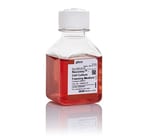
Medio de congelación de cultivos celulares Recovery™
Gibco™

Medio de congelación de cultivos celulares Recovery™

El medio para congelación para cultivos celulares Recovery™ es un medio de congelación listo para su uso para la crioconservaciónMás información
Have Questions?
Número de catálogoCantidad
1264801050 mL
Número de catálogo 12648010
Precio (USD)
299,70
Each
Añadir al carro de la compra
Cantidad:
50 mL
Precio (USD)
299,70
Each
Añadir al carro de la compra
El medio para congelación para cultivos celulares Recovery™ es un medio de congelación listo para su uso para la crioconservación de una amplia gama de células de mamíferos, incluidas CHO-S, CHO-K1, HEK 293, Jurkat y NIH 3T3. Características del medio de congelación de cultivos celulares Recovery™:

• Formulación clásica optimizada para un rendimiento superior
• Ideal para una amplia gama de células de mamíferos
• Calidad y rendimiento comprobados

Formulación clásica optimizada para un rendimiento superior
Durante muchos años, los investigadores han utilizado una receta común para fabricar medios de congelación: El medio Eagle modificado de Dulbecco (DMEM) con alto contenido de glucosa suplementado con un 10 % de suero y un 10 % de dimetilsulfóxido (DMSO). El medio para congelación de cultivos celulares Recovery™ es una versión optimizada de esta formulación clásica que utiliza el suero fetal bovino y el suero bovino Gibco™ de alta calidad para una mejorada viabilidad y recuperación de células después de la descongelación.

Idoneidad para una amplia variedad de células de mamíferos
El medio de congelación de cultivos celulares Recovery™ se puede utilizar para congelar la mayoría de células de mamíferos cultivadas en DMEM, DMEM/F-12, MEM, RPMI 1640, y F12 de Ham. Entre estas células se incluyen CHO-S, CHO-K1, HEK 293, Jurkat y NIH 3T3.

Calidad y rendimiento comprobados
El medio de congelación de cultivos celulares Recovery™ ha pasado por un control de calidad para pH, osmolalidad, esterilidad y endotoxinas. Además, se comprueba el rendimiento de cada lote con células CHO-K1.

Sistema de fabricación y calidad conforme las buenas prácticas de fabricación actuales
El medio de congelación de cultivo celular Recovery™ se fabrica en unas instalaciones conformes con las buenas prácticas de fabricación actuales situadas en Grand Island, Nueva York (EE. UU.). Las instalaciones también están registradas en la Agencia estadounidense de alimentos y medicamentos (FDA) como fabricante de dispositivos médicos y están certificadas según la norma ISO 13485.
Para uso exclusivo en investigación. No apto para uso en procedimientos diagnósticos.
Especificaciones
Tipo de célulaCélulas de mamíferos
Línea de productosGibco, Recovery
Tipo de productoMedio de congelación
Grado de pureza o calidadCalidad para investigación
Cantidad50 mL
Duración de almacenamiento12 meses
Condiciones de envíoHielo seco
Culture TypeCultivo de células de mamíferos
FormularioLíquido
Serum LevelSuplementos de suero estándar
EsterilidadEstéril con filtro
Con aditivosAlto contenido en glucosa, Rojo de fenol, DMSO (10 %)
Sin aditivosSin rojo fenol
Unit SizeEach
Contenido y almacenamiento
Condiciones de almacenamiento: -5 a -20° C. Proteger de la luz.
Condiciones de envío: Congelado
Vida útil: 12 meses a partir de la fecha de fabricación

Preguntas frecuentes

What is the procedure for cryopreserving mammalian cells?

Mammalian cells are cryopreserved to avoid loss by contamination, to minimize genetic change in continuous cell lines, and to avoid aging and transformation in finite cell lines. Before cryopreservation, cells should be characterized and checked for contamination.

There are several common media used to freeze cells. For serum-containing medium, the constituents may be as follows:
1) Complete medium containing 10% DMSO (dimethylsulfoxide)
2) 50% cell-conditioned medium with 50% fresh medium with 10% DMSO

Cryopreservation media generally consists of a base medium, cryopreservative, and a protein source. The cryopreservative and protein protect the cells from the stress of the freeze-thaw process. A serum-free medium has generally low or no protein, but one can still use it as a base for a cryopreservative medium in the following formulations:

1) 50% cell-conditioned serum free medium and 50% fresh serum-free medium containing 7.5% DMSO
2) Fresh serum-free medium containing 7.5% DMSO and 10% cell culture grade BSA

Protocol for Suspension Cultures:
1. Count the number of viable cells to be cryopreserved. Cells should be in log phase.
2. Centrifuge the cells at ~200 to 400 x g for 5 min to pellet cells.
3. Using a pipette, remove the supernatant down to the smallest volume without disturbing the cells.
4. Resuspend cells in freezing medium to a concentration of 1 x 10E7 to 5 x 10E7cells/ml for serum-containing medium, or 0.5 x 10E7to 1 x 10E7 cells/ml for serum-free medium.
5. Aliquot into cryogenic storage vials. Place vials on wet ice or in a 4°C refrigerator, and start the freezing procedure within 5 minutes.
6. Cells are frozen slowly at 1°C /min. This can be done by programmable coolers or by placing vials in an insulated box placed in a -70°C to -90°C freezer, then transferring to liquid nitrogen storage.

Protocol for Adherent Cultures:
1. Detach cells from the substrate with dissociation agents. Detach as gently as possible to minimize damage to the cells.
2. Resuspend the detached cells in a complete growth medium and establish the viable cell count.
3. Centrifuge at ~200 x g for 5 min to pellet cells.
4. Using a pipette, withdraw the supernatant down to the smallest volume without disturbing the cells.
5. Resuspend cells in freezing medium to a concentration of 5 x 10E6 to 1 x 10E7 cells/ml. Aliquot into cryogenic storage vials.
6. Place vials on wet ice or in a 4°C refrigerator, and start the freezing procedure within 5 min.
7. Cells are frozen slowly at 1°C /min. This can be done by programmable coolers or by placing vials in an insulated box placed in a -70°C to -90°C freezer, then transferring to liquid nitrogen storage.
Reference: Freshney, R. (1987) Culture of Animal Cells: A Manual of Basic Technique, p. 220, Alan R. Liss,Inc., New York.

Thawing of Cryopreserved Cells:
Cryopreserved cells are fragile and require gentle handling. Thaw cells quickly and plate directly into complete growth medium. If cells are particularly sensitive to cryopreservation (DMSO or glycerol), they are centrifuged to remove cryopreservative and then plated into growth medium. The following are suggested procedures for thawing cryopreserved cells:

- Centrifugation Method: Remove cells from storage and thaw quickly in a 37°C water bath. Place 1 or 2 ml of frozen cells in ~25 ml of complete growth medium. Mix very gently. Centrifuge cells at ~80 x g for 2 to 3 min. Discard supernatant. Gently Resuspend cells in complete growth medium and perform a viable cell count. Plate the cells. Cell innoculum should be at least 3 x 10E5 cells/ml.
- Direct Plating Method: Remove cells from storage and thaw quickly in a 37°C water bath. Plate cells directly with complete growth media.

Is there any difference between your Cell Culture Freezing Medium-Dimethylsulfoxide(DMSO) and the standard method using DMSO? Does it depend on the cell types? What protocol should I use for freezing cells?

Our Cell Culture Freezing Media is composed of DMEM, FBS, calf serum, and 10% DMSO. This is useful for many mammalian cells for freezing and is the same percentage of DMSO used in most methods. This product will work fine for most adherent cell lines grown with serum. A good general protocol for freezing cells can be found on our website by searching "Freezing cells protocol" from the home page.

Find additional tips, troubleshooting help, and resources within our Cell Culture Support Center.

Is it important to centrifuge and aspirate Recovery Cell Culture Freezing Medium before seeding into the flask?

Recovery Cell Culture Freezing Medium is meant for general cell culture applications where a wide range of growth media will be used. We recommend that you aspirate Recovery Cell Culture Freezing Medium before seeding, although other protocols can be substituted (this will need to be determined by the end user).

Find additional tips, troubleshooting help, and resources within our Cell Analysis Support Center.

Can Recovery Cell Culture Freezing Medium be stored at 2 to 8 degrees C?

Recovery Cell Culture Freezing Medium should be stable at 2 to 8 degrees C for 1 week, although we have no data to support this.

Find additional tips, troubleshooting help, and resources within our Cell Analysis Support Center.

Can Recovery Cell Culture Freezing Medium undergo multiple freeze thaw cycles?

There have not been any bench studies at this time. It is best to aliquot this product.

Find additional tips, troubleshooting help, and resources within our Cell Analysis Support Center.

Citations & References (1)

Citations & References
Abstract
Sleeping Beauty transposon mutagenesis of the rat genome in spermatogonial stem cells.
Authors:Ivics Z, Izsvák Z, Chapman KM, Hamra FK,
Journal:Methods
PubMed ID:21193047
'Since several aspects of physiology in rats have evolved to be more similar to humans than that of mice, it is highly desirable to link the rat into the process of annotating the human genome with function. However, the lack of technology for generating defined mutants in the rat genome ... More