Search




Citations & References (68)
Invitrogen™
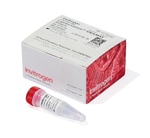
Lipofectamine™ RNAiMAX Transfection Reagent
Achieve effective RNAi transfection with Lipofectamine RNAiMAX Transfection Reagent across a wide range of cell types. This lipid-based transfection reagent is optimized for siRNA and miRNA transfection, offering high delivery efficiency and low cellular toxicity, enabling effective gene silencing.
Have Questions?
Change view

| Catalog Number | Quantity |
|---|---|
| 13778075 | 0.75 mL |
| 13778150 | 1.5 mL |
| 13778100 | 0.1 mL |
| 13778030 | 0.3 mL |
| 13778500 | 15 mL |
Catalog number 13778075
Price (MXN)
-
Quantity:
0.75 mL
Lipofectamine RNAiMAX reagent is a leading transfection reagent designed specifically for RNA interference applications. It efficiently delivers siRNA and miRNA into a wide variety of cell types, ensuring high transfection efficiency and effective gene knockdown. The proprietary cationic lipid formulation minimizes cytotoxicity, making it suitable for sensitive cells and long-term studies. Lipofectamine RNAiMAX reagent is optimized for consistent performance, providing researchers with reliable results in gene silencing experiments. Its ease of use and compatibility with high-throughput screening make it an essential tool for basic biology research and functional genomics.
Features of Lipofectamine RNAiMAX Transfection Reagent
- Optimized for RNAi—Specifically formulated for RNA interference applications, maximizing siRNA and miRNA transfection and gene silencing.
- Superior siRNA transfection efficiency—requires lower siRNA concentrations for effective gene knockdown
- miRNA reagent compatible—provides superior transfection efficiencies for miRNA mimics and inhibitors
- Minimal cytotoxicity—flexible 10-fold concentration range of the siRNA transfection reagent with low cellular impact
- Broad cell type compatibility—versatile use in a wide range of cell lines, including hard-to-transfect cells
- Simple and rapid protocol—easy-to-follow steps that save time and effort in the lab for consistent and reproducible results
High knockdown in a wide range of cells
Lipofectamine RNAiMAX Transfection Reagent is an effective siRNA transfection reagent suitable for a wide range of cell types, including primary cells (see figure). It achieves high-efficiency siRNA transfection, leading to significant gene knockdown necessary for convincing gene silencing results.
Simple, high-throughput-ready transfections
Mix Lipofectamine RNAiMAX Transfection Reagent with siRNA, add to your cells, incubate, and measure gene knockdown. Its simplicity and speed, combined with high transfection efficiency, make it ideal for high-throughput siRNA transfection workflows. Whether it's a forward or reverse transfection protocol, siRNA transfection conditions can be easily optimized for automated or robotic systems.
For Research Use Only. Not for use in diagnostic procedures.
Specifications
For Use With (Application)Transfection
High-throughput CompatibilityHigh-throughput Compatible
Product LineLipofectamine
Product TypeTransfection Reagent
Quantity0.75 mL
Serum CompatibleYes
Shipping ConditionApproved for shipment at Room Temperature or on Wet Ice
Cell TypeEstablished Cell Lines, Stem Cells, Primary Cells, Hard-to-Transfect Cells
Format6-well Plate, 12-well Plate, 24-well Plate, 48-well Plate, 96-well Plate, Flasks
Sample TypeSynthetic siRNA, siRNA, miRNA
Transfection TechniqueLipid-based Transfection
Unit SizeEach
Contents & Storage
Contains one vial (0.75 ml) Lipofectamine™ RNAiMAX Transfection Reagent. Store at 2–8°C. Do not freeze.
Frequently asked questions (FAQs)
I'm seeing cell death after transfection using Lipofectamine RNAiMAX Reagent. What should I do?
I accidentally kept my Lipofectamine RNAiMAX Reagent at room temperature. Can I still use it?
I accidentally froze my Lipofectamine RNAiMAX Reagent. Can I still use it?
I accidentally left my lipid reagent at room temperature. Can I still use it?
What positive transfection control can I use with Lipofectamine RNAiMAX?
Citations & References (68)
Citations & References
Abstract
Journal:
PubMed ID:17804805
The keratin-binding protein Albatross regulates polarization of epithelial cells.
Journal:J Cell Biol
PubMed ID:18838552
'The keratin intermediate filament network is abundant in epithelial cells, but its function in the establishment and maintenance of cell polarity is unclear. Here, we show that Albatross complexes with Par3 to regulate formation of the apical junctional complex (AJC) and maintain lateral membrane identity. In nonpolarized epithelial cells, Albatross
Identification of STAT3 as a substrate of receptor protein tyrosine phosphatase T.
Journal:Proc Natl Acad Sci U S A
PubMed ID:17360477
'Protein tyrosine phosphatase (PTP) receptor T (PTPRT) is the most frequently mutated PTP in human cancers. However, the cell signaling pathways regulated by PTPRT have not yet been elucidated. Here, we report identification of signal transducer and activator of transcription 3 (STAT3) as a substrate of PTPRT. Phosphorylation of a
Anti-apoptotic effect of the basic helix-loop-helix (bHLH) transcription factor DEC2 in human breast cancer cells.
Journal:Genes Cells
PubMed ID:20236182
'DEC1 (BHLHB2/Stra13/Sharp2) and DEC2 (BHLHB3/Sharp1) are basic helix-loop-helix (bHLH) transcription factors that are involved in circadian rhythms, differentiation and the responses to hypoxia. We examined whether DEC1 and DEC2 are involved in apoptosis regulation, in human breast cancer MCF-7 cells. We found that siRNA-mediated knockdown of DEC2 resulted in marked
EPLIN mediates linkage of the cadherin catenin complex to F-actin and stabilizes the circumferential actin belt.
Journal:Proc Natl Acad Sci U S A
PubMed ID:18093941
'The cadherin-catenin complex is the major machinery for cell-cell adhesion in many animal species. This complex in general associates with actin fibers at its cytoplasmic side, organizing the adherens junction (AJ). In epithelial cells, the AJ encircles the cells near their apical surface and forms the "zonula adherens" or "adhesion