Search

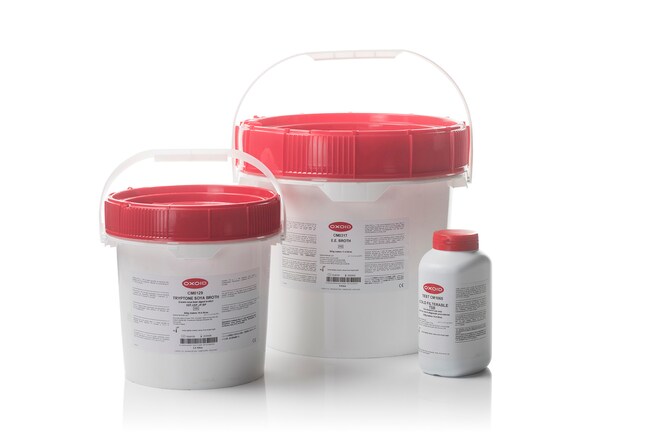
Thermo Scientific™
Lysine Iron Agar (Dehydrated)
Detect salmonellae including Salmonella arizonae with this differential and diagnostic medium.
| Catalog Number | Quantity |
|---|---|
| CM0381B | 500 g |
Catalog number CM0381B
Price (USD)
-
Quantity:
500 g
Detect salmonellae including Salmonella arizonae with the diagnostic Thermo Scientific™ Oxoid™ Lysine Iron Agar (Dehydrated). This differential medium detects salmonellae (including lactose fermenting Salmonella arizonae) by lysine decarboxylase activity and H2S production.
Salmonella infection (salmonellosis) is a common bacterial disease that affects the intestinal tract. Salmonella bacteria typically live in animal and human intestines and are shed through faeces. Humans become infected most frequently through contaminated water or food.
Lysine Iron Agar is a sensitive medium for the detection of lactose fermenting and lactose non-fermenting Salmonella species. Many strains of this group ferment lactose so quickly that the expected positive reaction for hydrogen sulphide are suppressed on some media like Triple Sugar Iron Slants. So there is a possibility that these organisms found in food poisoning outbreaks could be overlooked.
The only recognised groups of Enterobacteriaceae which regularly decarboxylate lysine rapidly and which produce large amounts of hydrogen sulphide, are the salmonellae1,2.Lysine Iron Agar is a sensitive medium for the detection of lactose-fermenting and non-lactose-fermenting salmonellae.
Typical reactions of organisms in Lysine Iron Agar:
Not all products are available for sale in all territories. Please inquire.
Remel™ and Oxoid™ products are now part of the Thermo Scientific brand.
Lysine Iron Agar is a sensitive medium for the detection of lactose fermenting and lactose non-fermenting Salmonella species. Many strains of this group ferment lactose so quickly that the expected positive reaction for hydrogen sulphide are suppressed on some media like Triple Sugar Iron Slants. So there is a possibility that these organisms found in food poisoning outbreaks could be overlooked.
The only recognised groups of Enterobacteriaceae which regularly decarboxylate lysine rapidly and which produce large amounts of hydrogen sulphide, are the salmonellae1,2.Lysine Iron Agar is a sensitive medium for the detection of lactose-fermenting and non-lactose-fermenting salmonellae.
Typical reactions of organisms in Lysine Iron Agar:
| Cultures | Slant | Butt | H2S |
| Salmonella | Alkaline | Alkaline | + |
| Proteus | Red | Acid | - |
| Providencia | Red | Acid | - |
| Citrobacter | Alkaline | Acid | + |
| Escherichia | Alkaline | Acid or neutral | - |
| Shigella | Alkaline | Acid | - |
| Klebsiella | Alkaline | Alkaline | - |
Not all products are available for sale in all territories. Please inquire.
Remel™ and Oxoid™ products are now part of the Thermo Scientific brand.
For Laboratory Use Only
General References:
- Moeller V. (1954) Acta. Pathol. Microbiol. Scand. 355. 259-277.
- Ewing W. H., Davis B. R. and Edwards P. R. (1960) Pub. Hlth Labs. 18. 77-83.
Specifications
Certifications/ComplianceIndustrial Reference: FDA, USDA.
DescriptionLiver Digest Neutralized
Quantity500 g
YieldFor 14.7L medium
FormPowder
Product TypeAgar
Unit SizeEach