Search


Citations & References (1)
Invitrogen™
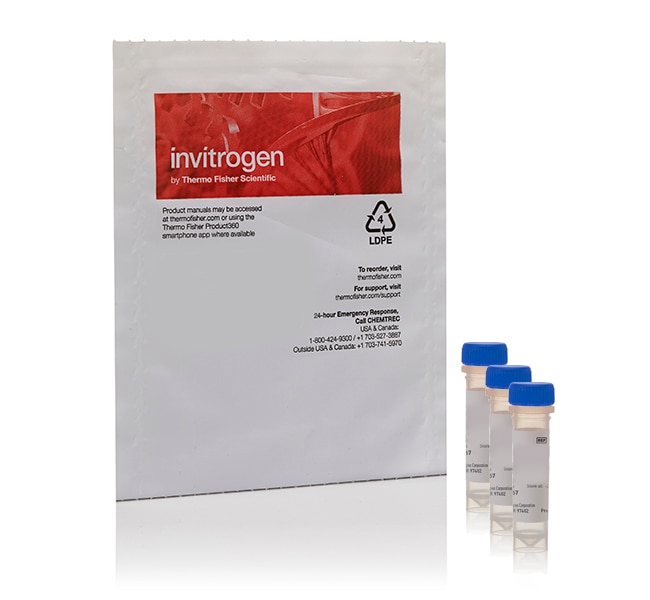
NeuroTrace™ Multicolor Tissue-Labeling Kit - DiO, DiI, DiD pastes, 500 mg each
NeuroTrace™ Multicolor Tissue-Labeling Kit contains 500 mg each of DiI, DiO or DiD mixed into an inert, water-resistant gel. TheRead more
| Catalog Number | Quantity |
|---|---|
| N22884 | 1 kit |
Catalog number N22884
Price (USD)
664.00
Each
Quantity:
1 kit
Price (USD)
664.00
Each
NeuroTrace™ Multicolor Tissue-Labeling Kit contains 500 mg each of DiI, DiO or DiD mixed into an inert, water-resistant gel. The paste is ready to use as supplied and can be applied directly to live or fixed tissue specimens using the tip of a needle. This method of application improves the penetration of the dye into bundled neurons, labeling axons both on and below the surface.
For Research Use Only. Not for use in diagnostic procedures.
Specifications
ColorGreen, Yellow, Red
Detection MethodFluorescence
For Use With (Equipment)Fluorescence Microscope
Product TypeTissue Labeling Kit
Quantity1 kit
Shipping ConditionRoom Temperature
Sub Cellular LocalizationCell Membranes & Lipids
Product LineNEUROTRACE
Unit SizeEach
Contents & Storage
Store at room temperature and protect from light.
Frequently asked questions (FAQs)
I am doing retrograde neuronal labeling using the NeuroTrace DiI Paste. I apply a small glob onto the neuron of interest, but it is not adhering very well. What can I do?
How long does it take for lipophlic tracers to transport along the membrane? How much faster are the FAST lipophilic dyes?
Which form of the lipophilic tracers (DiO, DiI, DiD, etc) should I use?
What products do you have for neuronal tracing?
Citations & References (1)
Citations & References
Abstract
Retinoic acid increases phagocytosis of myelin by macrophages.
Journal:J Cell Physiol
PubMed ID:33165955