Search


Citations & References (1)
Invitrogen™
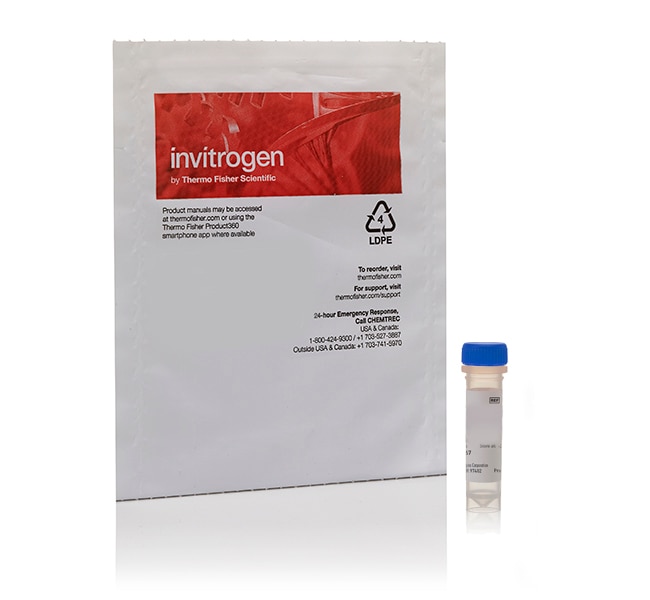
SYTO™ 84 Orange Fluorescent Nucleic Acid Stain - 5 mM Solution in DMSO
For use with fluorescence microscopy and flow cytometry
| Catalog Number | Quantity |
|---|---|
| S11365 | 250 μL |
Catalog number S11365
Price (USD)
366.00
Each
Quantity:
250 μL
Price (USD)
366.00
Each
The cell-permeant SYTO 84 orange fluorescent nucleic acid stain exhibits bright, orange fluorescence upon binding to nucleic acids. Because the staining pattern of the SYTO dyes in live cells may vary between cell types, we offer the SYTO Orange Fluorescent Nucleic Acid Stain Sampler Kit (Cat. No. S-11360) to enable researchers to find the most appropriate orange-fluorescent SYTO stain for their system.
Any physiological buffer between pH 7.0–8.0, including PBS, can be used to dilute the SYTO dyes for the staining solution.
For Research Use Only. Not for use in diagnostic procedures.
Specifications
ColorOrange
DescriptionSYTO™ 84 Orange Fluorescent Nucleic Acid Stain - 5 mM Solution in DMSO
Detection MethodFluorescence
Dye TypeCell-Permeant
Emission582 nm
Excitation Wavelength Range567 nm
For Use With (Equipment)Fluorescence Microscope
Product LineSYTO
Quantity250 μL
Shipping ConditionRoom Temperature
Volume (Metric)250 μL
Label TypeFluorescent Dye
Product TypeNucleic Acid Stain
Sub Cellular LocalizationNucleic Acids
Unit SizeEach
Contents & Storage
Store in freezer at -5°C to -30°C and protect from light.
Frequently asked questions (FAQs)
How do SYTO dyes bind to DNA?
Citations & References (1)
Citations & References
Abstract
Multiparameter assessments to determine the effects of sugars and antimicrobials on a polymicrobial oral biofilm.
Journal:Appl Environ Microbiol
PubMed ID:17021225
Clinical studies indicate relationships between dental plaque, a naturally formed biofilm, and oral diseases. The crucial role of nonmicrobial biofilm constituents in maintaining biofilm structure and biofilm-specific attributes, such as resistance to shear and viscoelasticity, is increasingly recognized. Concurrent analyses of the diverse nonmicrobial biofilm components for multiparameter assessments formed