Search

c7c8 - Key/Specs/Resources/Appl/Tech/Doc/Contact
Autoscript 4 Software for scanning electron microscopy and FIB SEM
Automation software packages for electron/ion microscopy like Thermo Scientific Maps and Thermo Scientific Auto Slice and View are great for making collection of standard imaging techniques easy. However, working to achieve cutting edge research goals or to meet specific industrial requirements is seldom standard.
Industrial automation as well as fundamental research often requires advanced techniques for imaging and analysis that cannot be covered in the scope of general purpose software.
Automated electron microscopy and FIB SEM imaging
Thermo Scientific AutoScript 4 Software is the customization toolkit for electron and ion microscopy. Built around Python, Autoscript Software provides you the power to automate imaging and associated processing pipelines built to solve specific research questions.
AutoScript Software:
- Provides a direct link between research needs and microscope automation
- Enables improved reproducibility and accuracy
- Focuses time on the microscope for higher throughput
Integrated IDE
An integrated development environment (IDE) makes it easy to get up and running with AutoScript Software. Object browsing and syntax tools with auto completion are all included to ensure a rich user experience and rapid, consistent scripting framework.
Python
Harness the power of your microscope using the most popular scientific programming language. Autoscript Software is built on Python 3.5 and includes a number of pre-installed libraries for scientific computing, data analysis, data visualization, image processing, and machine learning.
Scripting toolbox
AutoScript 4 Software comes bundled with a set of commonly needed, prebuilt routines. Not starting from scratch means more time to focus on developing the scripts that define the unique workflow for your research.
Style Sheet for Products Table Specifications
| Supported microscope control methods |
|
| Common packages |
|
| Application examples |
|
| Compatibility |
|
Style Sheet for Komodo Tabs

Feature based image segmentation (geological sample).

Compensation of thermal drift during a bulk heating experiment.
Feature based image segmentation (geological sample).
Compensation of thermal drift during a bulk heating experiment.
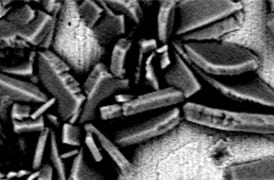
Process control using electron microscopy
Modern industry demands high throughput with superior quality, a balance that is maintained through robust process control. SEM and TEM tools with dedicated automation software provide rapid, multi-scale information for process monitoring and improvement.
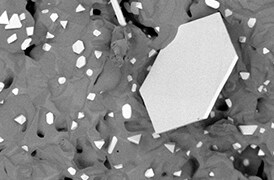
Quality control and failure analysis
Quality control and assurance are essential in modern industry. We offer a range of EM and spectroscopy tools for multi-scale and multi-modal analysis of defects, allowing you to make reliable and informed decisions for process control and improvement.
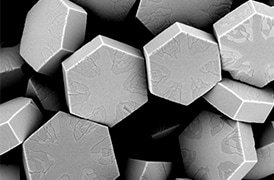
Fundamental Materials Research
Novel materials are investigated at increasingly smaller scales for maximum control of their physical and chemical properties. Electron microscopy provides researchers with key insight into a wide variety of material characteristics at the micro- to nano-scale.

3D Materials Characterization
Development of materials often requires multi-scale 3D characterization. DualBeam instruments enable serial sectioning of large volumes and subsequent SEM imaging at nanometer scale, which can be processed into high-quality 3D reconstructions of the sample.

Multi-scale analysis
Novel materials must be analyzed at ever higher resolution while retaining the larger context of the sample. Multi-scale analysis allows for the correlation of various imaging tools and modalities such as X-ray microCT, DualBeam, Laser PFIB, SEM and TEM.
3D Materials Characterization
Development of materials often requires multi-scale 3D characterization. DualBeam instruments enable serial sectioning of large volumes and subsequent SEM imaging at nanometer scale, which can be processed into high-quality 3D reconstructions of the sample.
Multi-scale analysis
Novel materials must be analyzed at ever higher resolution while retaining the larger context of the sample. Multi-scale analysis allows for the correlation of various imaging tools and modalities such as X-ray microCT, DualBeam, Laser PFIB, SEM and TEM.
Style Sheet to change H2 style to p with em-h2-header class

Electron microscopy services for
the materials science
To ensure optimal system performance, we provide you access to a world-class network of field service experts, technical support, and certified spare parts.
