Hamburger Menu Button
Thermo Fisher Scientific Logo
Faça o login
Não tem uma conta? Criar Conta​
  • Produtos
    • Consumíveis de Laboratório
    • Equipamentos de Laboratório
    • Instrumentos de Laboratório
    • Clínica & Diagnóstico
    • Cromatografia
    • Espectrômetria de Massas
    • Cultura Celular
    • Análise Celular
    • Anticorpos
    • Biologia Molecular & Análise de Ácidos Nucleicos
    • Produtos Ácidos Nucleicos Específicos de Sequência
    • Veja todas as categorias de produtos
  • Aplicações
    • Cultura Celular e Transfecção
    • Citometria de Fluxo
    • Pesquisa em Oncologia
    • Cromatografia
    • Sequenciamento
    • PCR
    • Soluções Laboratoriais
    • Diagnóstico de Alergias
    • Veja todas as aplicações e técnicas
  • Serviços
    • Serviços de Instrumentos e Equipamentos de Laboratório
    • Serviços Personalizados
    • Serviços de Treinamento
    • Informática de Laboratório em Nível Empresarial
    • Serviços Financeiros e de Arrendamento
    • CDMO & Serviços de Ensaios Clínicos
    • Veja todas as serviços
  • Ajuda e suporte
    • Cadastre-se em nosso site
    • Como fazer o pedido
    • Entre em Contato Conosco
    • Mudança de Localização do Site
    • Veja todos os tópicos de ajuda e suporte
  • Popular
    • Our Instagram
      Nosso Instagram
    • Our Facebook
      Nosso Facebook
    • Blog Behind the Bench
      Blog Behind the Bench
    • Customer Experience Center (CEC)
      Customer Experience Center (CEC)
    • Ecommerce Exclusives
  • Quem atendemos
    • Setor de Biotecnologia
    • Indústria Biofarmacêutica
    • CDMO
    • Diagnósticos Laboratoriais
    • Ciência Industrial e Aplicada
  • Ofertas especiais
  • Fale Conosco
  • Pedido rápido
  • Documentos e certificados
Thermo Fisher Scientific Logo

Search

Search All
Search button
          • Fale Conosco
          • Pedido rápido
          • Faça o login
            Faça o login
            Não tem uma conta? Criar Conta​
            • Conta
            • Status do pedido
            • Produtos Customizados & Projetos
          • Primary Antibodies ›
          • GITR Antibodies

          Invitrogen

          CD357 (AITR/GITR) Monoclonal Antibody (eBioAITR), APC-eFluor™ 780, eBioscience™

          View all (74) GITR antibodies

          {{$productOrderCtrl.translations['antibody.pdp.commerceCard.promotion.promotions']}}

          {{$productOrderCtrl.translations['antibody.pdp.commerceCard.promotion.viewpromo']}}

          {{$productOrderCtrl.translations['antibody.pdp.commerceCard.promotion.promocode']}}: {{promo.promoCode}} {{promo.promoTitle}} {{promo.promoDescription}}. {{$productOrderCtrl.translations['antibody.pdp.commerceCard.promotion.learnmore']}}

          Datasheet
          Certificates
          Protocols
          Questions & Answers
          Tech Support
          Datasheet
          Certificates
          Protocols
          Questions & Answers
          Tech Support
          Datasheet
          Certificates
          Protocols
          Questions & Answers
          Tech Support

          Cite CD357 (AITR/GITR) Monoclonal Antibody (eBioAITR), APC-eFluor™ 780, eBioscience™

          Additional Information:
          {{banner.description}}
          {{$ctrl.isSkuNotesCollapsed ? 'View more' : 'View less'}}
          • Antibody Testing Data (1)
          CD357 (AITR/GITR) Antibody in Flow Cytometry (Flow)
          Group 53 Created with Sketch.
          CD357 (AITR/GITR) Antibody in Flow Cytometry (Flow)
          Group 53 Created with Sketch.

          FIGURE: 1 / 1

          {{ $ctrl.currentElement.advancedVerification.fullName }}
          {{ $ctrl.currentElement.advancedVerification.text }}

          CD357 (AITR/GITR) Antibody (47-5875-42) in Flow

          Normal human peripheral blood cells were unstimulated (left) or stimulated for 72 hours with CD3 and CD28 Monoclonal Antibodies, Functional Grade (Product # 16-0037-85 and 16-0289-85) (right). Cells were then stained with CD25 Monoclonal Antibody, PE (Product # 12-0259-42) and CD357 (AITR/GITR) Monoclonal Antibody, APC-eFluor 780. Total viable cells, as determined by Fixable Viability Dye eFluor® 506 (Produ... View More {{ $ctrl.currentElement.advancedVerification.fullName }} validation info. View more
          Published figure supplied by benchsci-logo
          PMID: {{$ctrl.currentElement.benchSciPubmedId}}
          View Product

          {{$ctrl.videoDesc}}

          {{$ctrl.videoLongDesc}}

          CD357 (AITR/GITR) Antibody in Flow Cytometry (Flow)

          Product Details

          47-5875-42

          Applications
          Tested Dilution
          Publications

          Flow Cytometry (Flow)

          5 µL (1.0 µg)/test
          -
          Product Specifications

          Species Reactivity

          Human

          Host/Isotype

          Mouse / IgG1, kappa

          Recommended Isotype Control

          Mouse IgG1 kappa Isotype Control (P3.6.2.8.1), APC-eFluor™ 780, eBioscience™

          Class

          Monoclonal

          Type

          Antibody

          Clone

          eBioAITR

          Conjugate

          APC-eFluor™ 780 APC-eFluor™ 780 APC-eFluor™ 780
          • Unconjugated
          • Alexa Fluor 488 
          • APC 
          • eFluor 450
          • PE 
          • PE-Cyanine7
          • PE-eFluor 610
          • PerCP-eFluor 710
          • Request custom conjugation

          Excitation/Emission Max

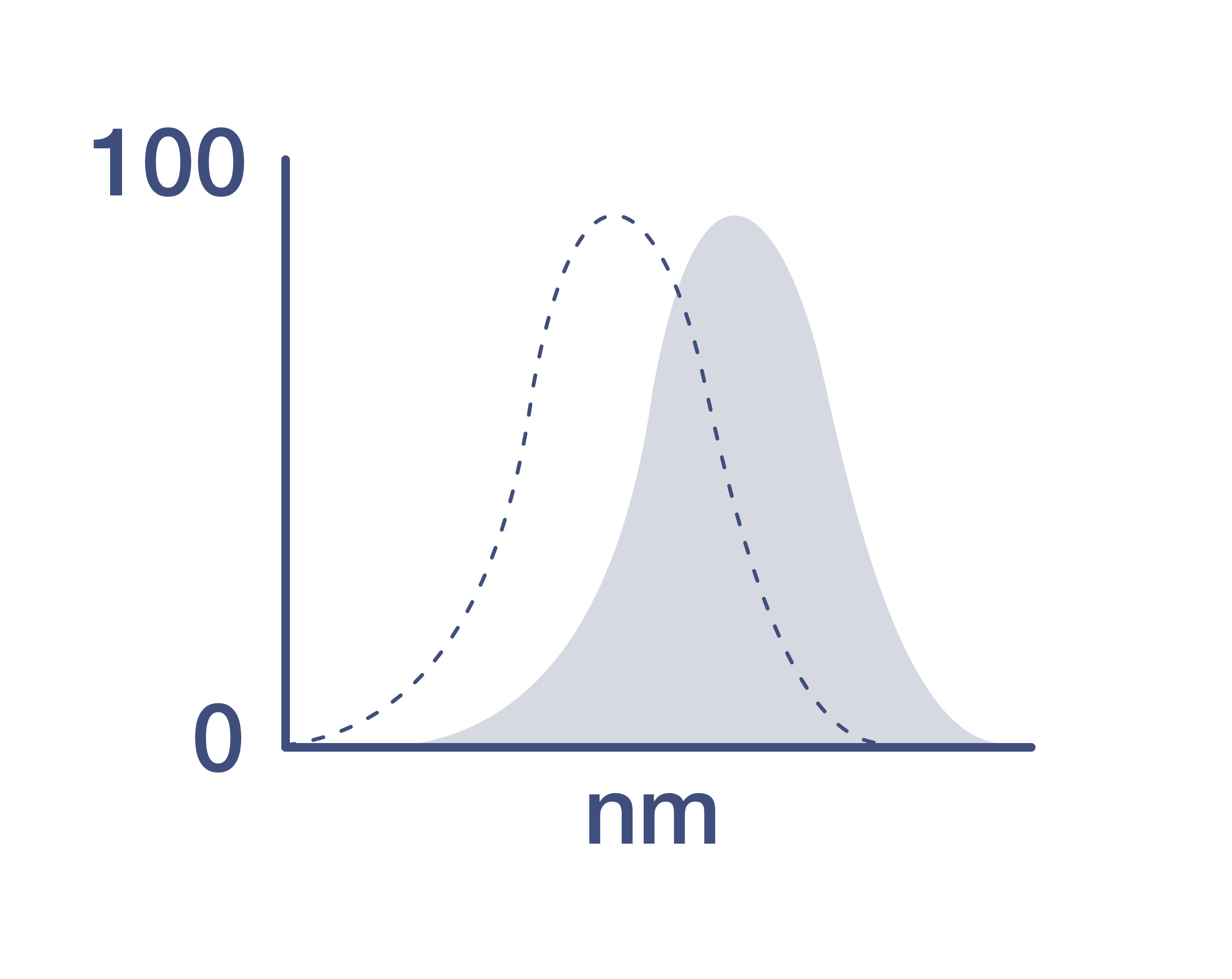
          756/785 nm View spectra spectra
          Form

          Liquid

          Concentration

          5 µL/Test

          Purification

          Affinity chromatography

          Storage buffer

          PBS, pH 7.2, with BSA

          Contains

          0.09% sodium azide

          Storage conditions

          4°C, store in dark, DO NOT FREEZE!

          Shipping conditions

          Ambient (domestic); Wet ice (international)

          RRID

          AB_2784713

          Product Specific Information

          Description: The monoclonal antibody reacts with human AITR, Activation Inducible TNFR family member, an approximately 25 kDa member of the TNFR superfamily. AITR mRNA is detected in lymph node, peripheral blood leukocytes and weakly in spleen. AITR mRNA expression was upregulated within 24 hour on PMA/ionomycin or PHA stimulated PBMC. At the protein level, AITR is expressed by a small population of activated PBMC. AITR associates with TRAF1, TRAF2 and TRAF3 and induces nuclear factor NF-kappaB activation via TRAF2. Recently TL6 (AITRL) has been reported as the ligand for AITR. Interaction of AITR with AITRL is important for cross-talk between T lymphocytes and endothelial cells.

          Applications Reported: This eBioAITR antibody has been reported for use in flow cytometric analysis.

          Applications Tested: This eBioAITR antibody has been pre-diluted and tested by flow cytometric analysis of normal human peripheral blood cells. This may be used at 5 µL (1.0 µg) per test. A test is defined as the amount (µg) of antibody that will stain a cell sample in a final volume of 100 µL. Cell number should be determined empirically but can range from 10^5 to 10^8 cells/test.

          APC-eFluor 780 emits at 780 nm and is excited with the Red laser (633-647 nm). Please make sure that your instrument is capable of detecting this fluorochrome.

          Light sensitivity: This tandem dye is sensitive to photo-induced oxidation. Please protect this vial and stained samples from light.

          Fixation: Samples can be stored in IC Fixation Buffer (Product # 00-8222-49) (100 µL of cell sample + 100 µL of IC Fixation Buffer) or 1-step Fix/Lyse Solution (Product # 00-5333-57) for up to 3 days in the dark at 4°C with minimal impact on brightness and FRET efficiency/compensation. Some generalizations regarding fluorophore performance after fixation can be made, but clone specific performance should be determined empirically.

          Excitation: 633-647 nm; Emission: 780 nm; Laser: Red Laser.

          Target Information

          Tumor necrosis factor receptor superfamily member 18 (TNFRSF18), also called GITR or AITR is a protein that in humans is encoded by the TNFRSF18 gene. It is mapped to 1p36.33. This gene encodes a member of the TNF-receptor superfamily. The encoded receptor has been shown to have increased expression upon T-cell activation, and it is thought to play a key role in dominant immunological self-tolerance maintained by CD25 (+)CD4 (+) regulatory T cells. Knockout studies in mice also suggest the role of this receptor is in the regulation of CD3-driven T-cell activation and programmed cell death. Three alternatively spliced transcript variants of this gene encoding distinct isoforms have been reported.

          For Research Use Only. Not for use in diagnostic procedures. Not for resale without express authorization.

          How to use the Panel Builder

          Watch the video to learn how to use the Invitrogen Flow Cytometry Panel Builder to build your next flow cytometry panel in 5 easy steps.

          References (0)

          Have you cited this product in a publication?
          Let us know so we can reference it here.
          Cite this product

          Bioinformatics

          Protein Aliases: Activation-inducible TNFR family receptor; AITR; CD357; GITR; TNF receptor homolog; similar to murine glucocorticoid-induced TNFR-related protein; Glucocorticoid-induced TNFR-related protein; PRO364; TNF receptor superfamily activation-inducible protein; Tumor necrosis factor receptor superfamily member 18; UNQ319; variant (4) contains an extra coding segment, which leads to a frame shift, compared to variant 1 and 3; resulting protein (isoform 4) contains a transmembrane domain (identical to variant 1 and 3) and a longer cytoplasmic domain with a sequence different

          View more View less

          Gene Aliases: AITR; CD357; ENERGEN; GITR; GITR-D; TNFRSF18; UNQ319/PRO364

          View more View less

          UniProt ID: (Human) Q9Y5U5

          View more View less

          Entrez Gene ID: (Human) 8784

          View more View less

          Function(s)
          tumor necrosis factor-activated receptor activity protein binding
          Process(es)
          positive regulation of leukocyte migration apoptotic process signal transduction tumor necrosis factor-mediated signaling pathway positive regulation of tyrosine phosphorylation of STAT protein negative regulation of apoptotic process positive regulation of cell adhesion
          It has to be done as per old AB suggested Products section.

          Disclaimer

          Close

          Clicking the images or links will redirect you to a website hosted by BenchSci that provides third-party scientific content. Neither the content nor the BenchSci technology and processes for selection have been evaluated by us; we are providing them as-is and without warranty of any kind, including for use or application of the Thermo Fisher Scientific products presented.

          guarantee_icon

          Performance Guarantee

          If an Invitrogen™ antibody doesn't perform as described on our website or datasheet,we'll replace the product at no cost to you, or provide you with a credit for a future purchase.*

          Learn more
          help_icon

          We're here to help

          Get expert recommendations for common problems or connect directly with an on staff expert for technical assistance related to applications, equipment and general product use.

          Contact tech support
          Pedidos Plus Icon Minus Icon
          • Status do pedido
          • Ajuda para pedidos
          • Pedido rápido
          • Supply Center
          • eProcurement
          Suporte Plus Icon Minus Icon
          • Ajuda e suporte
          • Entre em Contato
          • Centros de Suporte Técnico
          • Obter Documentos e Certificados
          • Informe um Problema no Site
          Recursos Plus Icon Minus Icon
          • Centros de aprendizagem
          • Promoções
          • Eventos & Webinars
          • Mídia Sociais
          Sobre a Thermo Fisher Plus Icon Minus Icon
          • Sobre Nós Sobre Nós
          • Carreiras Carreiras
          • Investidores Investidores
          • Sala de Impresa Sala de Impresa
          • Responsabilidade Social Responsabilidade Social
          • Marcas
          • Políticas e avisos
          Nosso Portfólio Plus Icon Minus Icon
          • Thermo Scientific
          • Applied Biosystems
          • Invitrogen
          • Gibco
          • Ion Torrent
          • Fisher Scientific
          • Patheon
          • PPD
          • Terms & Conditions
          • Privacy Policy
          • Price & Freight Policy
          © 2006-2026 Thermo Fisher Scientific Inc. All rights reserved. All trademarks are the property of Thermo Fisher Scientific and its subsidiaries unless otherwise specified.
          Brasil flag icon
          Brasil

          Your items have has been added!


          Host server : magellan-search-blue-67655d8755-zsnhf:80/100.66.75.14:80.
          git-commit: dddaa802cd395f65bf1581942d0e97a089c38f41
          git-url: https://github.com/thermofisher/magellan-search
          git-branch: release/2.46.0-Offline