Search


Citations & References (1145)
Applied Biosystems™
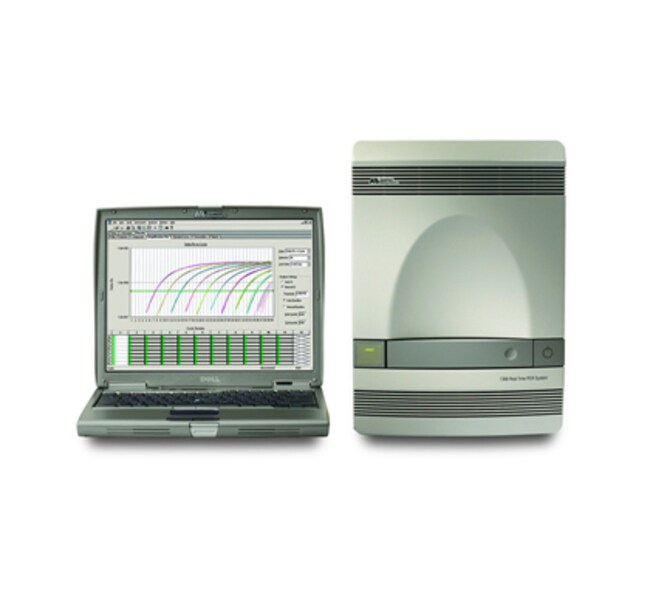
7300 System SDS v1.4 Software Upgrade Kit
This software upgrades earlier versions of the 7300 SDS Software to provide maximum capability and reliability. Powerful and user-friendly, theRead more
| Catalog Number | Quantity |
|---|---|
| 4379633 | 1 kit |
Catalog number 4379633
Price (USD)
514.00
Each
Quantity:
1 kit
Price (USD)
514.00
Each
This software upgrades earlier versions of the 7300 SDS Software to provide maximum capability and reliability. Powerful and user-friendly, the 7300 Sequence Detection Software includes:
• Simple plate setup wizard is streamlined for each application – option to setup before or after the completing the run
• Correct plate-setup mistakes after the run without losing collected data.
• One-click graphical export to PowerPoint or JPG for top notch presentations
• Flexible system can be used as a plate reader or a regular thermal cycler if needed
• Real-time amplification monitoring and flexibility to add additional PCR cycles during a run
• Lamp-lifetime monitoring ensures highest possible instrument performance
For Research Use Only. Not for use in diagnostics procedures.
• Simple plate setup wizard is streamlined for each application – option to setup before or after the completing the run
• Correct plate-setup mistakes after the run without losing collected data.
• One-click graphical export to PowerPoint or JPG for top notch presentations
• Flexible system can be used as a plate reader or a regular thermal cycler if needed
• Real-time amplification monitoring and flexibility to add additional PCR cycles during a run
• Lamp-lifetime monitoring ensures highest possible instrument performance
For Research Use Only. Not for use in diagnostics procedures.
For Research Use Only. Not for use in diagnostic procedures.
Specifications
For Use With (Application)Real Time PCR (qPCR)
For Use With (Equipment)7300 System
Operating SystemWindows XP Pro (Service Pk. 2)
Quantity1 kit
Software TypeAutomation Control
Product TypeSoftware Upgrade Kit
Unit SizeEach
Contents & Storage
Store at Room Temperature
Citations & References (1145)
Citations & References
Abstract
Journal:
PubMed ID:11282963
ADP-ribosylation factor-like GTPase ARFRP1 is required for trans-Golgi to plasma membrane trafficking of E-cadherin.
Journal:J Biol Chem
PubMed ID:18662990
ADP-ribosylation factor-related protein 1 (ARFRP1) plays a specific role in Golgi function controlling recruitment of GRIP domain proteins and ARL1 to the trans-Golgi. Deletion of the mouse Arfrp1 gene causes embryonic lethality during early gastrulation, because epiblast cells detach from the ectodermal cell layer and do not differentiate to mesodermal
Preclinical pharmacokinetic and pharmacodynamic evaluation of metronomic and conventional temozolomide dosing regimens.
Journal:J Pharmacol Exp Ther
PubMed ID:17259446
Metronomic dosed (MD) chemotherapy as opposed to conventional dosed (CD) chemotherapy is considered an alternate strategy to target angiogenesis and limit host toxicity. Although this approach is promising, there has not been any attempt to define optimal metronomic dosing regimens by integrating pharmacokinetic (PK) with pharmacodynamic (PD) measurements. The aim
Aim2 Deficiency Stimulates the Expression of IFN-Inducible Ifi202, a Lupus Susceptibility Murine Gene within the Nba2 Autoimmune Susceptibility Locus.
Journal:J Immunol
PubMed ID:21057088
Murine Aim2 and p202 proteins (encoded by the Aim2 and Ifi202 genes) are members of the IFN-inducible p200 protein family. Both proteins can sense dsDNA in the cytoplasm. However, upon sensing dsDNA, only the Aim2 protein through its pyrin domain can form an inflammasome to activate caspase-1 and induce cell
Small RNA class transition from siRNA/piRNA to miRNA during pre-implantation mouse development.
Journal:Nucleic Acids Res
PubMed ID:20385573
Recent studies showed that small interfering RNAs (siRNAs) and Piwi-interacting RNA (piRNA) in mammalian germ cells play important roles in retrotransposon silencing and gametogenesis. However, subsequent contribution of those small RNAs to early mammalian development remains poorly understood. We investigated the expression profiles of small RNAs in mouse metaphase II