Search


Citations & References (12)
Invitrogen™
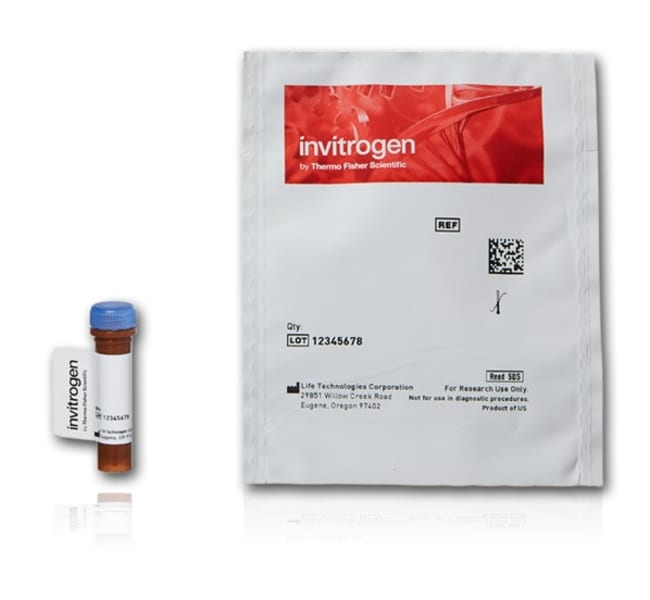
Biotin Azide (PEG4 carboxamide-6-Azidohexanyl Biotin)
The hapten, biotin azide is reactive with terminal alkynes via a copper-catalyzed click reaction. Biotin can be subsequently detected withRead more
| Catalog Number | Quantity |
|---|---|
| B10184 | 1 mg |
Catalog number B10184
Price (USD)
708.00
Each
Quantity:
1 mg
Price (USD)
708.00
Each
The hapten, biotin azide is reactive with terminal alkynes via a copper-catalyzed click reaction. Biotin can be subsequently detected with streptavidin, avidin or NeutrAvidin® biotin-binding protein.
For Research Use Only. Not for use in diagnostic procedures.
Specifications
Chemical ReactivityAlkyne
FormatSolid
Label or DyeBiotin
Molecular Weight (g/mol)615.79 Da
Product TypeBiotin Azide
Quantity1 mg
Reactive GroupAzide
Reactive MoietyAmine, Azide
Shipping ConditionRoom Temperature
SolubilityDMSO (Dimethylsulfoxide)
ColorNone
Label TypeBiotin and Other Haptens
Product LineMolecular Probes
Unit SizeEach
Contents & Storage
Store at ≤-20°C and keep desiccated.
Citations & References (12)
Citations & References
Abstract
AID-induced decrease in topoisomerase 1 induces DNA structural alteration and DNA cleavage for class switch recombination.
Journal:Proc Natl Acad Sci U S A
PubMed ID:20018730
'To initiate class switch recombination (CSR) activation-induced cytidine deaminase (AID) induces staggered nick cleavage in the S region, which lies 5'' to each Ig constant region gene and is rich in palindromic sequences. Topoisomerase 1 (Top1) controls the supercoiling of DNA by nicking, rotating, and religating one strand of DNA.
Identification of protein targets of 4-hydroxynonenal using click chemistry for ex vivo biotinylation of azido and alkynyl derivatives.
Journal:Chem Res Toxicol
PubMed ID:18232660
'Polyunsaturated fatty acids (PUFA) are primary targets of free radical damage during oxidative stress. Diffusible electrophilic alpha,beta-unsaturated aldehydes, such as 4-hydroxynonenal (HNE), have been shown to modify proteins that mediate cell signaling (e.g., IKK and Keap1) and alter gene expression pathways responsible for inducing antioxidant genes, heat shock proteins, and
A concomitant loss of dormant origins and FANCC exacerbates genome instability by impairing DNA replication fork progression.
Journal:
PubMed ID:24589582
'Accumulating evidence suggests that dormant DNA replication origins play an important role in the recovery of stalled forks. However, their functional interactions with other fork recovery mechanisms have not been tested. We previously reported intrinsic activation of the Fanconi anemia (FA) pathway in a tumor-prone mouse model (Mcm4(chaos3)) with a
Metabolic labeling of sialic acids in living animals with alkynyl sugars.
Journal:Angew Chem Int Ed Engl
PubMed ID:19388017
Sialome sweet sialome: As sialic acids are involved in many host-pathogen recognition events and are markers of embryonic and malignant tissues, there is great interest in methods for the enrichment and identification of sialylated glycoproteins from complex tissues. Now N-(4-pentynoyl)mannosamine can be used to metabolically label sialylated glycoproteins in living
Regulation of the Skeletal Muscle Ryanodine Receptor/Ca2+-release Channel RyR1 by S-Palmitoylation.
Journal:
PubMed ID:24509862
The ryanodine receptor/Ca(2+)-release channels (RyRs) of skeletal and cardiac muscle are essential for Ca(2+) release from the sarcoplasmic reticulum that mediates excitation-contraction coupling. It has been shown that RyR activity is regulated by dynamic post-translational modifications of Cys residues, in particular S-nitrosylation and S-oxidation. Here we show that the predominant