Search
Invitrogen
HSP70 Monoclonal Antibody (4G4)
{{$productOrderCtrl.translations['antibody.pdp.commerceCard.promotion.promotions']}}
{{$productOrderCtrl.translations['antibody.pdp.commerceCard.promotion.promocode']}}: {{promo.promoCode}} {{promo.promoTitle}} {{promo.promoDescription}}. {{$productOrderCtrl.translations['antibody.pdp.commerceCard.promotion.learnmore']}}
{{$ctrl.translations['antibody.pdp.skuNotes.additionalInformation']}}:

FIGURE: 1 / 21
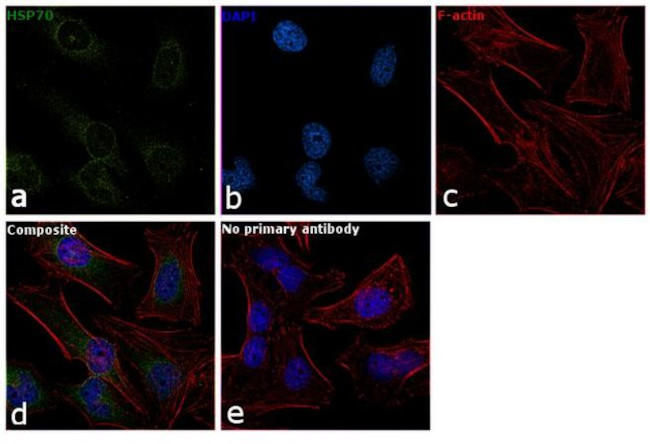
HSP70 Antibody (MA3-009) in ICC/IF
Immunofluorescence analysis of HSP70 was performed using 70% confluent log phase HeLa cells. The cells were fixed with 4% paraformaldehyde for 10 minutes, permeabilized with 0.1% Triton™ X-100 for 10 minutes, and blocked with 1% BSA for 1 hour at room temperature. The cells were labeled with HSP70 Monoclonal Antibody(4G4) (Product # MA3-009) at 1:100 dilution in 0.1% BSA and incubated overnight at 4 degree and then labeled with Goat anti-Mouse IgG (H+L) Superclonal™ Secondary Antibody, Alexa Fluor® 488 conjugate (Product # A28175) at a dil... View More


Please note: We are reviewing Western blot images included in the antibody testing data in our catalog, including those provided by third parties. Unless expressly labeled or annotated as “raw-unedited”, Western blot images included in the antibody testing data in our catalog may have been edited, optimized or otherwise adjusted for presentation.








Product Details
MA3-009
Applications
Tested Dilution
Publications
Product Specifications
Species Reactivity
Human,
Mouse
Published species
Human,
Mouse,
Non-human primate,
Rat
Host/Isotype
Mouse
/ IgG1
Class
Monoclonal
Type
Antibody
Clone
4G4
Immunogen
Human recombinant HSP70 over expressed in E. coli.
Conjugate
Unconjugated
Unconjugated
Unconjugated
Form
Liquid
Concentration
Conc. Not Determined
Storage buffer
PBS, ascites
Contains
no preservative
Storage conditions
-20°C, Avoid Freeze/Thaw Cycles
Shipping conditions
Ambient (domestic); Wet ice (international)
RRID
Product Specific Information
MA3-009 detects heat shock protein 70 kDa (HSP70) from mouse and human tissues. This antibody specifically detects HSP70 and does not cross-react with other members of the HSP70 family.
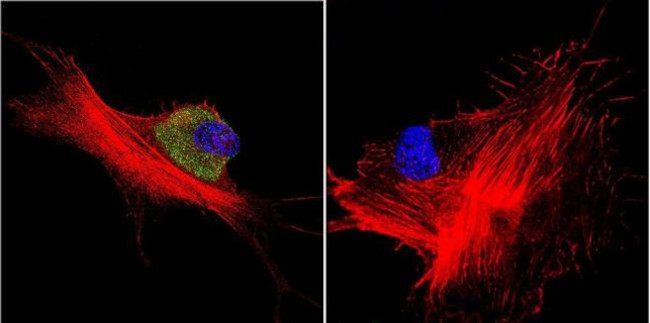
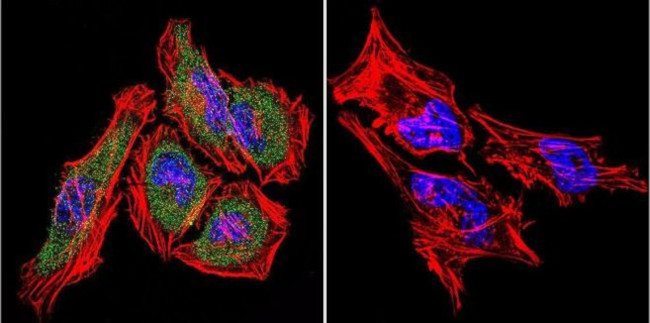
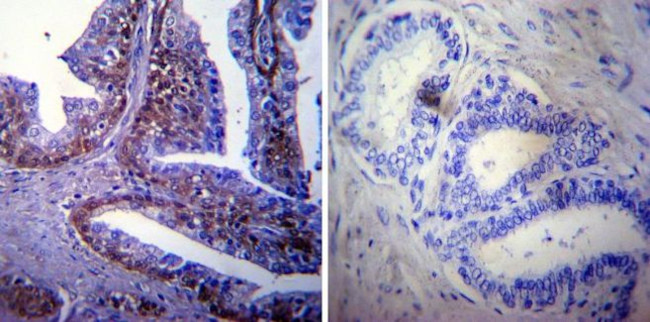
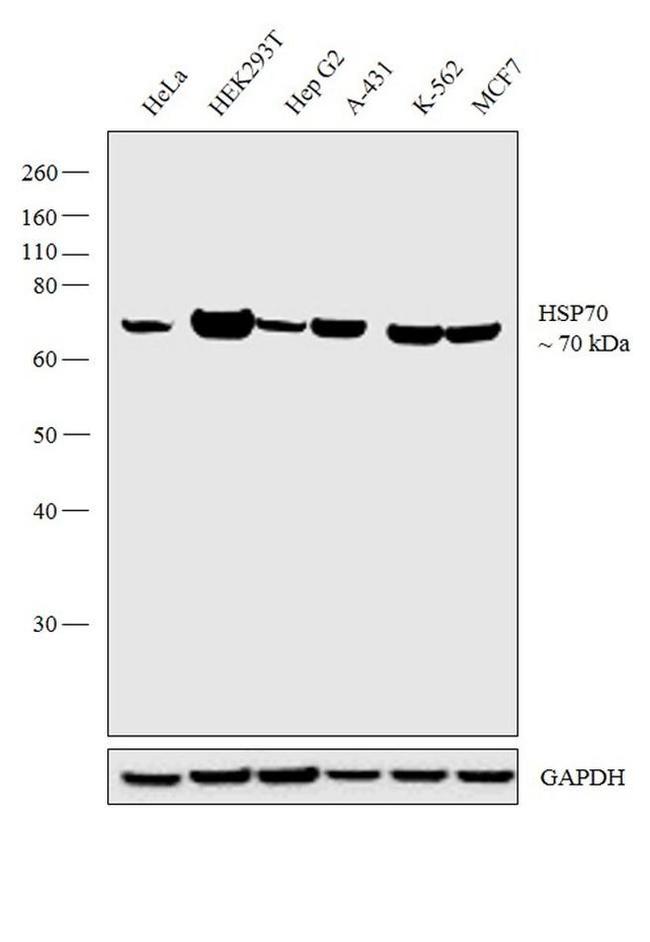
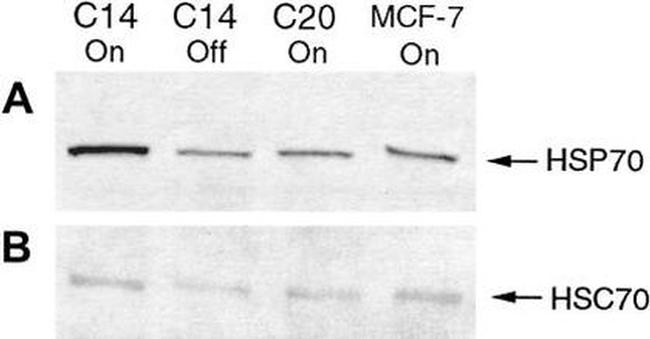
MA3-009 has been successfully used in Western blot, IF, blocking, FACS, inhibition assay, immunohistochemistry, and immunoprecipitation procedures. By Western blot, this antibody detects a 70 kDa protein representing HSP70 from K562 cell extract.
The MA3-009 antigen is recombinant human HSP70 over-expressed in E. coli. Epitope mapping with a panel of HSP70 deletion mutants suggests that the epitope recognized is located between amino acids 504-617 of human HSP70, a region that has been shown to be involved in stress-induced nucleolar localization.
Target Information
HSP70 is a Heat shock protein (HSP) which are expressed in response to various biological stresses, including high temperatures. There are several major families of HSPs that include HSP70, there are HSP90 and HSP100. The HSP70 family is a set of highly conserved proteins that are induced by a variety of biological stresses, including heat stress, in every organism in which the proteins have been examined. The human HSP70 family members include: HSP70, a protein which is strongly inducible in all organisms but which is also constitutively expressed in primate cells; HSP72, a 72 kDa protein that is induced exclusively under stress conditions; HSC70, or cognate protein, is a 72 kDa, constitutively expressed, protein which is involved in the uncoating of clathrin coated vesicles; GRP78, or BiP, is a glucose regulated 78 kDa protein localized in the endoplasmic reticulum; and p75, or HSP75, a 75 kDa protein that is found within the mitochondria. Further, HSP70 is encoded by an intronless gene and, in conjunction with other heat shock proteins, HSP70 stabilizes existing proteins against aggregation and mediates the folding of newly translated proteins in the cytosol and organelles. HSP70 is also involved in the ubiquitin-proteasome pathway through interaction with the AU-rich element RNA-binding protein 1. The HSP70 gene is located in the major histocompatibility complex class III region, in a cluster with two closely related genes which encode similar proteins.
For Research Use Only. Not for use in diagnostic procedures. Not for resale without express authorization.
Bioinformatics
Protein Aliases: 68 kDa heat shock protein; 70 kilodalton heat shock protein; dnaK-type molecular chaperone HSP70-1; epididymis secretory protein Li 103; epididymis secretory sperm binding protein; epididymis secretory sperm binding protein Li 5a; heat shock 10kDa protein 1-like; Heat shock 70 kDa protein 1; heat shock 70 kDa protein 1-Hom; heat shock 70 kDa protein 1/2; Heat shock 70 kDa protein 1A; heat shock 70 kDa protein 1A/1B; Heat shock 70 kDa protein 1B; heat shock 70 kDa protein 1L; Heat shock 70 kDa protein 2; heat shock 70 kDa protein 3; heat shock 70 kDa-like protein 1; heat shock 70-related protein APG-2; heat shock 70kD protein 1A; heat shock 70kD protein 1B; heat shock 70kD protein 2; heat shock 70kD protein 4; heat shock 70kD protein-like 1; heat shock 70kDa protein 1-like; heat shock 70kDa protein 1A; heat shock 70kDa protein 1B; heat shock 70kDa protein 2; Heat shock protein; heat shock protein 1A; heat shock protein 1B; heat shock protein 2; heat shock protein 4; heat shock protein 70.1; heat shock protein 70.2; heat shock protein cognate 70, testis; heat shock protein family A member 1A; heat shock protein family A member 1B; heat shock protein family A member 1L; heat shock protein family A member 2; heat shock protein family H member 2; heat shock protein, 110 kDa; heat shock protein, 70 kDa 1; heat shock protein, 70 kDa 2; heat shock protein, 70 kDa 3; heat shock-induced protein; heat shock-related protein; heat shock-related protein hsc70t; HEL S 103; HSP; HSP70 1; HSP70 1B; HSP70 2; HSP70 AceyltK77; hsp70 RY; HSP70-1/HSP70-2; HSP70.1/HSP70.2; HSPA2; HSPA4; Hspa70; inducible heat shock protein 70; spermatid-specific heat shock protein 70; unnamed protein product
Gene Aliases: 70kDa; APG-2; HEL-S-103; HEL-S-5a; HS24/P52; Hsc70t; Hsp110; hsp68; HSP70; HSP70-1; HSP70-1A; HSP70-1B; HSP70-1L; HSP70-2; HSP70-3; HSP70-HOM; HSP70.1; HSP70.2; Hsp70.3; hsp70A1; HSP70A2; HSP70B1; HSP70I; Hsp70RY; HSP70T; HSP72; HSPA1; HSPH2; HSX70; hum70t; mKIAA4025; Msh5; RY
UniProt ID: (Human) P0DMV8, (Human) P34931, (Human) P54652, (Human) P34932, (Mouse) Q61696, (Mouse) P17879, (Mouse) P16627, (Mouse) P17156
Entrez Gene ID: (Human) 3303, (Human) 3304, (Human) 3305, (Human) 3306, (Human) 3308, (Mouse) 193740, (Mouse) 15511, (Mouse) 15482, (Mouse) 15512, (Mouse) 15525
G-protein coupled receptor binding
transcription corepressor activity
RNA binding
receptor binding
protein binding
ATP binding
ATPase activity
enzyme binding
heat shock protein binding
ubiquitin protein ligase binding
histone deacetylase binding
protein binding involved in protein folding
cadherin binding
receptor agonist activity
misfolded protein binding
C3HC4-type RING finger domain binding
disordered domain specific binding
transcription regulator inhibitor activity
ATP-dependent protein disaggregase activity
tau protein binding
chaperone binding
glycolipid binding
adenyl-nucleotide exchange factor activity
protease binding
death receptor agonist activity
NF-kappaB binding
macromolecular complex binding
RNA polymerase II sequence-specific DNA binding transcription factor binding
negative regulation of protein phosphorylation
protein folding
negative regulation of gene expression
protein import into mitochondrial matrix
chaperone-mediated protein complex assembly
neuron apoptotic process
regulation of microglial cell activation
negative regulation of transcription from RNA polymerase II promoter
mRNA catabolic process
response to unfolded protein
lysosomal transport
negative regulation of cell proliferation
positive regulation of gene expression
negative regulation of cell growth
negative regulation of transforming growth factor beta receptor signaling pathway
endoplasmic reticulum unfolded protein response
regulation of protein ubiquitination
negative regulation of protein ubiquitination
positive regulation of proteasomal ubiquitin-dependent protein catabolic process
positive regulation of interleukin-8 production
positive regulation of RNA splicing
cellular response to oxidative stress
cellular response to heat
cellular response to unfolded protein
protein refolding
negative regulation of apoptotic process
positive regulation of I-kappaB kinase/NF-kappaB signaling
positive regulation of erythrocyte differentiation
ATP metabolic process
protein stabilization
cellular heat acclimation
positive regulation of nucleotide-binding oligomerization domain containing 2 signaling pathway
cellular response to steroid hormone stimulus
positive regulation of microtubule nucleation
negative regulation of inclusion body assembly
negative regulation of mitochondrial outer membrane permeabilization involved in apoptotic signaling pathway
regulation of mitotic spindle assembly
negative regulation of endoplasmic reticulum stress-induced intrinsic apoptotic signaling pathway
positive regulation of tumor necrosis factor-mediated signaling pathway
negative regulation of extrinsic apoptotic signaling pathway in absence of ligand
binding of sperm to zona pellucida
positive regulation of establishment of protein localization to mitochondrion
telomere maintenance
DNA repair
response to heat
male meiosis
spermatogenesis
spermatid development
response to cold
response to stress
positive regulation of protein phosphorylation
male meiosis I
positive regulation of G2/M transition of mitotic cell cycle
synaptonemal complex disassembly
Disclaimer

Clicking the images or links will redirect you to a website hosted by BenchSci that provides third-party scientific content. Neither the content nor the BenchSci technology and processes for selection have been evaluated by us; we are providing them as-is and without warranty of any kind, including for use or application of the Thermo Fisher Scientific products presented.

Performance Guarantee
If an Invitrogen™ antibody doesn't perform as described on our website or datasheet,we'll replace the product at no cost to you, or provide you with a credit for a future purchase.*
Learn more
We're here to help
Get expert recommendations for common problems or connect directly with an on staff expert for technical assistance related to applications, equipment and general product use.
Contact tech support