Search


Citations & References (6)
Invitrogen™
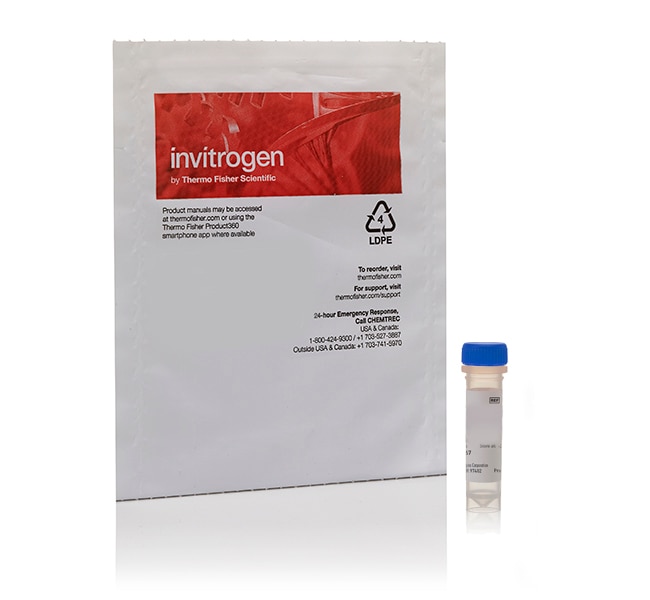
Phen Green™ FL, Diacetate, cell permeant
Green-fluorescent heavy metal indicator can be used to detect broad range of ions
| Catalog Number | Quantity |
|---|---|
| P6763 | 1 mg |
Catalog number P6763
Price (USD)
399.00
Each
Quantity:
1 mg
Price (USD)
399.00
Each
The green-fluorescent heavy metal indicator Phen Green™ FL, diacetate can be used to detect a broad range of ions, including Cu2+, Cu+, Fe2+, Hg2+, Pb2+, Cd2+, Zn2+ and Ni2+.
For Research Use Only. Not for use in diagnostic procedures.
Specifications
Detection MethodFluorescence
Dye TypePhen Green
Quantity1 mg
Shipping ConditionRoom Temperature
For Use With (Application)Heavy Metal Indicator
For Use With (Equipment)Fluorescence Microscope, Microplate Reader
Product LinePhen Green
Product TypeFL Diacetate
Unit SizeEach
Contents & Storage
Store in freezer -5°C to -30°C.
Citations & References (6)
Citations & References
Abstract
Two-photon fluorescence absorption and emission spectra of dyes relevant for cell imaging.
Journal:J Microsc
PubMed ID:12423261
'Two-photon absorption and emission spectra for fluorophores relevant in cell imaging were measured using a 45 fs Ti:sapphire laser, a continuously tuneable optical parametric amplifier for the excitation range 580-1150 nm and an optical multichannel analyser. The measurements included DNA stains, fluorescent dyes coupled to antibodies as well as organelle
Determination of the chelatable iron pool of isolated rat hepatocytes by digital fluorescence microscopy using the fluorescent probe, phen green SK.
Journal:Hepatology
PubMed ID:10094962
'The intracellular pool of chelatable iron is considered to be a decisive pathogenetic factor for various kinds of cell injury. We therefore set about establishing a method of detecting chelatable iron in isolated hepatocytes based on digital fluorescence microscopy. The fluorescence of hepatocytes loaded with the fluorescent metal indicators, phen
Binding of zinc(II) and copper(II) to the full-length Alzheimer's amyloid-beta peptide.
Journal:J Neurochem
PubMed ID:18289347
'There is evidence that binding of metal ions like Zn2+ and Cu2+ to amyloid beta-peptides (Abeta) may contribute to the pathogenesis of Alzheimer''s disease. Cu2+ and Zn2+ form complexes with Abeta peptides in vitro; however, the published metal-binding affinities of Abeta vary in an enormously large range. We studied the
Copper transport by lobster (Homarus americanus) hepatopancreatic mitochondria.
Journal:J Exp Biol
PubMed ID:11854377
Mechanisms of copper transport into purified mitochondrial suspensions prepared from the hepatopancreas of the Atlantic lobster Homarus americanus were investigated. Mitochondria were purified by combining methods of differential and Percoll-gradient centrifugation, and copper transport was studied using the copper-sensitive fluorescent dye Phen Green. Copper transport by this mitochondrial preparation was
Copper transport by lobster hepatopancreatic epithelial cells separated by centrifugal elutriation: measurements with the fluorescent dye Phen Green.
Journal:J Exp Biol
PubMed ID:11273805
The hepatopancreas of the American lobster (Homarus americanus) possesses four types of epithelial cells arranged along blind-ended tubules. At the distal tips of these tubules, stem cells termed E-cells differentiate into three other cell types, R-cells, F-cells and B-cells, each of which have different absorptive and secretory roles in the