Search
Invitrogen
Phospho-ERK1/2 (Thr202, Tyr204) Monoclonal Antibody (MILAN8R), PE-eFluor™ 610, eBioscience™
{{$productOrderCtrl.translations['antibody.pdp.commerceCard.promotion.promotions']}}
{{$productOrderCtrl.translations['antibody.pdp.commerceCard.promotion.promocode']}}: {{promo.promoCode}} {{promo.promoTitle}} {{promo.promoDescription}}. {{$productOrderCtrl.translations['antibody.pdp.commerceCard.promotion.learnmore']}}
{{$ctrl.translations['antibody.pdp.skuNotes.additionalInformation']}}:

FIGURE: 1 / 9
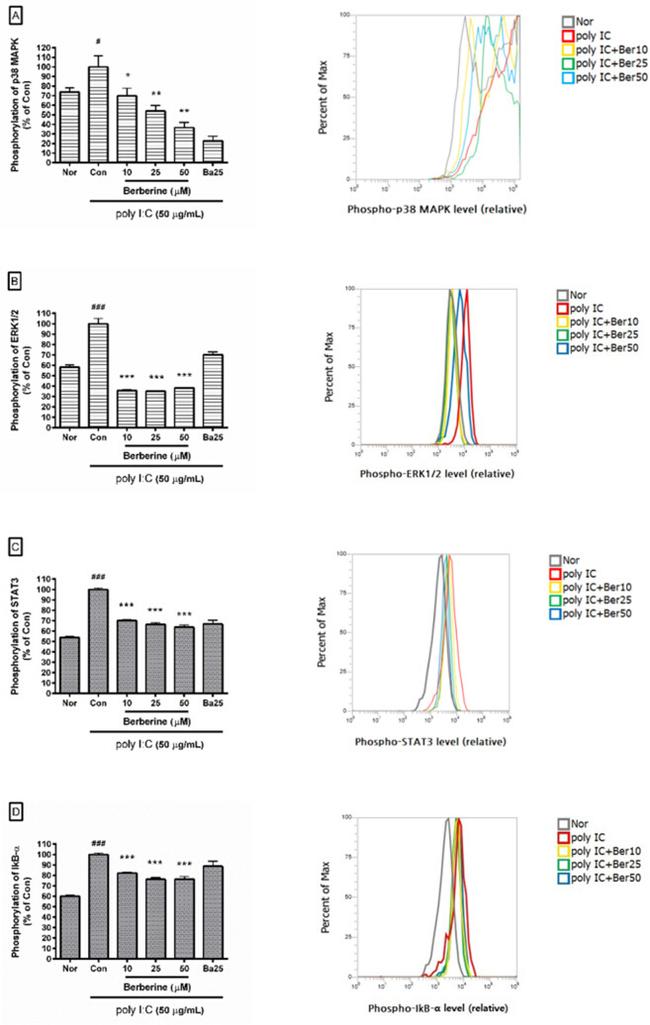
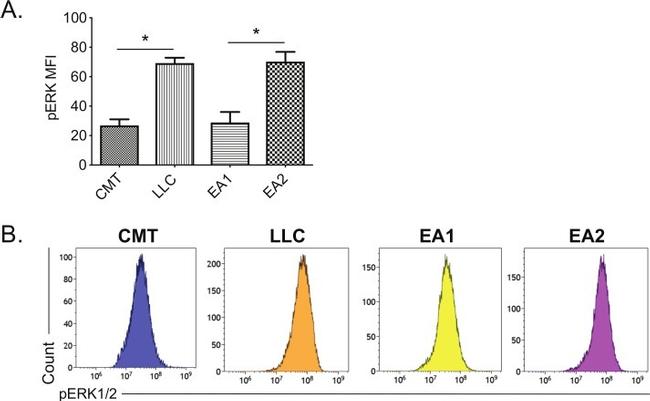
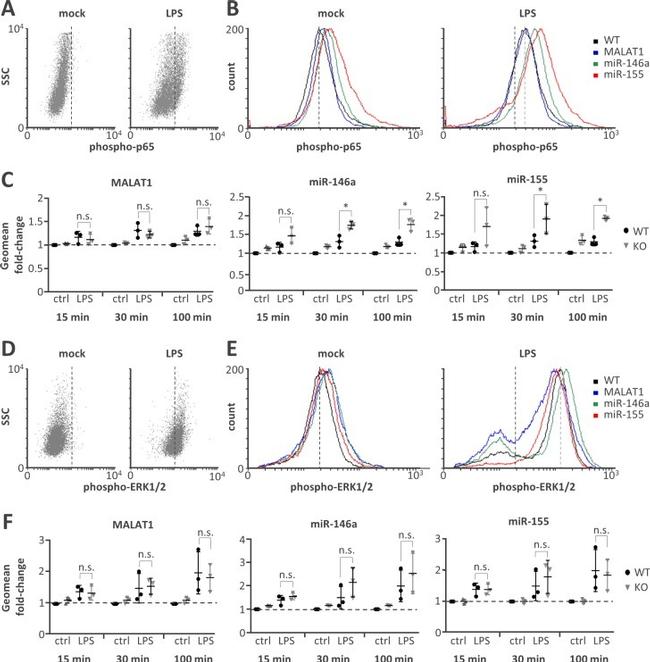
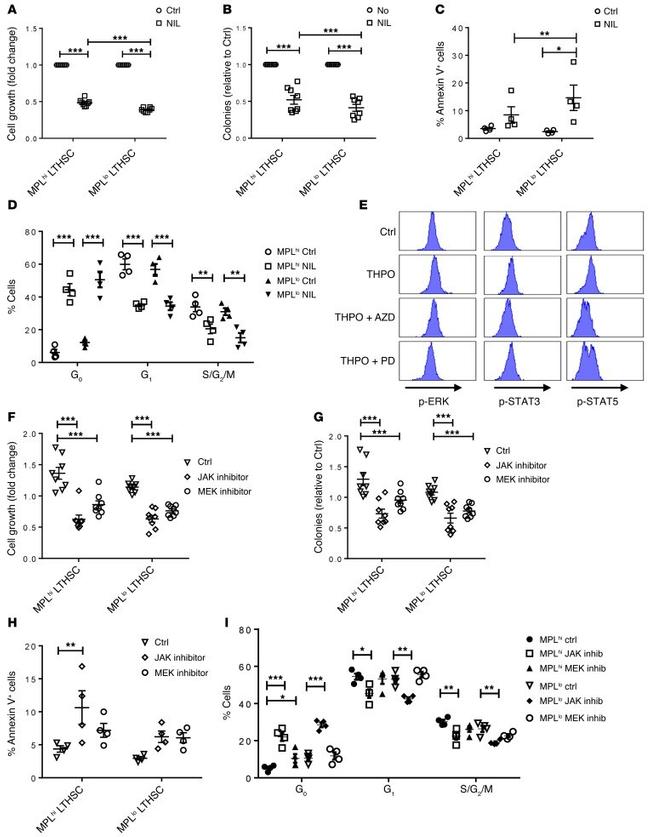
Phospho-ERK1/2 (Thr202, Tyr204) Antibody (61-9109-42) in Flow
TOP: Mouse splenocytes were unstimulated (left) or stimulated with F (ab')2 Anti-Mouse IgM, u chain specific Functional Grade Purified (Product # 16-5092-85) and Anti-Mouse CD40 Functional Grade Purified (Product # 16-0401-82) (right). The cells were then intracellularly stained with Anti-Human/Mouse CD45R (B220) FITC (Product # 11-0452-82) and Anti-Human/Mouse phospho-ERK1/2 (T202/Y204) PE-eFluor® 610 usin... View More


Please note: We are reviewing Western blot images included in the antibody testing data in our catalog, including those provided by third parties. Unless expressly labeled or annotated as “raw-unedited”, Western blot images included in the antibody testing data in our catalog may have been edited, optimized or otherwise adjusted for presentation.





Product Details
61-9109-42
Applications
Tested Dilution
Publications
Product Specifications
Species Reactivity
Human,
Mouse
Published species
Human
Host/Isotype
Mouse
/ IgG1, kappa
Recommended Isotype Control
Class
Monoclonal
Type
Antibody
Clone
MILAN8R
Conjugate
PE-eFluor™ 610
PE-eFluor™ 610
PE-eFluor™ 610
Excitation/Emission Max
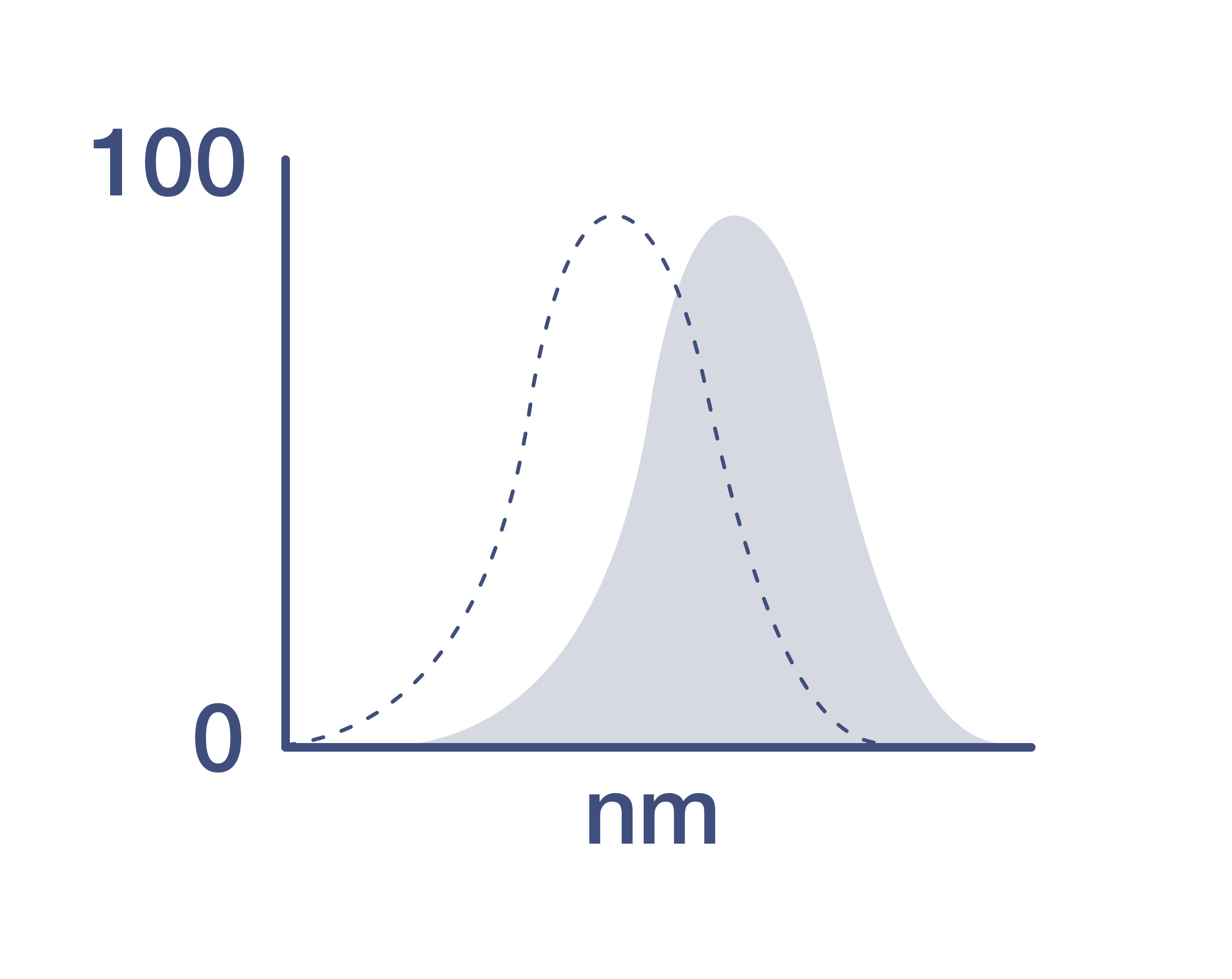
565/606 nm
View spectra
Form
Liquid
Concentration
5 µL/Test
Purification
Affinity chromatography
Storage buffer
PBS, pH 7.2, with BSA
Contains
0.09% sodium azide
Storage conditions
4°C, store in dark, DO NOT FREEZE!
Shipping conditions
Ambient (domestic); Wet ice (international)
RRID
Product Specific Information
Description: This MILAN8R monoclonal antibody recognizes human and mouse extracellular signal-regulated kinases 1 and 2 (also known as ERK1/2, p44/p42, or MAPK3/1) when phosphorylated on T202/Y204. ERK1/2 belong to a family of conserved serine/threonine protein kinases known as mitogen-activated protein kinases (MAPKs) that are involved in many cellular programs such as proliferation, differentiation, motility, and survival. ERK1/2 signaling is activated in response to numerous extracellular stimuli including mitogens, growth factors, and cytokines. The primary activators of ERK1/2 are MEK1 and MEK2 which act by phosphorylating the activation loop residues T202/Y204 and T185/Y187 in ERK1 and ERK2, respectively. Several downstream targets of ERK1/2 have been identified, including p90RSK and the transcription factor Elk-1. ERK1/2 are negatively regulated by MAPK phosphatases, known as DUSPs or MKPs, as well as by chemical inhibitors of MEK including U0126 and PD98059. Disruption of the ERK pathway is common in many types of cancer.
Specificity of this MILAN8R clone was determined by ELISA, flow cytometry, and western blotting.
Applications Reported: This MILAN8R antibody has been reported for use in intracellular staining followed by flow cytometric analysis.
Applications Tested: This MILAN8R antibody has been pre-titrated and tested by intracellular staining followed by flow cytometric analysis of normal human peripheral blood cells. This can be used at 5 µL (0.5 µg) per test. A test is defined as the amount (µg) of antibody that will stain a cell sample in a final volume of 100 µL. Cell number should be determined empirically but can range from 10^5 to 10^8 cells/test.
Staining Protocol: We recommend using Protocol C: Two-step protocol: Fixation/Methanol. Protocol A: Two-step protocol: intracellular (cytoplasmic) proteins and Protocol B: One-step protocol: intracellular (nuclear) proteins cannot be used. All Protocols can be found in the Flow Cytometry Protocols: "Staining Intracellular Antigens for Flow Cytometry Protocol" located in the BestProtocols® Section under the Resources tab online.
PE-eFluor® 610 can be excited with laser lines from 488-561 nm and emits at 607 nm. We recommend using a 610/20 band pass filter (equivalent to PE-Texas Red®). Please make sure that your instrument is capable of detecting this fluorochome.
Light sensitivity: This tandem dye is sensitive to photo-induced oxidation. Please protect this vial and stained samples from light.
Fixation: Samples can be stored in IC Fixation Buffer (Product # 00-8222) (100 µL of cell sample + 100 µL of IC Fixation Buffer) or 1-step Fix/Lyse Solution (Product # 00-5333) for up to 3 days in the dark at 4°C with minimal impact on brightness and FRET efficiency/compensation. Some generalizations regarding fluorophore performance after fixation can be made, but clone specific performance should be determined empirically.
Excitation: 488-561 nm; Emission: 607 nm; Laser: Blue Laser, Green Laser, Yellow-Green Laser.
Filtration: 0.2 µm post-manufacturing filtered.
Target Information
ERK1 and ERK2 are widely expressed and are involved in the regulation of meiosis, mitosis, and postmitotic functions in differentiated cells. Many different stimuli, including growth factors, cytokines, virus infection, ligands for heterotrimeric guanine nucleotide-binding protein (G protein)-coupled receptors and transforming agents, activate the ERK1 and ERK2 pathways. When growth factors bind to the receptor tyrosine kinase, Ras interacts with Raf, the serine/threonine protein kinase and activates it as well. Once actived, Raf phosphorylates serine residue in 2 further kinases, MEK1/2, which in turn phosphorylates tyrosine/threonine in extracellular-signal regulated kinase (ERK) 1/2. Upon activation, the ERKs either phosphorylate a number of cytoplasmic targets or migrate to the nucleus, where they phosphorylate and activate a number of transcription factors such as c-Fos and Elk-1.
For Research Use Only. Not for use in diagnostic procedures. Not for resale without express authorization.
How to use the Panel Builder
Watch the video to learn how to use the Invitrogen Flow Cytometry Panel Builder to build your next flow cytometry panel in 5 easy steps.
Bioinformatics
Protein Aliases: ERK-2; erk1 erk2; Erk1; cancer susceptibility protein; ERK1b; ERK1c; Erk2; cancer susceptibility protein; ERT1; extracellular signal-regulated kinase 1; extracellular signal-regulated kinase 2; extracellular signal-related kinase 1; insulin-stimulated MAP2 kinase; MAP kinase 1; MAP kinase 2; MAP kinase 3; MAPK 1; MAPK 2; microtubule-associated protein 2 kinase; mitogen-activated protein kinase 2; p42; p42 MAP Kinase; p42-MAPK; p44 MAP kinase; p44/42 MAPK; pp42/MAP kinase; protein tyrosine kinase ERK2; unnamed protein product
Gene Aliases: 9030612K14Rik; ERK; ERK-1; ERK-2; ERK1; ERK2; ERT1; ERT2; Esrk1; HS44KDAP; HUMKER1A; MAPK2; Mnk1; Mtap2k; NS13; p38; p40; p41; p41mapk; p42-MAPK; P42MAPK; p44; p44-ERK1; p44-MAPK; P44ERK1; P44MAPK; PRKM1; PRKM2; PRKM3
UniProt ID: (Human) P28482, (Human) P27361, (Mouse) P63085, (Mouse) Q63844
Entrez Gene ID: (Human) 5594, (Human) 5595, (Mouse) 26413, (Mouse) 26417
phosphotyrosine binding
protein kinase activity
protein serine/threonine kinase activity
MAP kinase activity
protein binding
ATP binding
RNA polymerase II carboxy-terminal domain kinase activity
kinase activity
phosphatase binding
identical protein binding
protein serine kinase activity
DNA-binding transcription factor binding
double-stranded DNA binding
protein kinase binding
mitogen-activated protein kinase kinase kinase binding
scaffold protein binding
autophagosome assembly
MAPK cascade
negative regulation of T cell mediated immune response to tumor cell
protein phosphorylation
cellular response to DNA damage stimulus
signal transduction
cell surface receptor signaling pathway
epidermal growth factor receptor signaling pathway
insulin receptor signaling pathway
response to toxic substance
organ morphogenesis
negative regulation of autophagy
positive regulation of autophagy
positive regulation of macrophage chemotaxis
neural crest cell development
Schwann cell development
phosphorylation
peptidyl-serine phosphorylation
sensory perception of pain
regulation of ossification
BMP signaling pathway
thyroid gland development
positive regulation of cyclase activity
lipopolysaccharide-mediated signaling pathway
cellular response to nutrient levels
positive regulation of telomere maintenance
negative regulation of proteasomal ubiquitin-dependent protein catabolic process
response to lipopolysaccharide
regulation of stress-activated MAPK cascade
cellular response to amino acid starvation
intracellular signal transduction
peptidyl-tyrosine autophosphorylation
ERBB2-ERBB3 signaling pathway
TORC1 signaling
outer ear morphogenesis
myelination
signal transduction in response to DNA damage
response to exogenous dsRNA
positive regulation of translation
positive regulation of transcription from RNA polymerase II promoter
decidualization
insulin-like growth factor receptor signaling pathway
thymus development
modulation of synaptic transmission
protein stabilization
negative regulation of T cell activation
cartilage development
stress-activated MAPK cascade
regulation of intracellular pH
regulation of cytoskeleton organization
Bergmann glial cell differentiation
face development
lung morphogenesis
trachea formation
cardiac neural crest cell development involved in heart development
interleukin-34-mediated signaling pathway
protein-containing complex assembly
ERK1 and ERK2 cascade
positive regulation of ERK1 and ERK2 cascade
interleukin-1-mediated signaling pathway
response to epidermal growth factor
cellular response to mechanical stimulus
cellular response to tumor necrosis factor
caveolin-mediated endocytosis
regulation of Golgi inheritance
negative regulation of cholesterol efflux
cellular response to toxic substance
positive regulation of macrophage proliferation
positive regulation of neuroinflammatory response
negative regulation of TORC1 signaling
positive regulation of xenophagy
regulation of early endosome to late endosome transport
regulation of transcription from RNA polymerase II promoter
apoptotic process
chemotaxis
chemical synaptic transmission
learning or memory
positive regulation of peptidyl-threonine phosphorylation
response to nicotine
ERBB signaling pathway
positive regulation of skeletal muscle tissue regeneration
positive regulation of cholesterol biosynthetic process
positive regulation of smoothened signaling pathway
chemokine-mediated signaling pathway
placenta development
heart development
diadenosine tetraphosphate biosynthetic process
cytosine metabolic process
mammary gland epithelial cell proliferation
positive regulation of protein import into nucleus
response to estrogen
negative regulation of cell differentiation
positive regulation of transcription, DNA-templated
T cell receptor signaling pathway
B cell receptor signaling pathway
positive regulation of cardiac muscle cell proliferation
long-term synaptic potentiation
labyrinthine layer blood vessel development
cellular response to peptide hormone stimulus
cellular response to lipid
Disclaimer

Clicking the images or links will redirect you to a website hosted by BenchSci that provides third-party scientific content. Neither the content nor the BenchSci technology and processes for selection have been evaluated by us; we are providing them as-is and without warranty of any kind, including for use or application of the Thermo Fisher Scientific products presented.

Performance Guarantee
If an Invitrogen™ antibody doesn't perform as described on our website or datasheet,we'll replace the product at no cost to you, or provide you with a credit for a future purchase.*
Learn more
We're here to help
Get expert recommendations for common problems or connect directly with an on staff expert for technical assistance related to applications, equipment and general product use.
Contact tech support