Search
- Home
- Shop All Products
- Prepared Media Split Plates
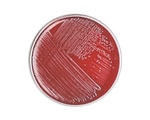

Remel™ Anaerobic CDC No. 3 Quad
Thermo Scientific™ Remel Anaerobic CDC No. 3 Quad (Lombard-Dowell Base) facilitates presumptive identification of anaerobic bacteria.
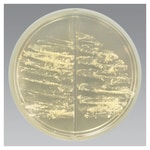
Tergitol 7 Agar with TTC/Blood Agar Biplate
Selectively isolate and differentiate coliform organisms and cultivate a wide variety of microorganisms to visualize hemolytic reactions with Thermo Scientific™ Remel™ Tergitol 7 Agar with TTC/Blood Agar Biplates.
Remel™ Biplates, HE through V Agar, SXT Blood Agar and SXT Blood Agar (TSA w/5% Sheep Blood)
Perform screening and isolation in the same 12 x 85mm dish using Thermo Scientific™ Remel Biplates, divided into two sections to hold either the same media on both sides or two media, one on each side.
Anaerobic Reducible LKV Blood Agar/Reducible Blood Agar with Neomycin and Vanomycin Biplate
Cultivate and isolate fastidious anaerobic bacteria with Thermo Scientific™ Remel™ Anaerobic Reducible LKV Blood Agar/Reducible Blood Agar, neomycin, vanomycin biplate. This divided culture plate contains reducible blood agar on one half, which improves the recovery of anaerobic organisms1,2.
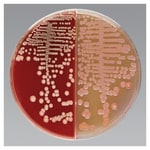
Remel™ Biplates: Anaerobic Reducible through Levine Agars, Columbia CNA//MacConkey Agar
Perform screening and isolation in the same 12 x 85mm dish using Thermo Scientific™ Remel™ Biplates, divided into two sections to hold either the same media on both sides or two media, one on each side.
Remel™ Nocardia Triplate
Thermo Scientific™ Remel Nocardia Triplate is used for differentiation of aerobic actinomycetes.
Remel™ Columbia CNA w/5% Sheep Blood, EMB Agar, Levine
Thermo Scientific™ Remel Columbia CNA w/5% Sheep Blood, EMB Agar, Levine is a biplate used for selective isolation and differentiation of gram-negative enteric and gram-positive bacilli from clinical and industrial samples.
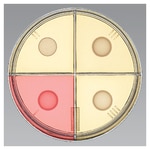
Synergy Quad Medium
Predict vancomycin and high-level aminoglycoside resistance in Enterococcus spp. using Thermo Scientific™ Synergy Quad.
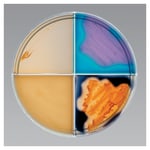
Anaerobic Gram Positive ID Quad Plates
Presumptively identify anaerobic, gram-positive rods using Thermo Scientific™ Remel™ Anaerobic Gram Positive ID Quad (Lombard-Dowell Base)1. The Remel Anaerobic Gram Gram Positive ID Quad is based on the CDC's Presumpto Plates2: I, II, and III, with three quadrants containing various differential...
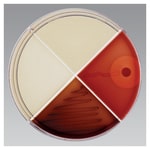
Strep ID Quadplate
Differentiate and presumptively identify streptococci and enterococci with Thermo Scientific™ Remel™ Strep ID Quadplate. In 1953, Maxted demonstrated the use of bacitracin to differentiate group A β-hemolytic streptococci (sensitive) from non-group A streptococci (resistant)1.
Nocardia Quad
Differentiate aerobic actinomycetes by hydrolysis of casein, xanthine, tyrosine, and starch with Thermo Scientific™ Remel™ Nocardia Quad. A taxonomic scheme to differentiate these genera based on biochemical characteristics was developed by Mishra et al1. McGinnis et al.
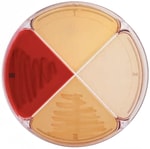
Haemophilus ID Quad Medium
Speciate the genus Haemophilus using Thermo Scientific™ Haemophilus ID Quad, a medium containing three separate growth requirements and horse blood for the production of hemolysis, all on a single prepared media plate.
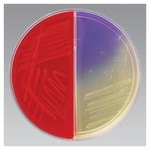
V Agar/V Agar Selective with Starch Agar and Brom Cresol Purple Biplate
Isolate, presumptively identify, and differentiate Gardnerella vaginalis from other organisms using Thermo Scientific™ Remel™ V Agar and V Agar Selective with Starch Agar and Brom cresol Purple Biplate. Greenwood et al.
Salmonella Shigella/XLD Biplate
Perform selective and differential isolation of enteric gram-negative bacilli, especially Salmonella and Shigella, from clinical specimens using Thermo Scientific™ Remel™ Salmonella Shigella(SS)/XLD Biplate. This biplate is used for isolating bacteria such as Salmonella and Shigella spp1-3.
Middlebrook 7H11 Agar/Mitchison 7H11 Selective Biplate
Isolate and cultivate Mycobacterium species from specimens that contain mixed flora with Thermo Scientific™ Remel™ Middlebrook 7H11 Agar/Mitchison 7H11 Selective Biplates. Middlebrook 7H10 Agar is a solid medium that allows faster and luxurious growth of Mycobacteria1 and protects the organisms...
